Review #1375: Panic in the Streets.
Cast:
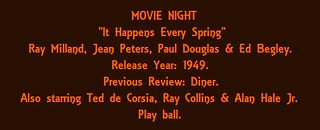
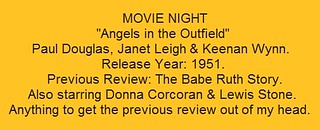
Richard Widmark (Lieutenant Commander "Clint" Reed, M.D.), Paul Douglas (Captain Tom Warren), Barbara Bel Geddes (Nancy Reed), Jack Palance (Blackie), Zero Mostel (Raymond Fitch), Alexis Minotis (John Mefaris), Dan Riss (Neff), Guy Thonajan (Poldi), and Tommy Cook (Vince Poldi) Directed by Elia Kazan (#104 - East of Eden, #109 - A Streetcar Named Desire, and #110 - On the Waterfront)
Review:
"I don't move unless I have some empathy with the basic theme."
Elia Kazan is thought to be one of the greatest influential directors of our time. He started his post college life as a stage actor, but his most important influence was the Group Theatre, a collective dedicated to a naturalistic and forceful style of acting, influenced by the teachings of Konstantin Stanislavski, with this particular style being associated later in the 20th century as the Method style of acting. Kazan did do some acting in his time with the Theatre, but it was his directing that soon came to be noticed on the New York stage, where he won three Tony Award for direction (most notably with Death of a Salesman). He came to Hollywood to direct his debut picture in A Tree Grows in Brooklyn (1945). 1947 was a critical year in his life, as he directed three films and had one of them (Gentlemen's Agreement) win an Academy Award for Best Picture and Best Director. He also helped to form the Actors Studio (along with Cheryl Crawford and Robert Lewis), which later had Group Theatre founder Lee Strasberg as director, who would later be described as the father of method acting in America. Ultimately, Kazan would direct nineteen films in 29 years of directing, with a majority of his films receiving award nominations and nine actors receiving Academy Awards for work in his films. Kazan liked to pick people for his films that weren't necessarily big stars, acting as a mentor to them to try and figure them out so they aren't a complete unknown when it comes to filming. One particular unknown who got a break from Kazan in this film was Walter (Jack) Palance. He had made his debut in theater in 1947 at the age of 28 after spending his life doing a variety of professions, ranging from a coal miner to a boxer to working various cooking jobs at Stanford University (where he nearly gradated from). He was later described by main star Widmark as "the toughest guy I ever met. He was the only actor I've ever been physically afraid of."
In any case, this is certainly an interesting film to pick out from Kazan, one to start out a prime decade for capable films from him alongside ones involving noir thrillers. For one thing, it's a film about a hunt for a killer that doesn't know he has the plague, filmed on location in New Orleans (with the underbelly parts being emphasized for effect) with a mix of professional actors and hired locale. Perhaps predictably, the Hays Code had their slight issues with the film (which had working titles Port of Entry and Outbreak) before it could get itself going, mostly with the ideas of not having a suggestion of a cop being killed, or a falling mattress scene being not too realistic in gruesomeness. The film had two separate writing credits, with Richard Murphy and Daniel Fuchs doing the screenplay while Edna and Edward Anhalt wrote the story. The Anhalts would win an Academy Award for Best Writing, Motion Picture Story for this film. In any case, this is a film that basks itself in its setting with openness and a sense of realism that makes for compelling staying power for this exact time seven decades after its release. It finds a path to not being just a plain procedural with relative tension and a collection of capable presences to follow along with. Widmark (known early for villainous roles) gives off a durable performance, one that is urgent and easy to follow along with no trouble in terms of belief. Douglas (having started his film career just one year earlier) accompanies him with rough assurance. Bel Geddes makes her time count with decent chemistry when needed with Widmark. Undeniably, Palance makes for a enterprising debut, a clear chilling presence whenever he is on screen, while Mostel (who was blacklisted in the late 1940s) accompanies him with panicky brilliance. On the whole, the film balances itself through 96 minutes with a grimy mix of terror and drama that doesn't sell itself short in overwrought decision-making, having a proactive vision of realism that applies especially now more than ever.
Overall, I give it 8 out of 10 stars.