Showing posts with label Joseph Cotten. Show all posts

December 31, 2024

Hush...Hush, Sweet Charlotte.

Review #2331: Hush...Hush, Sweet Charlotte.

Cast: 
Bette Davis (Charlotte Hollis), Olivia de Havilland (Miriam Deering), Joseph Cotten (Doctor Drew Bayliss), Agnes Moorehead (Velma Cruther), Cecil Kellaway (Harry Willis), Mary Astor (Jewel Mayhew), Victor Buono (Big Sam Hollis), Wesley Addy (Sheriff Luke Standish), William Campbell (Paul Merchand), and Bruce Dern (John Mayhew) Produced and Directed by Robert Aldrich (#105 - What Ever Happened to Baby Jane?, #778 - The Longest Yard, #1014 - The Dirty Dozen#1389 - Kiss Me Deadly)

Review: 
If you remember, What Ever Happened to Baby Jane? (1962) was a hit with audiences, so naturally one might want to capture on that success and make a quick follow-up. Robert Aldrich decided to use an unpublished short story written by Henry Farrell called "What Ever Happened to Cousin Charlotte?". Lukas Heller, who had adapted Farrell's Baby Jane novel, would write the screenplay with Farrell (incidentally, Farrell wrote one other screenplay with What's the Matter with Helen? [1971]). Of course, he ran into a small problem: Joan Crawford and Bette Davis did not really want to work with each other again. Crawford (as cast in a role that wasn't exactly a role to chew on when compared to Davis, who had influenced the title change) wound up in the hospital with a respiratory ailment, but Aldrich was skeptical enough to actually hire a P.I. to track her. Incidentally, Crawford happened to star in a different type of psychological horror movie in 1964 with Strait-Jacket (both movies feature a person spooked by a memory of head-rolling death that may or may not be coming back to haunt them back home). At any rate, demands by the insurance company led him to either trash the movie or fire Crawford, for which Alrich went with the latter decision in August of 1964. After a handful of actresses rejected Aldrich's offers (such as Vivien Leigh), he eventually replaced her with a good friend of Davis with Olivia de Havilland. Others did return to be involved with the film from Jane such as editor Michael Luciano and composer Frank De Vol to go along with appearances by Victor Buono and Wesley Addy. While not quite as popular as the aforementioned Aldrich film, the movie was a relative success with audiences when it first came out in late 1964 and even received a few award nominations (in interviews, Aldrich liked making the movie just fine, although he had wished he could've spread out the time in making two similar films with Baby Jane and Charlotte for "my personal taste" while also arguing that Davis gave a better performance in the latter). In 1969, Aldrich produced What Ever Happened to Aunt Alice?, which while not related to Charlotte or Baby Jane is at least interesting for being about an aging old woman (played by Geraldine Page) dealing with murder and mayhem.

Creepy and creaky with a runtime at 133 minutes, this is the kind of movie that plays right at home for those who like drawn out thrillers (it reminds me to consider Les Diaboliques [1955], incidentally), albeit ones that play with bits of gore here and there. One particularly has some fun with the opening sequence (which features the ever-effective Buono to go along with a young Dern getting to be a part of, well, head-rolling) to draw out the scenarios of Southern Gothic mayhem that does eventually circle back to what it believes will be fun turns of the screw. Of course, it helps to have an actress like Davis at the helm to give the whole thing a sense of interested dignity in making this more than just goofy hysterics (hey, we don't judge anyway, particularly since  there are people who thought Baby Jane had some sort of camp aspect to it, as if scene-chewery isn't merely just part of just making some thrillers). Her entrapment in the past for the character is handled with the usual Davis standard of approaching the role with straight-to-the-point grace, managing to handle the tightrope of not merely being consumed or embarrassed by the macabre aspects. She plays the great creature that comes with a psyche that can only see things through the prism of the place that might as well be a mark on her soul, one that traps her soul that can be seen even when she is brandishing a shotgun (as seen early in the movie). de Havilland apparently wasn't too keen on making the movie but elected to do it because of the desire by Davis to work with her, which she did with relative success (after this, she appeared in five further films over the next 15 years to go along with a few television appearances prior to her death in 2020 at the age of 104). But she plays it as it if was a tight-rope to glitter in facades just as interesting as the one presented by what one would assume is just a nut (maybe it's a spoiler to say to beware of nice-presenting strangers), and it goes just as well with Cotten (incidentally, he also happened to play a key role in a movie about a woman possibly being on the nutty side with 1944's Gaslight), who has that conniving nicety to play the part one needs to play in triangular mayhem with composure to make it stick. Of course, Moorehead inspires a few quizzical in amusement that lends support to both the unravelling curiosity along with generally being warm to follow in terms of devotion with an accent to match (hey, the accents are fine for me). Of course, Kellaway is the civil one for enjoyment on the level of a usual character actor that could just inhabit a role with a few choice sentences. Undeniably, the movie is so worthwhile to see in all of the shadows and angles (as shot by Joseph Biroc), which is gorgeously appropriate when it comes to crafting a tawdry tale (complete with carefully composed angles for such a suitable set (which come to a head in one eerie scene) with game actors and at least one rug-pull moment that will surely make a worthy dark joke. Sure, the movie wraps its strings quite a few times around itself to make a knot, but the game is worth playing nonetheless. Aldrich was a craftsman director worth following along with in his attempts at chasing the audience to entertain with whatever he felt like doing at the time. As such, there is a few good moments in suspense to justify a watch for those who love seeing a few familiar actors play along in Gothic strangeness for lively execution that endures after six decades because of the commitment behind it.

Overall, I give it 8 out of 10 stars.
167 reviews later, here we are at yet another New Year's Eve. Sure, last year was a bit busier, but October 2024 was a month to be proud of regardless. Since 2011, we've managed to review a movie on December 31st a total of 17 times, with only 2015 and 2017 being exceptions, and it was nice to try a double-header once again to try and top how things went from last year.

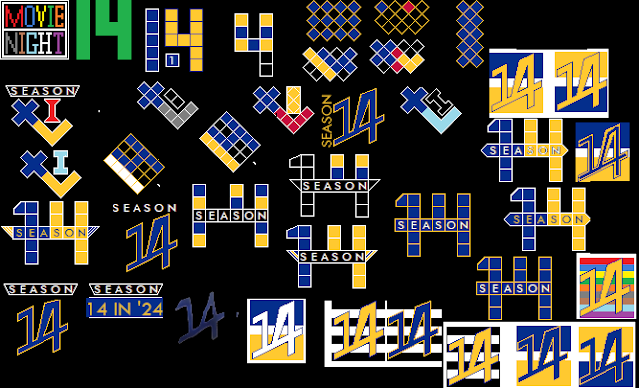
As a treat, I'd like to close off Season 14 by showing off a few concept ideas I had come up with MS Paint before settling on the final format in what accompanied each review in 2024. We shall see what Season XV brings in 2025. It will be a short wait for the next review.

August 2, 2024

Heaven's Gate.

Review #2237: Heaven's Gate.

Cast: 
Kris Kristofferson (Averill), Christopher Walken (Champion), John Hurt (Irvine), Sam Waterston (Canton), Brad Dourif (Mr. Eggleston), Isabelle Huppert (Ella), Joseph Cotten (The Reverend Doctor), Jeff Bridges (John L. Bridges), Geoffrey Lewis (Trapper), Paul Koslo (Mayor Lezak), Richard Masur (Cully), and Terry O'Quinn (Captain Minardi) Written and Directed by Michael Cimino (#1458 - The Deer Hunter

Review: 
"I wanted you to feel what it was like to walk down a street in that period: to follow those noisy wagons, to cross all that activity, what you felt, what you heard. People made so much dust; my God, was it dusty! That makes the streets dirty... when hundreds of wagons go around, they raise dust. And very often, we took the time to record the background sound. In the store, for example, we recorded numerous conversations, with the intention of inserting them into the soundtrack later. This isn’t general background noise; you hear people, in a corner, argue over the price of a knife, discuss the merits of a particular rifle... each of those people are engaged in a very specific activity and you hear them."

Believe it or not, I was awaiting the chance to watch this film in the best scenario and presentation possible. No, I was not waiting for this day to come just to deluge you with some spiel about the production of the film being the legacy of the film for years and years. August seemed to be the best time to see if this film truly deserved to be acknowledged as something beyond just being thought of by critics and audiences as a failure. The attention to detail actually shouldn't be surprising considering that Cimino (the Yale graduate in fine arts of painting) was quite familiar with the arts before his filmmaking era had begun. In fact, his cinematographer for this film (Vilmos Zsigmond) equated Cimino's selection and placement of extras (which could be as many as fifty) in particular places for shots to painting to go with doing as many takes as it seemed necessary to get the right one to use for a scene. Let us run down the various versions of the film really quickly: Cimino's first screening was for studio executives in June of 1980 (initially before all of the hubbub happened, United Artists wanted a Christmas 1979 release), which ran for 325 minutes that he felt would only be a little bit longer than the final cut. The November 1980 screenings (which lasted a week and had critics going "the Devil has just come around to collect") saw a 219-minute version cut by Cimino. Five months later, a 149-minute cut came and died in theaters. Cimino would only direct four films (the last being The Sunchaser [1996]) prior to his death in 2016. Both of these versions were released in some form of the days of home media. In 2005, a "restored cut" came out for screenings that was assembled by MGM archivist John Kirk with no involvement from Cimino, who had stated that even the original premiere version wasn't really a "director's cut". Finally, in 2012, a version restored and supervised by Cimino himself that lasts 216 minutes and removes the sepia tint that had been present in every edition (which is one that you can see here); it was screened to apparent applause and ovations that Cimino got to hear for himself (while saying once that he "never needed vindication") before an eventual home media release, with the Criterion release being the one I saw for myself.

From 1889 to 1893, a reported range conflict, now generally referred to as the "Johnson County War" occurred in Wyoming involving county settlers and cattle companies (the Wyoming Stock Growers Association) trying to prosecute who they felt were rustlers that led to a variety of lynchings and deaths, such as Ella Watson and her husband Jim Averell or a murderous gunfight involving Nate Champion. The film utilizes real-life names such as Watson, Averell, Champion and Cannon but is generally fast and loose with actual events (such as the death of one person who actually lived until the 20th century). Cimino had envisioned making a film loosely based on the War since the early 1970s (after being inspired by the history of barbed wire in relation to the Old West), but it was only just before The Deer Hunter (1979) garnered Academy Awards that had United Artists onto the idea of giving him money and carte blanche to do what he wanted in filming (located mostly in Montana and Idaho). The result was a film that had a studio executive write a book detailing the movie in all the grisly details (Final Cut, published in 1999). What I see from this film (set in 1890) is one that tries to thread the needle of being the epic of mythmaking, one that wonders just what really lies beneath the fabric of what we call America (complete with a line musing about it "always was" a danger to be poor in the country). It is a movie all about tragedy in its mosaic that demands plenty from its viewer that is easy to see its qualities and drawbacks that are quite distinct from those who saw it in its "prime". Beneath all of the lush photography (and an edited tint, remember) is a film for those with the patience to gaze at the building tragedy that arises from knowing blood will be spilled on this soil as manifested by the destiny of those to live with people who look and act like themselves. The obsession for perceived perfection by Cimino bleeds out quite evidently in the weirdest of ways. In other words, to get to the climatic sequence of wagons and wood, one must see for themselves a sequence of roller-skating (which is where the title comes from) or plenty of stilted moments of this would-be love triangle. Kristofferson and Walken seem to battle for who dominates the screen best in terms of presence in the trouble of staying with the loyalty they wish to express to both Huppert along with the uncertain frontier (Walken has that certain type of glare and Kristofferson has that facade of trying to seem like a common man). Poor Huppert seems lost in trying to hack it beyond hazy charm when Walken can just waltz into his introduction without losing a step. Hurt gets to play an observer removed from actually being involved with the general plot (because of his hollow character) that is sort of effective in a sea of one-note stuff. Poor Bridges chimes in just as little as one thinks by the time of the halfway point, while Waterston seemingly is one really good scene away from being the true presence of soulless manifest the film seems to think he is. The film gives one a hazy outline to basically use their imagination in trying to make one see themselves in these folks that are not merely outsiders, which is only somewhat successful. Its battle sequence at the end makes for a poignant hollow victory for all involved, one where the blood will stay on the soil long after all involved have shuffled off the coil that is considered "settled" to go with that last scene of an older and, well, settled lead presence in the privilege that comes with compliance. I can't call it a great movie because really it is just a bit too bloated to really rise to greatness (although being close to sprawling flawed films like Dances with Wolves is not a bad thing), but I think it is pretty obviously a movie worth checking out to see for oneself (while paying attention, naturally) to assess where it ranks in the pantheon of tragic Westerns and mythmaking as a whole.

Overall, I give it 8 out of 10 stars.

Hello folks. As you can see, we have another August upon us, which means a theme month once again.
The theme for 2024 is "Acknowledged in August", which will cover films that were either lambasted or forgotten by critics or audiences at the time of release in an attempt to see if, well, they deserve to be acknowledged for possibly worth having a cult following. What better way to start than with a film trashed to hell and back in Heaven's Gate? From Michael Cimino to Robert Altman, we will cover some films that may or may not be "something to acknowledge". There will be a few new releases covered alongside the Acknowledged stuff this month, as evidenced by the next review: Trap.

September 7, 2021

Airport '77.

Review #1720: Airport '77.

Cast: 
Jack Lemmon (Capt. Don Gallagher), Lee Grant (Karen Wallace), Brenda Vaccaro (Eve Clayton), Joseph Cotten (Nicholas St. Downs III), Olivia de Havilland (Emily Livingston), James Stewart (Philip Stevens), George Kennedy (Joseph "Joe" Patroni), Darren McGavin (Stan Buchek), Christopher Lee (Martin Wallace), Robert Foxworth (Chambers), Robert Hooks (Eddie), and M. Emmet Walsh (Dr. Williams) Directed by Jerry Jameson (#1195 - Raise the Titanic)

Review: 
See, one knows they are dealing with a product movie, because what other movie have the year titled on it? Of course, by this point, the Airport films (1970, 1975) have now evolved past even having an airport involved in the actual plot, since now it deals with the Navy helping to find a fancy plane that crashed near the Bermuda Triangle. The true star is Albert J. Whitlock, who provides the special effects within matte paintings, which is probably the most interesting part of the film (besides having scenes shot in a water tank in Florida, I suppose). By this point, the Airport series has managed to ditch the attempt at thrills, really. You know what you are getting into if you've decided to pick the third film of a series dedicated to making planes and flying as boring as humanely possible. Exposition is the true terror of the sky when it comes to stuff like this, and it is probably not surprising that four writers (Michael Scheff, David Spector, H. A. L. Craig, Charles Kuenstle) were hired to do the film. Jameson may have been more of a TV director than a feature film man, but at least he fitted the occasion of helming disaster-fare (such as TV movies involving hurricanes and elevators in trouble). Even The Poseidon Adventure (1972) managed to evoke some sort of interest within trouble in the waters with a sinking ship, mostly because there is more gusto given by the actors along with better time spent in the water.

Apparently, Lemmon took the role because of he thought it would be fun to do a "blatantly commercial cartoon" (of course, he also was coming off a failure with Alex & the Gypsy and apparently told his agent to accept the next high-paying offer, so...). Eh, he is technically better as a pilot in the acting scale than Heston or Martin, in that he isn't beholden to hammy overtones like the others were - him and Vacarro at least look like they want to be there and act together with believability. Of course, Lee accepted his supporting role because he wanted to work with Lemmon. They do get to share a scene together at least, so one can at least consider the contrast of tastes for certain acting presences over others (i.e. I am always curious to see a movie with Lee in it). This is mostly apparent because he shares most of his segmented time paired with Grant, who gets to play the jealous spouse that also gets to panic the most when disaster strikes - yeah, I don't get it either (apparently, the television version adds more of her, so there's that). At least you get to see her get hysterical and be punched out after trying to open a hatch? Why exactly was Kennedy in this movie? He spends about two minutes in the movie, and he also is the only actor to actually spend any screen-time with Stewart, who might as well have filmed his stages in a box. One can't quite tell which actor is phoning it in more, but I imagine Stewart was quite comfortable with making a movie where he didn't have to speak much and could make a check worthy for his grandchildren to enjoy - this was his fifth-to-last role on film, after all. Cotten and de Havilland are okay, but one isn't really here to see traditional actors if McGavin is jawing exposition right in front of you, right? Honestly, although the film doesn't have as much to generate in weirdo character stuff, at least one can appreciate the small role done by Walsh, who actually had been appearing in a handful of films in bit parts for almost a decade (with this being right before better stuff such as Blood Simple).

At least you can say the Navy wouldn't be embarrassed by participating in this film. The credits even list that the rescue operations are actually utilized by the Navy in similar emergencies, so one can at least appreciate seeing the USS Cayuga being used for something that isn't a waste of time (granted, scenes filmed in water isn't exactly the most interesting thing to watch but your mileage may vary). Look, the movie is no better and no worse than the previous two features in terms of mediocrity. Sure, there are probably a few more things to make fun of here, but it is the same kind of blah movie from before that made money in a time where people were ripe for seeing these kind of movies (making over $90 million on a $6 million dollar budget). Naturally, Airport had to continue with The Concorde ... Airport '79 (1979), so one can only wonder where the adventure of mediocrity can go from there.

Overall, I give it 6 out of 10 stars.

June 6, 2020

The Abominable Dr. Phibes.

Review #1437: The Abominable Dr. Phibes.

Cast: 
Vincent Price (Dr. Anton Phibes), Joseph Cotten (Dr. Vesalius), Peter Jeffrey (Inspector Harry Trout), Virginia North (Vulnavia), Hugh Griffith (Rabbi), Terry-Thomas (Dr. Longstreet), Derek Godfrey (Crow), Norman Jones (Sgt. Tom Schenley), John Cater (Waverley), Aubrey Woods (Goldsmith), John Laurie (Darrow), and Maurice Kaufmann (Dr. Whitcombe) Directed by Robert Fuest.

Review: 
"I sometimes feel that I'm impersonating the dark unconscious of the whole human race. I know this sounds sick, but I love it."

Any time spent watching Vincent Price in a film is bound to be an interesting experience to watch, regardless of how the film as a whole turns out. This could also apply to films from American International Pictures, so it should only prove to be a match made in heaven to see Price in one of their films, having appeared in numerous films with the company since House of Usher (1960, the first of the eight Edgar Allen Poe stories adapted into films, which featured Price in seven of them). Price originally had an interest in fine arts (intending to study for a master's degree in the subject), but he soon found himself drawn to the theater, and he debuted in 1935. He is known for his horror work, but he had a versatile range that started from his character work in his films (starting in 1938), which could be in noir thrillers and comedy while also doing radio and television work. Although his career veered a bit towards stage and voicework with the 1970s, there was still room for Price to keep busy with film (fun fact: he also was an avid art collector and gourmet chef). Incidentally, Price would star in Theatre of Blood (1973), which was also a revenge story involving elaborate murders (in this case an actor emulating murder scenes from the plays of William Shakespeare). At the helm of director was set designer-turned-director Fuest, who would work on films such as And Soon the Darkness (1970) and the follow-up Dr. Phibes Rises Again (1972).

One has an interesting time with a horror revenge film with shades of dark comedy in its methods of madness. The method of the killer this time around? Oh just the ten plagues of ancient times, which lend themselves to amusingly dark highlights such as a man being killed by a mechanical frog mask or being speared by a brass unicorn head horn. In a film that runs at 94 minutes, it certainly is interesting to have Price remain silent for the first third of the film (complete with an eerie voiceless intro), so he is mostly relying on his facial expressions with occasional moments of (literally) phone-in speech. In that sense, this makes for a performance worth viewing from Price. He might be playing a character that wants to bring about the plague to certain doctors, but it doesn't mean Price is playing just for hammy evil moments - he actually does a pretty creepy job for a role that he reportedly found to be very funny (to the point where he giggled and laughed while having plastic makeup on, which made it dissolve time and time again). The other actors stand fine with rolling in the quick paced black comedy, revolving from the strait-laced and composed Cotten to the effectively serious Jeffrey and Jones with not falling to all the bumbling stereotypes of authority. North makes a solemn but sound accompanying figure to the action. A lesser director would have likely presented the material broadly without subtlety or style, but Fuest (who re-wrote a significant part of the original screenplay that was done by James Whiton and William Goldstein) seems to have a touch for making dark ideas come out with their own sense of beauty. There is some creepy moments of horror that are spread out fine without dwelling on too much gore or seeming too tame for its time. On the whole, this is a serviceable film worthy for any purveyor of some creepy horror with a few chuckles alongside the madness with one fun actor in Price to make this a cult gem worth considering in its era.

Overall, I give it 8 out of 10 stars.

March 26, 2020

Duel in the Sun.

Review #1369: Duel in the Sun.
Cast: 
Jennifer Jones (Pearl Chavez), Joseph Cotten (Jesse McCanles), Gregory Peck (Lewton McCanles), Lionel Barrymore (Senator Jackson McCanles), Lillian Gish (Laura Belle McCanles), Walter Huston (Jubal Crabbe, The Sinkiller), Charles Bickford (Sam Pierce), Harry Carey (Lem Smoot), Charles Dingle (Sheriff Hardy), Herbert Marshall (Scott Chavez), Sidney Blackmer (The "Lover" of Mrs. Chavez), and Butterfly McQueen (Vashti) Directed by King Vidor (#987 - Show People and #1015 - Bardelys the Magnificent)

Review:
Sometimes one can really sense the grip of a producer when it comes to how a film comes out. One such producer in terms of presence is David O. Selznick. He was the son of silent movie producer distributor Lewis J. Selznick, who had established film companies at important locations in film locations: World Film Company in Fort Lee, New Jersey and Selznick Pictures in California. At the age of 24 in 1926, the young Selznick went to Hollywood, finding his way to assistant story editor at MGM, and he moved his way around in the prevailing years from MGM to Paramount to RKO, becoming Head of Production in 1931 before going back to MGM in 1933, complete with a production unit for himself much in the same way Irving Thalberg (ill in health at the time) had. However, he desired to have his own studio for production, so he found a backlot and studio to lease out through RKO. He produced numerous films from 1936 to 1940 (distributed through different studios), such as A Star is Born (1937), Nothing Sacred (1937) and his two crowning achievements in Gone with the Wind (1939) and Rebecca (1940), both winning Best Picture for their respective years. He dissolved the company in 1940, taking some time off from production and loaning out some of his contracted stars and directors to other studios. In 1943 and 1946, he formed Vanguard Films and Selznick Releasing Organization to return to production and distribution, respectively. He attempted hard to try and top the successes of the past he had, with mixed results, later stating that he wasted his life trying to outdo it, and he stopped his independent productions in 1948, going on to co-produce films with other makers, with his last venture being the star-crossed A Farewell to Arms (1957). When it comes to this film, Selznick spared no expense in terms of budget and turbulent production from start to finish. Some films may have an uncredited director when it comes to disagreements with a producer, but this is one that has six un-credited directors: Josef von Sternberg, William Dieterle, William Cameron Menzies, Otto Brower, Sidney Franklin, and Selznick himself, since Vidor and the producer had disagreements that led to him walking out (having three credited cinematographers and four editors helps too). Vidor was a respected filmmaker before and after this film, debuting as a director at the age of 19 in 1913 with short films before moving to features in 1919 before finding a contract with Goldwyn Pictures (later MGM) and eventual success with movies such as The Big Parade (1925) and The Crowd (1928). He directed numerous films over the prevailing decades (slowing down after the 1950s), with his last work being a documentary with The Metaphor (1980), released two years before his death in 1982 at the age of 88. Although he did not win an Academy Award on five nominations in his career, he received an Academy Honorary Award in 1979 to recognize his achievements as an innovator. This was a film based off the novel of the same name by Niven Busch, who had pitched the film to RKO for his wife Teresa Wright to star in, but Wright's pregnancy nixed that idea. One pairing that was thought of prior to production was John Wayne and Hedy Lamarr before Jones (who had risen to quick stardom and had won an Academy Award at the age of 25) was brought in, with Selznick (whose affair with Jones later led to divorce and marriage) was credited for writing the film alongside Oliver H.P. Garrett and Ben Hecht. The film cost over $5 million to make (owing to expensive Technicolor film stock, location shooting and multiple re-shoots) and $2 million to advertise (a hefty sum for the time), with the film receiving a great deal of infamy for its excess in terms of its excess in romantic content, with one derisive joke calling the film "Lust in the Dust", with the film having its troubles with the Hays Code (with one sequence involving a dance by Jones being deleted).

This is definitely the kind of film that is best at being as ridiculous as it wants, a melodrama that fits all the molds of the modern age in how relentless it is in being a soap opera with all the trimmings (despite some dated material involving race) and competent acting to make this a silly treat that exceeds the senses that surely stands out for its decade, completed with a lengthy run-time of 145 minute (at least with the overture, anyway). It certainly isn't a great Western or romance by any means, but one will get some sort of enjoyment at an attempt at making an epic, which one should guess right away from its opening narration from Orson Welles, since I guess having the main character's fate being death really needs to be told to us from the get go, which is odd since the novel apparently ended with the main character living. Jones (who would later marry Selznick in 1949) shines in gritty detail, a woundedly obsessed role that exudes passion in the ways that matter in terms of romance, although it is actually the showdown sequence at the end that is her shining moment, complete with her own stunt work in the rocks with scrapes and cuts. Cotten is quiet yet fairly effective as the most level-headed one of the group, which goes okay despite not having as much screen-time in the second half. Peck is certainly electrifying in his rough role, full of energy like a beast of burden (having arrived from stage to film in 1944 to quick stardom), one that demands your attention as the bad man you love to hate (as is the case in plenty of interesting Westerns). Barrymore shines as an old battle axe, spending most of his time commanding coarse presence without needing to get out of his wheelchair (which he primarily used due to having an unhealed broken hip and arthritis since 1938). Gish (who earned her one and only Academy Award nomination for this film) shines with honesty in a role that demands sincerity. Huston proves worthy to view in his fiery brimstone approach to trying to rid the dangers of sin. If one is desiring of a different kind of Western, one may find something fitting with a weird film like this, where its romantic gestures having a strange lasting power to them. The film, controversy be darned, managed to break just even with audiences, who were probably tempted to see it one way or the other when it came to the furor it could inspire from the powers that be with decency (for the time, at least). One notable person who found this film influential was Martin Scorsese, which he saw when he was four years old. Sure, the film doesn't quite live up to Gone with the Wind, but the undeniable truth is that both films have a lasting appeal to them, with this being one to see in Selznick's power of obsession on display, a bold piece of escapism for better or worse.

Overall, I give it 8 out of 10 stars.

May 21, 2016

Shadow of a Doubt.


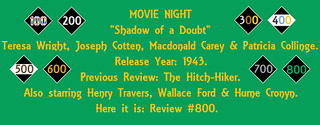
Review #800: Shadow of a Doubt.

Cast
Teresa Wright (Charlotte "Charlie" Newton), Joseph Cotten (Charles "Charlie" Oakley), Macdonald Carey (Detective Jack Graham), Patricia Collinge (Emma Newton), Henry Travers (Joseph Newton), Wallace Ford (Detective Fred Saunders), Hume Cronyn (Herbie Hawkins), and Edna May Wonacott (Ann Newton) Directed by Alfred Hitchcock (#219 - Rope, #223 - North by Northwest, #446 - Spellbound, #447 - Psycho, #450 - Vertigo, #455 - Rear Window, and #553 - Strangers on a Train)

Review
Shadow of a Doubt benefits a great deal from being so tightly wound with suspense and thrills that never let up from beginning to end, the hallmark of a great film noir. Cotten is the first one introduced on screen, and whenever he appears he certainly has an alluring, likable charm, making for such a brilliant villain; when he lets out his other side (such as when he compares rich widows to fat wheezing animals) sneak onto the surface, it certainly makes for making this character very definable and very effective. Wright does a fine job as well, making for a great lead in that she has depth to her, not just being someone who happens to play onto all of these events; she has her struggles and her doubts about someone near to her, and it is all easy to relate and thus makes her character well defined. When she finally discovers the truth, it's a great scene because it finally culminates the clues sprinkled in beforehand (the inscription of the ring, ripping out a page of the paper, etc.), and the movie soon shifts into a game between the two Charlies. Wright and Carey share a good (if not extremely quick) rapport as well. The supporting cast is well done, doing their purpose and roles nicely, because they fit the movie well, being neither too distracting nor unhelpful to the plot. The final scene between the two of them is excellent, being a quick and effective climax that seals the movie neatly. Hitchcock described it as his favorite film, and it's evident that this really is one of his best films.

With that, 800 reviews have been written by yours truly in 1,979 days from December 20, 2010 to the present day. I am proud to have done this for over 5 years, and I am glad to have broadcast these reviews to all of you, wherever you are. I hope you enjoy this review, along with the previous and future installments of this show.

Overall, I give it 10 out of 10 stars.

April 21, 2015

Movie Night: The Third Man.


Review #703: The Third Man.

Cast
Joseph Cotten (Holly Martins), Alida Valli (Anna Schmidt), Orson Welles (Harry Lime), Trevor Howard (Major Calloway), Bernard Lee (Sergeant Paine), Wilfrid Hyde-White (Crabbin), Erich Ponto (Dr. Winkel), and Ernst Deutsch (Baron Kurtz) Directed by Carol Reed.

Review
It's hard to put into words why this is a fine movie, but one of the main reasons is the fact the movie manages to be consistent in terms of its production. It never seems to stray from its suspenseful roots while also managing to have a good atmosphere around it as well. And yes, the zither music is the cornerstone of the unique strangeness that is this movie. Cotten and Valli are alright, and the ending with the two is what it is: an ending. Welles is only in the movie for the second half, but he sure makes up for it by just having a commanding presence while on screen, which all starts with how we first see him, which is his face, illuminated by a window light, as the movie segues into a chase that is pretty fun to watch. The scene at the end in the sewers is riveting to watch, especially when Lime gets his fingers out of the gate. That shot is just really excellent. The zither music is...certainly different from what film noirs had, and I don't think I've ever watched a movie with zither, so in a way the music is fine with me. The film is shot nicely, and the dutch angles work well with the tone the movie is going for, helping to make a good mystery.

Overall, I give it 9 out of 10 stars.

February 27, 2014

Movie Night: The Oscar.


Review #549: The Oscar.

Cast
Stephen Boyd (Frankie Fane), Elke Sommer (Kay Bergdahl), Milton Berle (Alfred Kapstetter), Eleanor Parker (Sophie Cantaro), Joseph Cotten (Kenneth H. Regan), Jill St. John (Laurel Scott), Tony Bennett (Kelly), Edie Adams (Trina Yale), and Ernest Borgnine (Barney Yale) Directed by Russell Rouse.

Review
In honor of the 86th Academy Awards this Sunday, I decided to review a movie with many stars (some of which who won Oscars before this movie), many cameos...and a big ego. The movie is billed as a drama, when it really is an unintentional comedy that goes so over the top in trying to be a drama, that it becomes laughable. The main problem of the movie is the unlikable characters. Aside from the main character, there are no characters to root for, none to actually feel for nor care about, and while it could be argued that there are films with unlikable characters that are actually good, this is not one of them. This is a movie that decays from beginning to end, a movie that tries to disguise its faults with cameos, basically trying to plug a hole with a band-aid. Tony Bennett is bad (one might say inept is a better term, but let's be fair, this was his film debut and consequently his only dramatic role), but with the lines (Example: "I was running out of numbers! He used 'em like Kleenex! Once, and threw 'em away!") he has to say, I can't blame him. The movie is bloated in length, self-indulgent in style, and an overall mess that almost is so bad, it's good, until it goes back into so bad, it's bad. I'd stick to the "The Nobel" by SCTV instead. Whatever you may think of the Oscars, this is a definite skip it.

Overall, I give it 3 out of 10 stars.

September 13, 2013

Movie Night: Soylent Green.


Review #453: Soylent Green.

Cast
Charlton Heston (Thorn), Leigh Taylor-Young (Shirl), Chuck Connors (Fielding), Edward G. Robinson (Sol Roth), Joseph Cotten (Simonson), Brock Peters (Hatcher), Paula Kelly (Martha), and Stephen Young (Gilbert) Directed by Richard Fleischer.

Review
Soylent Green has been considered as a film to be reviewed in the past, and I do vaguely remember having a chance to seeing it right around last year, but I decided to take a good night sleep instead. So...After feeling a bit under the weather, carrying a death wish and not wanting to do a lame pun by reviewing a Friday the 13th film on the most over hyped superstitious day, I decided to watch Soylent Green. The film was adapted from the novel Make Room! Make Room! by Harry Harrison, who died just last year. This film has probably one of the more notable last lines which essentially gives the film new spin, but even still this doesn't validate all of the film. Heston is fine and Taylor-Young is okay, but the main actor that I seem to connect with is Edward G. Robinson, in his final film role, with his last scene of his last movie being both sad and ironic in approach. He does a good, if not great film, even if he isn't in the film too much. This feels like it could've been a Twilight Zone episode, especially with the twist ending and such. The future is grim bleak, and looks more like 1973 than 2022 at times. It's an okay film, highlighted with a fair twist and one or two great scenes, it's an alright science fiction film for the most part, just take it for what its worth.

Overall, I give it 7 out of 10 stars.

July 20, 2012

Movie Night: Citizen Kane.


Review #200: Citizen Kane.

Cast
Orson Welles (Charles Foster Kane), William Alland (Jerry Thompson), Dorothy Comingore (Susan Alexander Kane), Joseph Cotten (Jedediah Leland), George Coulouris (Walter Parks Thatcher), Everett Sloane (Mr. Bernstein), Ruth Warrick (Emily Monroe Norton Kane), Agnes Moorehead (Mary Kane), Ray Collins (Jim W. Gettys), and Paul Stewart (Raymond) Directed by Orson Welles.

Review
This film feels like a detective story, as you are invested into the life of the man known as Kane. The acting is great, with Welles being the main standout (As it should be) This was his first film that he directed, and this is his more remembered (More so then The Magnificent Ambersons) The film grows on you, it turns from seeing a young, grand Kane to the end, where he is alone, old, in his grand palace, Xanadu. The screenplay is great as well. There aren't many effects in this film, but when they are apparent, they're good. My favorite is the rise of the theater along with the shot of the many Kanes walking in his palace. The ending is just great, giving you a twist that hasn't really been done ever since. It has been 71 years since this film was released, and it is still one of, if not the greatest. For people who want to learn how to make films, it is a grand tool for that department. It may not have been respected as it is today back in 1941, but now it is respected as one of the greatest films of our time. And that ends the 200th Review. Thank you for reading, commenting, and just being there for Movie Night. There's still more to come.

Overall, I give it 10 out of 10 stars.