Showing posts with label William Campbell. Show all posts

December 31, 2024

Hush...Hush, Sweet Charlotte.

Review #2331: Hush...Hush, Sweet Charlotte.

Cast: 
Bette Davis (Charlotte Hollis), Olivia de Havilland (Miriam Deering), Joseph Cotten (Doctor Drew Bayliss), Agnes Moorehead (Velma Cruther), Cecil Kellaway (Harry Willis), Mary Astor (Jewel Mayhew), Victor Buono (Big Sam Hollis), Wesley Addy (Sheriff Luke Standish), William Campbell (Paul Merchand), and Bruce Dern (John Mayhew) Produced and Directed by Robert Aldrich (#105 - What Ever Happened to Baby Jane?, #778 - The Longest Yard, #1014 - The Dirty Dozen#1389 - Kiss Me Deadly)

Review: 
If you remember, What Ever Happened to Baby Jane? (1962) was a hit with audiences, so naturally one might want to capture on that success and make a quick follow-up. Robert Aldrich decided to use an unpublished short story written by Henry Farrell called "What Ever Happened to Cousin Charlotte?". Lukas Heller, who had adapted Farrell's Baby Jane novel, would write the screenplay with Farrell (incidentally, Farrell wrote one other screenplay with What's the Matter with Helen? [1971]). Of course, he ran into a small problem: Joan Crawford and Bette Davis did not really want to work with each other again. Crawford (as cast in a role that wasn't exactly a role to chew on when compared to Davis, who had influenced the title change) wound up in the hospital with a respiratory ailment, but Aldrich was skeptical enough to actually hire a P.I. to track her. Incidentally, Crawford happened to star in a different type of psychological horror movie in 1964 with Strait-Jacket (both movies feature a person spooked by a memory of head-rolling death that may or may not be coming back to haunt them back home). At any rate, demands by the insurance company led him to either trash the movie or fire Crawford, for which Alrich went with the latter decision in August of 1964. After a handful of actresses rejected Aldrich's offers (such as Vivien Leigh), he eventually replaced her with a good friend of Davis with Olivia de Havilland. Others did return to be involved with the film from Jane such as editor Michael Luciano and composer Frank De Vol to go along with appearances by Victor Buono and Wesley Addy. While not quite as popular as the aforementioned Aldrich film, the movie was a relative success with audiences when it first came out in late 1964 and even received a few award nominations (in interviews, Aldrich liked making the movie just fine, although he had wished he could've spread out the time in making two similar films with Baby Jane and Charlotte for "my personal taste" while also arguing that Davis gave a better performance in the latter). In 1969, Aldrich produced What Ever Happened to Aunt Alice?, which while not related to Charlotte or Baby Jane is at least interesting for being about an aging old woman (played by Geraldine Page) dealing with murder and mayhem.

Creepy and creaky with a runtime at 133 minutes, this is the kind of movie that plays right at home for those who like drawn out thrillers (it reminds me to consider Les Diaboliques [1955], incidentally), albeit ones that play with bits of gore here and there. One particularly has some fun with the opening sequence (which features the ever-effective Buono to go along with a young Dern getting to be a part of, well, head-rolling) to draw out the scenarios of Southern Gothic mayhem that does eventually circle back to what it believes will be fun turns of the screw. Of course, it helps to have an actress like Davis at the helm to give the whole thing a sense of interested dignity in making this more than just goofy hysterics (hey, we don't judge anyway, particularly since  there are people who thought Baby Jane had some sort of camp aspect to it, as if scene-chewery isn't merely just part of just making some thrillers). Her entrapment in the past for the character is handled with the usual Davis standard of approaching the role with straight-to-the-point grace, managing to handle the tightrope of not merely being consumed or embarrassed by the macabre aspects. She plays the great creature that comes with a psyche that can only see things through the prism of the place that might as well be a mark on her soul, one that traps her soul that can be seen even when she is brandishing a shotgun (as seen early in the movie). de Havilland apparently wasn't too keen on making the movie but elected to do it because of the desire by Davis to work with her, which she did with relative success (after this, she appeared in five further films over the next 15 years to go along with a few television appearances prior to her death in 2020 at the age of 104). But she plays it as it if was a tight-rope to glitter in facades just as interesting as the one presented by what one would assume is just a nut (maybe it's a spoiler to say to beware of nice-presenting strangers), and it goes just as well with Cotten (incidentally, he also happened to play a key role in a movie about a woman possibly being on the nutty side with 1944's Gaslight), who has that conniving nicety to play the part one needs to play in triangular mayhem with composure to make it stick. Of course, Moorehead inspires a few quizzical in amusement that lends support to both the unravelling curiosity along with generally being warm to follow in terms of devotion with an accent to match (hey, the accents are fine for me). Of course, Kellaway is the civil one for enjoyment on the level of a usual character actor that could just inhabit a role with a few choice sentences. Undeniably, the movie is so worthwhile to see in all of the shadows and angles (as shot by Joseph Biroc), which is gorgeously appropriate when it comes to crafting a tawdry tale (complete with carefully composed angles for such a suitable set (which come to a head in one eerie scene) with game actors and at least one rug-pull moment that will surely make a worthy dark joke. Sure, the movie wraps its strings quite a few times around itself to make a knot, but the game is worth playing nonetheless. Aldrich was a craftsman director worth following along with in his attempts at chasing the audience to entertain with whatever he felt like doing at the time. As such, there is a few good moments in suspense to justify a watch for those who love seeing a few familiar actors play along in Gothic strangeness for lively execution that endures after six decades because of the commitment behind it.

Overall, I give it 8 out of 10 stars.
167 reviews later, here we are at yet another New Year's Eve. Sure, last year was a bit busier, but October 2024 was a month to be proud of regardless. Since 2011, we've managed to review a movie on December 31st a total of 17 times, with only 2015 and 2017 being exceptions, and it was nice to try a double-header once again to try and top how things went from last year.

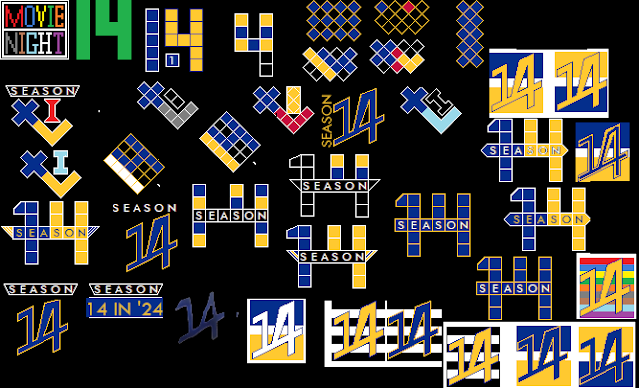
As a treat, I'd like to close off Season 14 by showing off a few concept ideas I had come up with MS Paint before settling on the final format in what accompanied each review in 2024. We shall see what Season XV brings in 2025. It will be a short wait for the next review.

March 18, 2021

Blood Bath.

Review #1654: Blood Bath.

Cast:
William Campbell (Antonio Sordi), Karl Schanzer (Max), Lori Saunders (Dorian / Meliza), Sandra Knight (Donna Allen), Marissa Mathes (Daisy Allen), Sid Haig (The Tall Beatnik), Jonathan Haze (A Beatnik), Fred Thompson (Another Beatnik), Biff Elliot (Cafe Manager), and David Ackles (Carousel Operator) Written and Directed by Jack Hill and Stephanie Rothman.

Review:
What we have here is an interesting tale of two directors, each in their own beginnings of filmmaking. Born in New Jersey but raised in California, Stephanie Rothman did study in sociology with the University of California (Berkeley), but her focus to film came with a viewing of The Seventh Seal (1957). She subsequently did study with the University of Southern California in filmmaking, and she would earn a fellowship by the Directors Guild of America with her student film directing. She was hired by Roger Corman in 1964 to work as his assistant, and she would do a variety of tasks on films that could range from writing new scenes to final cut edits that had to be done on a set time and budget. Corman was ultimately the first and only mentor she would have when it came to filmmaking. Rothman would direct her first solo effort with It's a Bikini World (1967, although shot two years earlier) and follow it up with five further films in the next few years; her most noted film was The Student Nurses (1970), which ended up inspiring New World Pictures to make subsequent efforts within depicting nurses. Rothman's career stalled in 1974. Although she tried to find work within television and script treatments with her husband, no sales resulted from these efforts (her work in exploitation, which gave her a chance to direct, ended up as a stigma against her when trying to do work away from it). A decade of languishing misses and rejection of going back to exploitation led to her retirement, although she did find work to live on within real estate investment. On the other side, California native Jack Hill started an interest in film within study at UCLA's film school. One of his mentors would be Dorothy Arzner, and one of his classmates was Francis Ford Coppola, incidentally. Hill did a variety of side-work in his rise to the industry with Roger Corman that ranged from editing to contribution within writing/directing, such as shooting a 20-minute prologue to a TV version of The Wasp Woman (1959) or doing re-writes/direction for The Terror (1963). Hill made his formal directing debut with Mondo Keyhole (1966), which he co-directed with John Lamb. Ultimately, Hill would make fifteen films over the course of sixteen years, which ranged from horror with films like Spider Baby to lesser-known works such as The Incredible Invasion (1971, the last of four that Hill directed the US sequences in USA-Mexico productions that all had Boris Karloff as star before his death) and blaxploitation such as Coffy (1973).

Okay, history time. It all started with a film that was slated to be released in Yugoslavia that was named Operacija Ticijan [Operation Titian] (1963), starring William Campbell, Rade Markovic, and Patrick Magee. It was a thriller film involving a stolen painting, and Roger Corman (on vacation in Europe at the time) ended up being a silent partner in the hopes that he could acquire it and Americanize the feature for release later. Francis Ford Coppola was behind script supervision, interestingly enough. However, the final result was something not quite suitable for the drive-in circuit. He commissioned a re-cut and re-scored edit, which was known as Portrait in Terror. Somehow, it did not satisfy Corman, although a re-edited version of that cut would find its way into television; enter Hill, who was tasked to take the footage and write/shoot new material to go on top of what could be used with Campbell in tow (who reportedly got a nice check for his services, which angered Corman and makes me smirk a little), which turned a spy thriller into a horror film. Somehow, this version (known as Blood Bath) was still not suitable enough for Corman. Two years later, Corman wanted to try again, so he hired Rothman to make her own edits in the story while shooting new footage. So now a film that had a killer artist was changed to a killer artist vampire. To add on to this, Campbell did not participate in the re-shoots, so now Rothman had a film with a vampire lead that would have to re-cast its main lead for the vampire scenes (an actor that has not been identified). Corman at last found something worth releasing despite a film with two directors/writers that never even met and they all lived happily...nope, the story isn't over. There is yet one more version of this film that is called Track of the Vampire, which included just a little more footage to play on television (Rothman/Hill's film lasted 69 minutes). Funny enough, you probably wouldn't even know Corman's fingerprints are there at all, because he doesn't even have an on-screen credit. Rothman would later call it a "mish-mosh", while Hill thought it was "totally ruined" by the changes made to his original cut.

So...we have a Yugoslavian film that got edited / re-shot into two television films AND two feature films, and the one that we are focusing on today is the one with Rothman & Hill on the credit (strangely enough, the one cut entirely by Hill is missing, but all the other ones are there). If one intends to watch the film, the best version to watch it would be a recent release that includes a video essay by Tim Lucas that includes detail of the whole saga of what became Blood Bath with interviews that likely make for an interesting hour to listen to (a full detail also is found with a series of articles done in Video Watchdog). Of course I forgot to mention that in this portrait of a killer artist, there are also beatniks included within the process, so one really seems to be in for a familiar rendition of A Bucket of Blood. Honestly, the beatnik stuff seemed better the first time around, what with its rendition of "beatnik slang" alongside its legend about vampire artists; my favorite head-slapping moment is someone mentioning to Knight's character about a tower and the legend having "peculiar things" happening before telling them to find it for themselves because they have their own problems (that's one way to inspire someone to read up on vampires and say exposition). Hill definitely had more of the prints involved when it comes to matching his horror type over Rothman's more conscious style in women's films (although both obviously were cut on the cloth of cheap filmmaking). Trying to guess who made what can be a doozy, but just know that the film probably didn't make any more sense when it was just Hill at the helm...of shooting/re-writes - the fact that it is only an hour long might come from the fact that the seams would probably have snapped if one tried to put more logic if it lasted longer than that. In other words, the only thing to say is that the history behind its making is far more efficient than the actual result - a mess. An amusing mess with curious moments, but a mess. Campbell is a capable guy, but he can only do so much with a role that is bargain-bin killer at best, and the fact that there is a different actor in the terror scenes dilutes credibility in the same way one would see in a creature feature where someone wears a weird costume with a lack of time to act (so The Man from Planet X, but not as good). It all goes on how one views the death scenes, which can range from a decent sequence involving a friendly conversation leading to a cleaver...to someone being chased into a pool and drowned (for some reason). The fact that two of the actresses in the film look similar to each other at any rate makes this an even sillier affair. The other actors act as one could expect from patchwork, which results in distinct levels of mediocrity, with the beatnik aspects having that middling feeling of semi-seriousness that one could only bear in irony drenched in insomnia. At least one could give credit to folks like Haig (who had starred in one of Hill's short films) for not wilting like a confused cat (despite having a conflict of timing that means there are scenes with/without a beard). Saunders is okay, but the focus is technically more on Knight before we are baited and switched on who the focus is (not that it matters anyway, since one can barely make head or tails about who or what matters in the first place in plot). Schanzer is the bare minimum for folks to focus on, seeming like an abstract of a lead hero than anything. For a film with a bloody title, the count of four is probably more about what could be salvaged than any real sense of terror - it is a jumble, where the vampire twist borders on the idea that you the viewer are going to buy into a deranged descendant of a vampire that happens to change his face before turning them into wax for art...which then turn on him for the climax. Rothman and Hill's assembly of footage into what was one film into four others is a curious tale, but for a movie it is easily too average for its own good. At least Rothman and Hill can each say they went on to better things in filmmaking.

Next Time: On the shortlist a few months ago, now seems like a good time to reach out for Daisies [Sedmikrásky] (1966).

Overall, I give it 6 out of 10 stars.

June 13, 2014

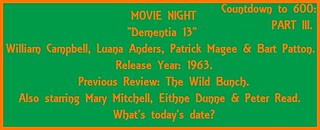
Movie Night: Dementia 13.


Review #592: Dementia 13.

Cast
William Campbell (Richard Haloran), Luana Anders (Louise Haloran), Patrick Magee (Dr. Justin Caleb), Bart Patton (Billy Haloran), Mary Mitchell (Kane), Eithne Dunne (Lady Haloran), and Peter Read (John Haloran) Directed by Francis Ford Coppola.

Review
This was the first mainstream film made by Francis Ford Coppola, and this was made only because Roger Corman had leftover money after making one of his numerous films (The Young Racers, which had some of the cast in this film), and Coppola made the story outline in about a day, with the production in Ireland. Corman did not like how the movie was after Coppola showed him the finished product, and so Corman demanded an additional death scene along with a prologue to be added, though the version I watched lacks the prologue. The movie has an eerie Gothic feel, with the castle being the backdrop. The plot is paper thin at times and sometimes odd, but in the end it all comes together to make a pretty well made movie. Coppola knows what he's doing and the cast does a fine job with the material. There aren't many murders, but at least the movie still enjoyable, even if the identity of the killer could be figured out by the halfway point. Take this for what it's worth, especially on this day, Friday the...13th. Yeah...Countdown to 600: 10, 9, 8...

Overall, I give it 7 out of 10 stars.