
May 22, 2026
Star Wars: The Clone Wars.
October 30, 2025
Death Line.
October 24, 2024
The Wicker Man (1973).
April 19, 2024
The Return of the Musketeers.
October 12, 2023
Scars of Dracula.
October 4, 2023
The Mummy (1959).
October 31, 2022
Count Dracula.
September 7, 2021
Airport '77.

August 30, 2021
The Stupids.
November 4, 2020
Dracula A.D. 1972.
Supposedly the film took inspiration from an actual media case involving supposed vampires that occurred in London in the late 1960s that involved graveyard desecration and supposed mysterious figures being sighted (which naturally involved "vampire hunters" that occurred in Highgate Cemetery. Sure, "vampire hunters" and figures seen in the dark near the graves seem like an apt inspiration when it comes to Dracula, but it doesn't do any favors in the eyeroll of the skeptic with horror, that much is true (one detail of the Highgate sensation involved hunters that were also supposed to have a "magic duel" with each other, I kid you not). The film was written by Don Houghton, who you might recognize from his work on television programs such as Doctor Who (which he wrote two serials from 1970-71), and he would also write the following two films of the Dracula series. Again, the continuity is up to the viewer to pick and poke with, since there are only occasionally dates referred to in these films anyway (the original Dracula was apparently set in 1885, while this film depicts a final fight between Van Helsing and Dracula in 1872, and if you go by Dracula Has Risen from the Grave (1968, #860), that was set in the early 20th century - oh, and Van Helsing's first name in the original was- never mind, I give up). So yes, the main setting is indeed with swinging hippies in 1972 (i.e. padding) to wash away a charming little start with Cushing and Lee before Cushing is back again at minute 20 (Lee comes back 15 minutes after that). Oh, right, I forgot, there's a bunch of swinging 70s characters, which I guess is supposed to be more fresh than having the usual 19th century British folks, no doubt inspired by the success of earlier 70s vampire films like Count Yorga, Vampire (1970). Is there any more semblance of "plot" than before? Nope, and it only goes to show that just having Lee and Cushing back can't override the sense of boredom that comes from hippies and a Dracula that only comes around to lurk a few feet, never really experiencing the swinging locale besides having people being brought in to scream. Jeez, the blood being poured into the chalice (with ashes from 1872) can't even bring the fright level up. All that is happening is padding but with "hip" stuff, and Lee and Cushing literally only show up together again with five minutes left of a 96 minute feature. They are both at their usual level of curiosity, but they clearly have had better scripts to go along with (after all, they starred in a far better film with Horror Express the same year as this one). Beacham is okay in trying to draw new blood on the catacombs of familiarity, which works to a point in some tension while being quite bland in other respects. Neame is quite silly here, a laughable stooge of dark arts that is at his most bewildering in the fight between him and Cushing - fear the might that comes from a rising sun and "moveable mirrors" to go with water to end it all - oh the horror (there is even a scene that does the whole Alucard = Dracula bit...older fans might recognize this as a familiar bit from Son of Dracula (1943), of all things). At least Munro gets to have a scream scene to note. As a whole, it's a bland movie, reminding me of the "How do you do, fellow kids?" meme that shows the age of the Hammer films even with attempts to move from Victorian era making to 1970s stuff that shows plaque on the fangs of Dracula more than anything. To be fair, there are supporters of the film, with Tim Burton even once calling it one of his favorite films. If one finds something to like or found it to be one of the blocks that built scares as a kid, all power to you. It's a jumbled mess, but it is likely one you could find some amusement with just along the line of the other Dracula films from Hammer - for better or worse.
Next Time: Day of the Dead.
Overall, I give it 6 out of 10 stars.
October 7, 2020
Hugo.
August 1, 2020
Gremlins 2: The New Batch.
Review #1494: Gremlins 2: The New Batch.Cast:
Zach Galligan (Billy Peltzer), Phoebe Cates (Kate Beringer), John Glover (Daniel Clamp), Robert Prosky (Grandpa Fred), Robert Picardo (Forster, chief of security), Christopher Lee (Doctor Cushing Catheter), Haviland Morris (Marla Bloodstone), Dick Miller (Murray Futterman), Jackie Joseph (Sheila Futterman), Gedde Watanabe (Mr. Katsuji), and Keye Luke (Mr. Wing), with Howie Mandel (Gizmo), Tony Randall (Brain Gremlin), and Frank Welker (Mohawk, Other Gremlins) Directed by Joe Dante (#007 - Looney Tunes: Back in Action, #096 - Gremlins, and #097 - Small Soldiers)
Review:
"It's the one time someone came to me and said: 'We want this movie and we don't care what it is. Do whatever you want, just give it to us by this date."
When it comes to underappreciated directors, Joe Dante certainly deserves consideration. He grew up with an interest in cartoons alongside watching matinee films as a youth. While a graduate of the Philadelphia College of Art, it was Roger Corman who Dante honed his craft into becoming a filmmaker, initially starting out in the trailer-cutting department at New World Pictures. He made his debut with Hollywood Boulevard (1976), co-directing with Allan Arkush along with editing the film. His first minor triumph was Piranha (1978), and The Howling (1981) helped get his foot in the door with Warner Bros. to make Gremlins (1984). The original film is a triumph of comedy and horror, dark and entertaining that had attracted attention for their effects (and of course, complaints from folks who managed to be fooled by the Christmas setting and critics of violence that don't know any better and are rightfully made fun of here) along with being a key force in the creation of the PG-13 rating. It is entirely possible that this is a sequel that was just a little too late to the party. It took six years for a sequel to Gremlins to arrive into theaters and its director Joe Dante had to be convinced to even do another film in the first place, and he was granted creative control and a bigger budget. Charlie Haas would take over in writing duty (the original had been done by Chris Columbus), who moved the action to New York City with satirical elements all throughout the film, such as the advent of cable television (most notably with Ted Turner) and sequels in general that was more cartoonish than dark, with Dante describing it as one of his most personal films.
It's a shame that this wasn't too successful on release, because I enjoyed it just as much as the original Gremlins. The quality is just about even here, replacing its dark sentiment for cartoonish anarchy that manage to resonate just as much in amusement. It touches upon elements of the original without being smothered by expectations or becoming too much of an effects show, and it does so without becoming dated. It does what one could want for someone with a clear interest in having a good time at the movies in a similar vein to someone like William Castle or even in cartoons with Chuck Jones (who provided the animation for the opening/closing titles). Galligan returns alongside Cates, and each prove just fine in providing continuity and some small moments of levity among themselves and some sort of Mogwai mayhem. Of course the real focus is on Glover, wrapped in spry curiosity that is very much in his element with a bit of camp enjoyment. Prosky, imitating Al Lewis' portryal of another famous horror Grandpa that hosted a horror TV segment, does just fine with mixing camp and care that does lend itself to some quick smiles. Picardo does fine with smarmy chuckles, but the true curiosity ineviably turns to Lee, with that solumn voice going just right with the cliches required for some momentary smiles. Miller and Joseph also return for a quick turn around with the creatures, while Morris and the Mogwai voices round out the cast just fine. Like before, there are quite a handful of cameos lurking around, most notably with Leonard Maltin being dragged away by unsatisfied viewer gremlins. The effects are always lurking in one's mind, and Rick Baker does a tremendous job with delivering some distinct creatures (with a mix of puppetry like before and also mechanical work and stop motion) that get to do a bit more madcap action, such as a bat gremlin for example. The plot threads verge a bit familar at times with its structure, but it makes up for it with some interesting tricks of offbeat humor (such as having the film be stopped and then re-started) that goes in the right direction to make a fun time worthy of further inspection as a quality sequel and an interesting film to highlight for the start of the 1990s.
Overall, I give it 8 out of 10 stars.
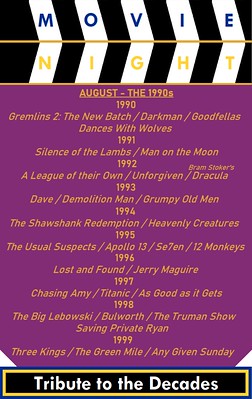
And now, the schedule for this month, a mix of familiar and new faces on and behind the camera as one approaches the end of the millennium.

May 19, 2020
Dr. Terror's House of Horrors.
Review #1419: Dr. Terror's House of Horrors.Cast:
Peter Cushing (Dr. Schreck)
Review:
"As far back as I can ever remember, without really knowing it I wanted to be an actor. I was always dressing up, you know, playing pretend, putting on mothers hats and things. I'm sure Freud would have something to say about that. It was very much in my blood."
"Making films has never just been a job to me, it is my life. I have some interests outside of acting - I sing and I've written books, for instance - but acting is what keeps me going, it's what I do, it gives life purpose."
Horror, particularly horror in a decade of expanding tastes like the 1960s, can come in any kind of package. Anthology is a particular interesting manner in telling stories revolving around something creepy that can be linked together by either a theme, a character or a framing device. There have been plenty of anthology films in numerous genres, but one key anthology film that helped inspire this was Dead of Night (1945), a British production that producer Milton Subotsky liked enough to feel inspired to do his own multi-story film. He had started his work in television, but soon moved to films such as Rock, Rock, Rock (1956) and The City of the Dead (1960), which he produced with Max Rosenberg. In 1962, they would form Amicus Productions, a British company led by the American producers and writer that lasted until 1977. They specialized primarily in horror over the years that would have a share of name actors alongside young and old actors in the cast, particularly when it came to their anthologies. This was the first of seven anthology films they would do over a span of nine years, with those including Torture Garden (1967), The House That Dripped Blood (1970), Asylum (1972), Tales from the Crypt (1972), The Vault of Horror (1973) and From Beyond the Grave (1974). This was filmed in a span of less than three months from Freddie Francis, who had a career of over four decades in both directing and cinematographer that was known for his work on British horror films while winning two Academy Awards for the latter.
Honestly, the parts that are really interesting are the scenes inside the train with Cushing and the main five, since he tries on a beard and an German accent that stand out from the curious others. This isn't surprising to me at this point, because he had a perfectionist and dignified attitude that served him well in six decades of film, stage, television and radio, treating every role with seriousness that he felt his audience would like. One can have a soft spot for British horror when it is done right and Cushing always seems to end up fitting in to most of the right ones. Accompanying him is fellow British actor and friend Lee, who had a career just as versatile and long (nearly seven decades! This includes a singing career before turning 90!) with a distinctive voice that for a change is not playing someone villainous but merely just pompous, which he breezes by without trouble. McCallum and Freeman aren't exactly as well-known in presence (the former being an actor of stage and television and the latter being a disc jockey and radio personality), but they are least serviceable to starting the film with decent leads in their respective stories. Castle, a dancer/singer/comedian comes off with the lesser of the five stories and suffers for it. Sutherland, a Canadian actor doing British roles in film and TV before hitting it big later in this decade, makes for a composed turn in his third career role, fresh in looking for more beyond horror fare.
The segments each have a focus on something you've likely seen in a horror film before, whether that means a supernatural beast or a killer plant/hand or voodoo, and they generally range from average to slightly above average. In this sense, the Lee story involving a hand that follows him around is my personal favorite of the bunch, since it also features Gough for a time (making fun of an art critic, no less) in a segment that has a silly looking effect but enjoyment value regardless. I would say that the werewolf story is a notch below that, having a bit of interest in its coffin hidden in a fake wall that leads to a somewhat played out ending. The vine story also has a silly-looking effect, particularly since it doesn't have much of an ending (regardless of the resolution for the film, which is just as odd), although at least it is nice to see Bernard Lee play his type of authority role and utilize a pipe for safety. The vampire tale is fair, although it probably suffers from having a small time to build a story from the most, complete with the final twist in the knife with its last line (as is the case with the wolf and hand story). The voodoo is the lesser of all the tales (although none are actually terrible), mostly because of how hokey it is in generating actual suspense (copying a tune and getting followed for it, what a twist), but at least none of these tales manage to bore the senses or hold for too long. In the long run, this is a fair package of horror that utilizes its familiar trappings of its genre and stars to useful effect, and it is a serviceable film for its era to pick up on a day for curiosity.
Overall, I give it 7 out of 10 stars.


.png)
