Showing posts with label Bruce Dern. Show all posts

December 31, 2024

Hush...Hush, Sweet Charlotte.

Review #2331: Hush...Hush, Sweet Charlotte.

Cast: 
Bette Davis (Charlotte Hollis), Olivia de Havilland (Miriam Deering), Joseph Cotten (Doctor Drew Bayliss), Agnes Moorehead (Velma Cruther), Cecil Kellaway (Harry Willis), Mary Astor (Jewel Mayhew), Victor Buono (Big Sam Hollis), Wesley Addy (Sheriff Luke Standish), William Campbell (Paul Merchand), and Bruce Dern (John Mayhew) Produced and Directed by Robert Aldrich (#105 - What Ever Happened to Baby Jane?, #778 - The Longest Yard, #1014 - The Dirty Dozen#1389 - Kiss Me Deadly)

Review: 
If you remember, What Ever Happened to Baby Jane? (1962) was a hit with audiences, so naturally one might want to capture on that success and make a quick follow-up. Robert Aldrich decided to use an unpublished short story written by Henry Farrell called "What Ever Happened to Cousin Charlotte?". Lukas Heller, who had adapted Farrell's Baby Jane novel, would write the screenplay with Farrell (incidentally, Farrell wrote one other screenplay with What's the Matter with Helen? [1971]). Of course, he ran into a small problem: Joan Crawford and Bette Davis did not really want to work with each other again. Crawford (as cast in a role that wasn't exactly a role to chew on when compared to Davis, who had influenced the title change) wound up in the hospital with a respiratory ailment, but Aldrich was skeptical enough to actually hire a P.I. to track her. Incidentally, Crawford happened to star in a different type of psychological horror movie in 1964 with Strait-Jacket (both movies feature a person spooked by a memory of head-rolling death that may or may not be coming back to haunt them back home). At any rate, demands by the insurance company led him to either trash the movie or fire Crawford, for which Alrich went with the latter decision in August of 1964. After a handful of actresses rejected Aldrich's offers (such as Vivien Leigh), he eventually replaced her with a good friend of Davis with Olivia de Havilland. Others did return to be involved with the film from Jane such as editor Michael Luciano and composer Frank De Vol to go along with appearances by Victor Buono and Wesley Addy. While not quite as popular as the aforementioned Aldrich film, the movie was a relative success with audiences when it first came out in late 1964 and even received a few award nominations (in interviews, Aldrich liked making the movie just fine, although he had wished he could've spread out the time in making two similar films with Baby Jane and Charlotte for "my personal taste" while also arguing that Davis gave a better performance in the latter). In 1969, Aldrich produced What Ever Happened to Aunt Alice?, which while not related to Charlotte or Baby Jane is at least interesting for being about an aging old woman (played by Geraldine Page) dealing with murder and mayhem.

Creepy and creaky with a runtime at 133 minutes, this is the kind of movie that plays right at home for those who like drawn out thrillers (it reminds me to consider Les Diaboliques [1955], incidentally), albeit ones that play with bits of gore here and there. One particularly has some fun with the opening sequence (which features the ever-effective Buono to go along with a young Dern getting to be a part of, well, head-rolling) to draw out the scenarios of Southern Gothic mayhem that does eventually circle back to what it believes will be fun turns of the screw. Of course, it helps to have an actress like Davis at the helm to give the whole thing a sense of interested dignity in making this more than just goofy hysterics (hey, we don't judge anyway, particularly since  there are people who thought Baby Jane had some sort of camp aspect to it, as if scene-chewery isn't merely just part of just making some thrillers). Her entrapment in the past for the character is handled with the usual Davis standard of approaching the role with straight-to-the-point grace, managing to handle the tightrope of not merely being consumed or embarrassed by the macabre aspects. She plays the great creature that comes with a psyche that can only see things through the prism of the place that might as well be a mark on her soul, one that traps her soul that can be seen even when she is brandishing a shotgun (as seen early in the movie). de Havilland apparently wasn't too keen on making the movie but elected to do it because of the desire by Davis to work with her, which she did with relative success (after this, she appeared in five further films over the next 15 years to go along with a few television appearances prior to her death in 2020 at the age of 104). But she plays it as it if was a tight-rope to glitter in facades just as interesting as the one presented by what one would assume is just a nut (maybe it's a spoiler to say to beware of nice-presenting strangers), and it goes just as well with Cotten (incidentally, he also happened to play a key role in a movie about a woman possibly being on the nutty side with 1944's Gaslight), who has that conniving nicety to play the part one needs to play in triangular mayhem with composure to make it stick. Of course, Moorehead inspires a few quizzical in amusement that lends support to both the unravelling curiosity along with generally being warm to follow in terms of devotion with an accent to match (hey, the accents are fine for me). Of course, Kellaway is the civil one for enjoyment on the level of a usual character actor that could just inhabit a role with a few choice sentences. Undeniably, the movie is so worthwhile to see in all of the shadows and angles (as shot by Joseph Biroc), which is gorgeously appropriate when it comes to crafting a tawdry tale (complete with carefully composed angles for such a suitable set (which come to a head in one eerie scene) with game actors and at least one rug-pull moment that will surely make a worthy dark joke. Sure, the movie wraps its strings quite a few times around itself to make a knot, but the game is worth playing nonetheless. Aldrich was a craftsman director worth following along with in his attempts at chasing the audience to entertain with whatever he felt like doing at the time. As such, there is a few good moments in suspense to justify a watch for those who love seeing a few familiar actors play along in Gothic strangeness for lively execution that endures after six decades because of the commitment behind it.

Overall, I give it 8 out of 10 stars.
167 reviews later, here we are at yet another New Year's Eve. Sure, last year was a bit busier, but October 2024 was a month to be proud of regardless. Since 2011, we've managed to review a movie on December 31st a total of 17 times, with only 2015 and 2017 being exceptions, and it was nice to try a double-header once again to try and top how things went from last year.

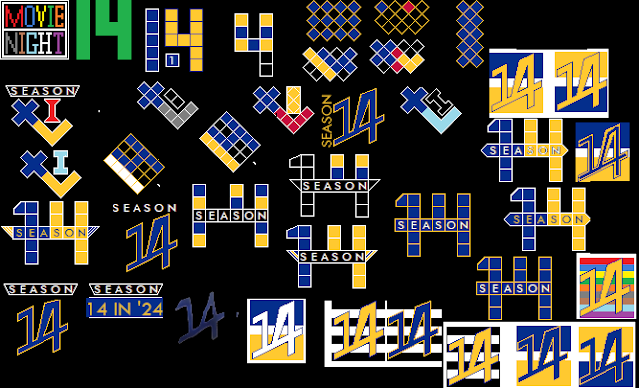
As a treat, I'd like to close off Season 14 by showing off a few concept ideas I had come up with MS Paint before settling on the final format in what accompanied each review in 2024. We shall see what Season XV brings in 2025. It will be a short wait for the next review.

July 3, 2023

The Trip (1967).

Review #2030: The Trip.

Cast: 
Peter Fonda (Paul Groves), Susan Strasberg (Sally Groves), Bruce Dern (John), Dennis Hopper (Max), Salli Sachse (Glenn), Barboura Morris (Flo), Judy Lang (Nadine), Luana Anders (Waitress), and Dick Miller (Cash) Produced and Directed by Roger Corman (#368 The Little Shop of Horrors, #684 - It Conquered the World, #852 - The Terror, #931 - Not of This Earth, #1007 - Attack of the Crab Monsters, #1039 - Five Guns West#1042 - War of the Satellites, #1136 - Gas-s-s-s, #1147 - X: The Man with the X-ray Eyes#1186 A Bucket of Blood, #1423 The Wild Angels, #1425 The St. Valentine's Day Massacre, #1674 - Machine-Gun Kelly, #1684 - Creature from the Haunted Sea, and #1918 - House of Usher)

Review: 
"I wanted the picture not to be a pro-LSD picture and not to be an anti-LSD picture because my trip was very good, I had no bad effects in my trip at all. It was wonderful. Yet I felt I really shouldn’t be accused of proselytizing for LSD, and at the same time I knew people had had bad trips, so I was trying to be neutral, and I had to ask people what had happened on their bad trips, and incorporate some of what they had experienced into it to make it neutral."

Admittedly, when I think of Roger Corman, the words "counterculture trilogy" don't exactly come to mind. Research by others involving films involving so-called "hippies" has labeled The Trip as the second of his films involving the counterculture, with Gas-s-s-s (1970) being thought of as the last of the three and The Wild Angels (1966) being the first. Whatever Corman intended, one thing is clear when it comes to The Trip: it was meant to be quite an interesting experience in line with what Corman usually tried to do with American International Pictures. Hell, he certainly tried to do his own research to get things moving, which first involved reading the work of Timothy Leary, a noted psychologist, author, and advocate for psychedelic drugs which in this case involved lysergic acid diethylamide (LSD), although others would also know Leary for phrases that he came up with, such as "turn on, tune in, drop out". This drug, if you didn't know, was first synthetized in 1938 by Albert Hofmann. I would like to mention that Hofmann (after accidentally finding out the effect of LSD with ingestion years later) argued for LSD as a possible tool for psychiatry within the right place of awareness and safety rather than used for entertainment. So yes, he had plenty to think about the counterculture and their use of something he called "medicine for the soul". As for Corman, he eventually came to the conclusion that reading and asking folks about it was not enough, he had to try LSD for himself. After all of that, Corman, having a good trip, decided to make a film relying on experiments with cinematography and visual elements to carry a film that isn't really about much besides a drug trip. Of course, I can't forget that the film was also written by Jack Nicholson, which came about after Corman had Charles B. Griffith (his writer on previous material) write a couple of drafts, one of which was done as a musical; Nicholson apparently wanted to play a role in the film, but Corman wanted to reuse Dern from the aforementioned Angels film (which he and Fonda both starred in). The film was released less than a month after Corman's one big-budget venture with The St. Valentine's Day Massacre, but The Trip (made on a budget 1/4th the size of the other one) was a major hit for AIP. If you didn't connect the dots already, Fonda and Hopper would star together in a future film involving the road and the counterculture (with Nicholson and Anders in tow) in Easy Rider (1969).

Evidently, the way to go with this film is to turn off one's mind, relax, and float downstream. Regardless of how one feels about the attempt of neutrality, there is something quite, uh, offbeat about how the film goes about in wandering for 82 minutes. Strangely though, I find it far more interesting of the counterculture films that Corman did as compared to Wild Angels or with Gas-s-s-s, probably because the raucous biker experience of "freedom" of the former and the latter's attempt at "post-apocalyptic dark comedy" seem quite hollow compared to the simple goals presented here. It certainly won't be as ridiculous to watch as say, Reefer Madness. Those who find it tedious will have as much justification to say so as the folks who label it as pure cinematic exercise. It all depends on how much patience on has with lingering sequences of a man going through a really weird time that includes fantasy sequences, folks accidentally breaking into people's houses, and musical backdrops involving jazz or organ and horns for a score. With that in mind, Fonda actually does a pretty good job here, a dazed performance that is totally inviting and right for the scenario presented that doesn't seem ripe for exploitation. You get bits and pieces of who he is around and during the trip, and it namely involves vulnerability that one would think about when it comes to one's awareness being tuned into weird putty. Hopper and Dern play the guides on the would-be road of awakening, which is mostly amusing in bits and pieces. The women in the film in Strasberg and Sachse come and go in a rate that suggests discussion over just what they actually mean to Fonda beyond what they look on the surface, but remember that LSD was indeed meant more than just tripping out, so take that in mind. A handful of psychedelic/counterculture films would come and go in the coming months, whether that involved Something Weird (1967), or say, Head (1968), or Skidoo (1968), you get the idea, but The Trip should prove just fine for the curious at heart that like entertaining looks at the experience of doing a trip with useful imagery that is both what you think and don't think would happen if you were the one put in the lead scenario here. And for that, Corman clearly was in his element here in a decent experience.

Overall, I give it 7 out of 10 stars.

May 23, 2020

The Wild Angels.

Review #1423: The Wild Angels.
Cast: 
Peter Fonda (Heavenly Blues), Nancy Sinatra (Mike), Bruce Dern (Joe 'Loser' Kearns), Diane Ladd (Gaysh), Buck Taylor (Dear John), Norman Alden (Medic), Michael J. Pollard (Pigmy), and Frank Maxwell (Funeral preacher) Produced and Directed by Roger Corman (#368 - The Little Shop of Horrors, #684 - It Conquered the World, #852 - The Terror, #931 - Not of This Earth, #1007 - Attack of the Crab Monsters, #1039 - Five Guns West, #1042 - War of the Satellites, #1136 - Gas-s-s-s, #1147 - X: The Man with the X-ray Eyes, and #1186 - A Bucket of Blood)

Review: 
What has been said about Roger Corman that hasn't been said before? He is a trailblazer of independent cinema, one who has directed, wrote, and produced numerous films over in over six decades of work, whether through American International Pictures or through New World Pictures (which he founded) or through various ventures. He has collaborated with several people who have gone on to have careers of their own such as directors Francis Ford Coppola, Jonathan Demme, and Peter Bogdanovich (who served as production assistant and un-credited writer that modified Charles B. Griffith's script). He made films in a variety of genres for studios, whether that meant Westerns, horror, or exploitation features like this. He was inspired to do this film from a photograph in Life magazine that depicted a group of the Hells Angels motorcycle gang on their way to a funeral for a member. It wasn't the first film to depict a motorcycle rampage (popularized by The Wild One (1953) and subsequent exploitations films), but it would attempt to show its gang from the inside, since Corman saw them as "riding free as a modern-day cowboy." (this was of course before they were profiled by Hunter S. Thompson in 1967 and events such as the Altamont disaster). Actual members of the club were utilized for the film, paid $35 a day for cooperation and $25 for use of the bikes. Dern found himself with a role for the film when George Chakiris could not ride a motorcycle (imagine wanting a stunt double for a film about outlaw bikers as a focus), so Fonda went from a supporting role in the Loser character to the main focus.

This is the kind of film that has an aim for freedom with its characters, what with its climatic quote near the end from Fonda about said desire for freedom without trouble from "The Man" and have a good time doing it. The fact that this is said during a funeral only makes it amusing (particularly since it was later sampled for a song). There is a sense of ridiculousness with how it tries to balance its nihilism with a wavering focus and pallid pace at 93 minutes. I suppose this is the best example of a film fitting the project management triangle: It can be good, fast, or cheap, but one can only pick two of those options. In this case, it is evident that the latter two fit this film to a T. One could've made a film with less dialogue and probably come out better for it than what happens here. On the one hand, it is an interesting piece for the late 1960s that shows some promise in the beginning, but ultimately it can't quite live up as anything other than mild exploitation at best, something that aims for riding free but ultimately coming up short of anything really meaningful. Fonda, a different kind of leading man that would become a counterculture figure for the era, pulls off a subdued performance that has a small edge of calm collectedness in leading a band of misfits to whatever point seems necessary, whether that means raising trouble or not. Sinatra, a singer (best known for her hit song "These Boots Are Made for Walkin'" in 1966) and occasional actor, proves to be a quiet calm presence that seems in need of more to do (the same could be said for Ladd). Dern, who would go on to a career of his own with usually villainous supporting roles, is rough but interesting to view in the time he is present, even if his last scene is just him acting dead and being given a cigarette in a ruckus. The others come and go with a line or so, and a lack of conflict (no, arguing with a preacher over how the funeral should be doesn't count) makes things teeter on tediousness, with a dispiriting ending that I suppose is meant to mean something about not having anywhere else to go. Perhaps that is an apt metaphor for an average film that never really seems to go anywhere to begin with. To me, it seems too dated to really rise to something worth checking out, unless one really needs a raucous biker film from way back when or want to see a selection from Roger Corman in his prime decade.

Overall, I give it 6 out of 10 stars.

July 30, 2019

Once Upon a Time in Hollywood.


Review #1251: Once Upon a Time in Hollywood.

Cast: 
Leonardo DiCaprio (Rick Dalton), Brad Pitt (Cliff Booth), Margot Robbie (Sharon Tate), Emile Hirsch (Jay Sebring), Margaret Qualley (Pussycat), Timothy Olyphant (James Stacy), Julia Butters (Trudi Fraser), Austin Butler (Charles "Tex" Watson), Dakota Fanning (Lynette "Squeaky" Fromme), Bruce Dern (George Spahn), Mike Moh (Bruce Lee), Luke Perry (Wayne Maunder), Damian Lewis (Steve McQueen), Al Pacino (Marvin Schwarz), Brenda Vaccaro (Mary Alice Schwarz), Kurt Russell (Randy), Zoë Bell (Janet), and Lorenza Izzo (Francesca Cappucci) Written and Directed by Quentin Tarantino (#638 - Kill Bill: Volume 1, #639 - Kill Bill: Volume 2, #1180 - Reservoir Dogs, and #1218 - Pulp Fiction)

Review: 
It is not a surprise to find myself watching a love letter to a time long since past in terms of movies, particularly since it is a Tarantino movie but also because of the intrigue of seeing such an interesting time like 1969 come to life. It attempts to talk a grand tale of fact and fiction with a cavalcade of actors and images that surely make for an ambitious piece of entertainment. The final result is something that will surely work wonders in terms of design and energy, although it holds itself together with a paste that may very well be described as frantic excess. Tarantino clearly wanted to make a great sprawling tale much in the same vein of other films of the 1960s that has its cake and eats plenty of it in a 161 minute run-time that his fans will probably clamor for (while wondering was left on the cutting floor) while others will probably wonder why it wanders for so long on certain aspects while leaving other parts less covered, with the ending being one of those moments ripe for discussion for quite a while, alongside other moments.

In a sea of actors spread out from substantial to one-scene wonder, DiCaprio and Pitt are game to lead the way in delivering plenty of enthusiasm and charm in respective ways that carry the film steady. DiCaprio in particular shines as a falling star pastiche, where one can see his fading attempts at what was and what could be in the changing of the time. Pitt joins that same kind of road with vigor that rolls right along when all is said and done. Robbie, the last of the main trio, doesn't have as much to say but does make a key impression of warmth and charm whenever we see her, such as when she sees herself in The Wrecking Crew in a theater while enjoying what she sees of her fictional comic relief lead. She plays her time for a part that doesn't fall under complete biopic structure - which can either prove fine or a bit disappointing. Others make their mark, some more than others. Qualley and Butters each make their mark count, conveying plenty of conviction in where they stand in the moment, the former being a marker of descent into the other side of 1969 Hollywood and the latter a young (but aspiring) talent firmly in the system in a changing time. Butler, Fanning and Dern also contribute for a scene with wiry impact, and it is sure is nice to see Russell make his mark from time to time. The actors with one-shot moments in the TV scenes (Olyphant and Perry) do fairly well with representing the time in helping making a show as forgotten as Lancer come to life again. Moh and Lewis are fine if not too particularly important in the grand scheme.

Once it garners itself to setting a conclusion (complete with narration that certainly feels a bit wry when coming from Russell), the film has already garnered enough enticement that you don't really want it to ever come crashing down (to say nothing of the request from Tarantino to avoid spoiling the film before release, which is a bit strange to say in a quasi fact/fiction film). It fights against the dawn of a different kind of Hollywood and the sign of the times itself that surely can resonate with those who seek the resonance that was a decade such as the 1960s without devolving too much into an old man argument. It aspires to have its cake and eat it too, doing plenty of both with no shame. It is a film that certainly will have fans who will find joy with its decisions (such as its visual and musical choices), but it isn't impossible to find aspects that test the grounds of patience if not in the mood for all the roads wanting to be covered by Tarantino. I enjoyed a good chunk of what I saw, and it could either teeter at the high or low end of his directorial efforts when all is said and done, which is a pretty good testament to his craft. After one views a tale like this, they will likely leave their theater with acceptance with what they saw - the times of big stars and big sights like drive-in theaters and the like may not resonate as much as they did before, but there sure is still something to enjoy then as in now when it comes to the movies and showmanship. It is a bittersweet tribute that succeeds more often than not with plenty of charm and entertainment value to go around that surely will endure just as much as the people that came from it did.
Any movie where a bunch of hippies are beaten to hell does tend to win praise from me, too.
Overall, I give it 9 out of 10 stars.

June 5, 2018

Last Man Standing (1996).


Review #1091: Last Man Standing.

Cast: 
Bruce Willis (John Smith), Bruce Dern (Sheriff Ed Galt), William Sanderson (Joe Monday), Christopher Walken (Hickey), David Patrick Kelly (Doyle), Karina Lombard (Felina), Ned Eisenberg (Fredo Strozzi), Michael Imperioli (Giorgio Carmonte), R. D. Call (Jack McCool), Alexandra Powers (Lucy Kolinski), Ken Jenkins (Capt. Tom Pickett), and Ted Markland (Deputy Bob) Directed by Walter Hill (#1072 - 48 Hrs)

Review: 
The film is a remake of Yojimbo (1961), directed by Akira Kurosawa, with the screenplay done by Ryūzō Kikushima and Kurosawa. It featured Toshiro Mifune as a rōnin (a samurai with no master) that arrived in a town with competing crime lords vying for supremacy that was set in 1860 in Japan. An unofficial and unlicensed remake followed in 1964 with Sergio Leone's A Fistful of Dollars, but Last Man Standing is an official remake that gives Kukushima and Kurosawa credit for the story, with Hill providing the screenplay. With all of that information, how does this movie manage to be a dreary failure? It certainly is consistent with its tone of dry entertainment, in that it has its share of brutal action sequences and a look from Lloyd Ahern II that will certainly test the eyes of how many times the color orange dominates the screens - for better or worse. Even comparing its style to the film noirs that it seems to emulate goes against the movie's favor, since it isn't as alluring as those. It isn't so much that this is a boring thing to watch, it's just that it is a disappointing thing to see play out, with one-note characters and an execution that likes to throw its situations all over the place but not have them be readily interesting. Willis delivers a performance that seems to match the film in that it shifts between mild grinning and stale wanderer type. He may seem best when doing action sequences, but he doesn't seem to feel too comfortable in making this character seem less than stale. Dern is fairly decent, although he doesn't have too much time on screen. It is nice to see Walken when he's on screen, but there is something about the character (whether due to him or the writing) that doesn't really make him as menacing as you'd probably expect, which makes the final showdown seem less interesting than it probably should've been. The other cast members come and go with their performances, for better or worse. That's not to say that the movie would've been better if it had comedy bits, but there is certainly something lacking in terms of excitement, where one can't really revel in its attempts at trying to be compelling. In its 101 minute run-time, this isn't a terribly long slog to go through, but even as a bad film it isn't fun to pick at, more of a thing to just look at and ponder in its mundane nature.

Overall, I give it 5 out of 10 stars.

August 31, 2014

Movie Night: Nebraska.


Review #635: Nebraska.

Cast
Bruce Dern (Woody Grant), Will Forte (David Grant), June Squibb (Kate Grant), Bob Odenkirk (Ross Grant), Stacy Keach (Ed Pegram), Mary Louise Wilson (Aunt Martha), Missy Doty (Noel), and Angela McEwan (Pegy Nagy) Directed by Alexander Payne.

Review
This is a movie that manages to be both heartfelt and sometimes hilarious. This movie belongs to Bruce Dern, he manages to make every moment count, and he's even fun to watch when he's not talking, such as the denture scene, though my favorite scene is the Mount Rushmore scene because watching Dern's character describe it as a bunch of rocks that look unfinished is simply beautiful. The black and while photography makes the movie look crisp and gives the movie a tone of its own, which matches the dreariness of the characters and the landscape to an extent, but the movie is still interesting to look at. The characters are interesting to watch, living in a small state without much to do, but they all have their unique flair to it. Forte is actually a pretty good lead, and he works extremely well with Dern, that's what makes the movie work, the relationship of the two characters. The movie isn't just a trip to Nebraska, it's a chance to see layers of Dern's character get revealed, the good and bad, making for an emotional, if not somewhat funny film. The graveyard scene actually does provoke some laughs, I guess it because of June Squibb, who is essentially the only sane person in the movie, next to Forte. The movie is somewhat soothing in a way, but it is at heart charming, and a good way to spend your time, especially to see Bruce Dern.

Overall, I give it 10 out of 10 stars.

January 4, 2014

Movie Night: Hang 'Em High.


Review #518: Hang 'Em High.

Cast
Clint Eastwood (Jed Cooper), Inger Stevens (Rachel Warren), Ed Begley (Captain Wilson), Pat Hingle (Judge Adam Fenton), Ben Johnson (Dave Bliss), Charles McGraw (Ray Calhoun), Ruth White (Peaches Sophie), Bruce Dern (Miller), Alan Hale Jr. (Matt Stone), Arlene Golonka (Jennifer), James Westerfield (Prisoner), and Dennis Hopper (The Prophet) Directed by Ted Post.

Review
I had reviewed the Dollars Trilogy that starred Clint Eastwood and directed by Sergio Leone (#015 - The Good, the Bad and the Ugly, #017 - A Fistful of Dollars, #019 - For a Few Dollars More), and the success of the trilogy led to this film, one that Eastwood's business manager (Irving Leonard) described as a cross between Rawhide and Leone's westerns, and I can see why. But how is the film? It's okay. Eastwood is raw but intriguing, and Stevens delivers a contrast despite not having too many scenes, only near the end does she get her chance to shine. Begley and Hingle are good, but it seems the one who is really memorable despite having once scene is Dennis Hopper, he sticks out and rambles, and he certainly made an impression on me for his one scene. The film is raw at times and somewhat interesting and while it may take its time, it's an alright film and it is a film you could watch if you're still reeling from Leone's masterful Trilogy, take this for what it's worth.

Overall, I give it 8 out of 10 stars.

February 6, 2012

Movie Night: Small Soldiers.

Review #097: Small Soldiers.

Cast
Gregory Smith (Alan Abernathy), Frank Langella (Archer), Kirsten Dunst (Christy Fimple), Tommy Lee Jones (Chip Hazard), Phil Hartman (Phil Fimple), George Kennedy (Brick Bazooka), Jim Brown (Butch Meathook), Ernest Borgnine (Kip Killigan), Clint Walker (Nick Nitro), Bruce Dern (Link Static), Kevin Dunn (Stuart Abernathy), Ann Magnuson (Irene Abernathy), Jay Mohr (Larry Benson), David Cross (Irwin Wayfair), and Denis Leary (Gil Mars) Directed by Joe Dante.

Review
This is a bit similar to Gremlins (#096), with our lead hero releasing the villans to the world, destroying things, and ultimately losing to another toy/gremlin. But the film does try to distance itself a little, with action and slight laughs all over the film. It may be a little dark, but compare it to Gremlins, which had microwaved heads and more. This is just a cherry to that cake, really. It has excellent effects with good voice acting and standard acting that entertains you for two hours (Make that 1:50). It's not a great film, but it at least is enjoyable. Countdown: 10, 9, 8, 7, 6, 5, 4, 3...

Overall, I give it 6 out of 10 stars.

January 27, 2012

Movie Night: Silent Running.

Review #091: Silent Running.

Cast
Bruce Dern (Freeman Lowell), Cliff Potts (John Keenan), Ron Rifkin (Marty Barker), Jesse Vint (Andy Wolf), with Mark Persons (Drone 1 - Dewey), Cheryl Sparks & Steven Brown (Drone 2 - Huey), and Larry Whisenhunt (Drone 3 - Louie) Directed by Douglas Trumbull.

Review
This is a simple film. And a good film indeed. It has a simple plot with simple things, but it makes up for it with its good acting and effects. I like the droids in this film, it's a creative process they used, with amputees in the roles of the droids, and this was before other films that used the process with differences. It has a simple message, to not mess around with the earth, and it has one of the saddest endings in movie history. It's a good film that delivers in being entertaining...In the mind at least. It's not a perfect film, but it is a classic that will keep living on after nearly 40 years. Now then, there's one last film left for this week. Let's see if it's got enough to end it right...10, 9...This ends Part VI of Robot Week.

Overall, I give it 8 out of 10 stars.