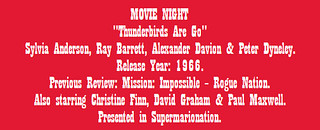
Cast:
Barbara Parkins (Anne Welles), Patty Duke (Neely O'Hara), Paul Burke (Lyon Burke), Sharon Tate (Jennifer North), Tony Scotti (Tony Polar), Lee Grant (Miriam Polar), Susan Hayward (Helen Lawson), Martin Milner (Mel Anderson), Charles Drake (Kevin Gillmore), Alexander Davion (Ted Casablanca), Richard Angarola (Claude Chardot), Naomi Stevens (Miss Steinberg), and Robert H. Harris (Henry Bellamy) Directed by Mark Robson (#1797 - Home of the Brave)
Review:
In 1966, Jacqueline Susann saw her first novel published in Valley of the Dolls. She had aspired to become an actress at a young age in the 1930s, and she got to appear in a handful of stage shows and television, but likely her most known quality was in commercials, which she wrote, produced and starred in for a number of years; she also had a habit of downing amphetamines (calling them "dolls") around this time, which apparently started not long after her son was diagnosed with autism and put into an institution when he was 3. In 1962, at the age of 44, she was diagnosed with breast cancer. She then made a pact with God to say that she would prove herself to be the best-selling writer in the world if she was given ten more years of life. Often called the first "brand-name" novelist, Susann became quite the show-woman in promoting books, and her first published work was Every Night, Josephine! in 1963 (inspired by letter she wrote to her pet dog). Valley of the Dolls, the work she is most famous for, came in 1966. Years after steamy novels like Peyton Place succeeded with readers (not with critics), Valley of the Dolls was a twenty-year odyssey in the lives of three young women who all happen to fall prey to drugs called "dolls" that featured other characters inspired by real-life stars such as Ethel Merman, Carole Landis, Judy Garland and Dean Martin. Fifty years after its release, the book has sold more than 31 million copies, and it inspired a film, a "continuation novel", two TV adaptations and a parody with Beyond the Valley of the Dolls (1970). A book into the process of making Valley of the Dolls called one of the most beloved bad book and movies of its time was written by Stephen Rebello in 2020. Robson was an interesting choice to direct. The Montreal native honed his craft as an editor before he became a director, directing 34 films from The Seventh Victim (1943) to Avalanche Express (1979), with a number of the films seeing him also serve as a producer. Harlan Ellison, Helen Deutsch, and Dorothy Kingsley were brought in to work on the script, although Ellison hated what they did to the book and requested his name taken off - imagine a book that already sees a character kill themselves and another go off the wagon ending on a breezy note. Two further adaptation of the five novels Susann wrote have followed: The Love Machine (1971) and Once Is Not Enough (1975). In 1974, after over a decade of a battle with cancer, Susann died in 1974 at the age of 56.
Just like the film adaptation of Peyton Place (released in 1957 with Robson as director) and Sex and the Single Girl, the book really is steamier than the film it came from, since the book featured elements of homosexuality in both men and women. Of course, the movie takes place in the current day rather than the book timeline from the mid 1940s to the mid 1960s. Jacqueline Susann saw the film on a cruise ship premiere, and she thought it was crap, although she kept that opinion to herself so to not give the movie an early thrashing...which came plenty (probably didn't help that the casting wasn't what she wanted, since she wanted people like Ursula Andress, Bette Davis, Shirley MacLaine and Elvis Presley for the lead roles). The movie and book ended up reflecting each other: audiences dug it while critics trashed it. The movie is an explosion of gloss and grooviness that looks like it was processed in the 1950s that makes a tale of sexual liberation and the entertainment industry seem quite amusing. Adultery, divorce, addiction and deviancy seem like something pulled from the silliest of moral stories. It's no wonder why she didn't care for it: it's a movie that doesn't know what foot to put in front of the other and looks like a soap opera run amuck. Parkins is just the everyman character, firmly in the middle of weirdo things happening around them with the appeal of a broomstick stuck in a schmaltzy molasses. You might say a normal-ish person is the ideal among all the weirdness, but ordinary isn't always fun. Apparently, Duke wanted to do the film to help transition her into more adult roles, since her role was the most dynamic (she had won an Academy Award for playing Helen Keller in The Miracle Worker and she also had her own TV show). She even gets the opportunity to sing (dubbed by Gail Heideman). The funny thing is that the movie nearly walloped her career, although really, she does pretty well in the art of eating the screen. She eats the screen in all the ways one would hope. Tate is okay, at least because Burke and Scotti are blander. Judy Garland was originally cast in the role later played by Susan Heyward, and promotions were done with that in mind, and she would get to sing a song, which was pre-recorded. After a week, she suffered from her dependence on alcohol and Demerol that saw her get fired from 20th Century Fox. Apparently, on the final day, Robson made her wait until 4pm to film her scenes after making her wait since 8am, in the belief that she would be upset and drunk at the time (so yes, if you believe the account from Duke about Robson, the latter sounds like an asshole). Heyward, an Academy Award winner, is decent in terms of vaunted confidence without particularly having much to really do besides one scene of Duke fighting her over who has the fake appendage on and how to go on. Grant seems to be shuffling through as if the paycheck is just tempting enough to go on. Eh, the movie is as it is: silly but mostly watchable, if one accommodates it being more for the experience rather than a full collection of interesting people. Sure, people think it may be a camp classic with its stylistic kitsch or maybe a revealing look into the struggles of women, but in the end, it all boils down to an absurd and amusing affair that can be thought of as a fantasy for whoever is watching: the gossip-obsessed people desiring a pop event, or people looking for a silly crappy movie to watch (or maybe gay people that look to reclaim the film as a camp classic, but I will let you decide that, since I'm not here for that). In that sense, 55 years has given Valley of the Dolls is overwhelming in the best and worst ways that could only come from a certain time and certain perspective.
Overall, I give it 6 out of 10 stars.
Well, we have reached the ninth and final film of Turkey Week. I really wanted to scrap the bottom of the barrel in terms of movies fitting for the label of "turkey" for Turkey Week. Since the first two Turkey Weeks had eight reviews, I wanted to try and include at least one more movie than what I did before, and I can say that there were a few candidates that missed the cut that may be considered for next year
The Scarlet Letter (1995), Turks in Space, Sidekicks, Verotika, An American Hippie in Israel, The Legend of the Lone Ranger, and The Conqueror
Any and all suggestions are welcome for next year.