Showing posts with label Dick Miller. Show all posts

October 14, 2025

Demon Knight.

Review #2441: Demon Knight.

Cast: 
Billy Zane (The Collector), William Sadler (Frank Brayker), Jada Pinkett (Jeryline), Thomas Haden Church (Roach), C. C. H. Pounder (Irene), John Kassir (voice of The Crypt Keeper; Brock Winkless as puppeteer), Brenda Bakke (Cordelia), Dick Miller (Uncle Willy), Gary Farmer (Deputy Bob), Ryan O'Donohue (Danny), Charles Fleischer (Wally), John Schuck (Sheriff Tupper), and Sherrie Rose (Wanda) Directed by Ernest Dickerson (#1641 - Juice

Review: 
"I’ve always enjoyed Demon Knight. I love horror films, and I had a lot of fun creating a horror mythology. It was a great cast. I was also happy to do the first film where an African American woman saves the world. That was a good project to be involved with."

Hey, remember Tales from the Crypt? In 1989, a television series was created based on the bi-monthly horror comic anthology series that was created by Bill Gaines and Al Feldstein. By the 1980s, one was long past whiny parents and even whinier doctors having fears that horror comics were making kids illiterate and/or juvenile delinquents*, now you could mine old stuff for movies and premium TV (complete with sex and violence, the hallmark of horror movies and probably America too). The show ran on HBO until 1996 and it probably makes sense that movies were coming. Plans for three of them, in fact. The other ones were tentatively called "Dead Easy" and "Body Count". The screenplay was credited to Ethan Reiff, Cyrus Voris, and Mark Bishop, although it should be noted that the script for the film had been languishing around for several years and at one point there was a version scripted around not having demons being shown but instead a legion of Bible salesman clad in suits and sunglasses that just happen to be revealed as demons later. Demon Knight, a movie released in January of 1995 because they pushed it back from Halloween 1994, was a mild success with audiences (not with critics, but do you trust mainstream critics about horror?), and a post-credits scene states the next film of the Crypt would be Dead E-nope, the second film "presented by Tales from the Crypt" was quickly retooled into Bordello of Blood in 1996 (funny enough, that was also a movie involving an old script being retooled). A hastily made segment with the Cryptkeper character was done for a movie called Ritual (2002), which remade I Walked With a Zombie of all movies (seriously?), although that movie barely had a release in theaters.

So, does it compare well to the 1972 Tales from the Crypt movie? Eh, sort of. If you accept the movie as a little ride through varied conversations about lore (well, something involving religion I guess) and familiar ground for a siege movie, you will be totally fine with what you get here. 92 minutes sounds like they could've just packaged a few episodes for video but it makes for a mostly paint-by-numbers movie, but...it is up the alley. If you thought the show could show promise when not just being a [name actor is here for 20 minutes]* episode, the movie will probably satisfy some of the expectations you may have in entertainment. Maybe it could have been more unsettling, but it at least makes up for it with a few solid moments, in particular because of the presence of Billy Zane, who is delightful in menace. He manages to be unsettling in the sequences of temptation because it ends up sounding pretty believable to walk along his path, which is a hard road when one scene has him drop the pretense of being a cop to just punch straight through a guy's head.  He just has an aura of energy and capability to make you want to listen to what the hell is coming up next that I almost wish would've made it all the way to the end. Sadler may be strapped with an understated type of hero role, but I see it more as an appropriately weary performance that is enjoyable to see play out, mainly because Sadler just seems reliable to take seriously. For a movie that invites you to the idea of a key filled with many, many people's blood (and Christ) in it, anyway. Pinkett makes a worthy participant to the proceedings around her, quirky yet eventually endearing enough to root for, at least when compared to the delightfully adversarial presence of Church* or the always on-time Pounder and Miller. In general, the movie sets its body count early and has a few fine moments with the effects and chuckles, although it definitely feels more a casual ride for those who've seen Assault on Precinct 13 (1980) a few too many times more than a truly original ride. But I like hokum like this when it is presented with likable people or a few little moments of gore to make me want to see it all the way to the ending, which might be a bit too cozy (even the lesser Crypt episodes tried sticking a twist in like a knife for the end). But as a whole, Demon Knight manages to have a few entertaining moments to ride through the obvious bumps that come with trying to turn 30-minute spine-tinglers into a full-edged movie for a moderate ride of success.

Overall, I give it 7 out of 10 stars.

*Why can't people focus their attention on asking aloud why certain people are weird like Taylor Swift superfans?
*Remember when Morton Downey Jr appeared in an episode about haunted ghosts on live TV? The one I probably remember best is the one with Joe Pantoliano about remembering just how many times he has died. Or the one about being trapped in one's own body.
*A Harlingen High School graduate, don't ya know?

October 8, 2025

Chopping Mall.

Review #2435: Chopping Mall.

Cast: 
Kelli Maroney (Allison Parks). Tony O'Dell (Ferdy Meisel), Russell Todd (Rick Stanton), Karrie Emerson (Linda Stanton), Barbara Crampton (Suzie Lynn), Nick Segal (Greg Williams), Suzee Slater (Leslie Todd), John Terlesky (Mike Brennan), Paul Bartel (Paul Bland), Mary Woronov (Mary Bland), Angela Aames (Miss Vanders), and Dick Miller (Walter Paisley) Directed by Jim Wynorski.

Review: 
You have to know that the movie was going to be called "Killbots". Apparently, Vestron Video had a deal with Julie Corman (working with Roger with Concorde Pictures) to do a movie set in a mall. Who better to make a pitch but Jim Wynorski, who already had done writing work for the Cormans in writing and publicity before debuting as a director with The Lost Empire (1984). Wynorski and Steve Mitchell took inspiration taken from the 1954 movie Gog. With the setting in mind, they actually first came up with a "Phantom of the Mall" type of idea before Wynorski came up with just doing it with robots; they wrote the idea in about 24 hours that was soon approved. The effects for the robots (as envisoned by Robert Short) are interesting as the things (all five of them, as one does when preparing for an emergency) had construction from wheelchair frames and conveyor belt pieces, complete with remote control operation or using cables to move them around (you can read more about it here). The movie was shot at the Sherman Oaks Galleria in Los Angeles (with exterior shots being of the Beverly Center), and it only makes sense that it was done when the mall was closed at night; you can recognize the Galleria from its use in Commando (1985) and uh, Fast Times at Ridgemont High (1982). The film was shot over the course of roughly three weeks. Apparently, the movie had a regional release with the Killbots title in Spring of 1986 and tested poorly* but was later reissued months later as Chopping Mall, complete with nearly 20 minutes cut out that resulted in the 76-minute runtime (there apparently is a bit of extra footage that was included on TV, but its not easy to find it). While the movie was a mild hit on release, it found a better life with release on VHS and cable. Wynorski made a litany of movies (some for the video market) that ranged from parodies to "erotic" ones, but Chopping Mall is likely the one people know best. 

Admittedly, it is a bubblegum type of horror movie, one that delivers most of the goods in having a neat adversary and a few interesting moments in mayhem (coincidentally, this was the other 1986 movie about robots being changed due to lightning strikes next to Short Circuit). Admittedly, the ensemble presented here is mostly just fine*, serving more as fodder for strangely paired death after death (seriously, most of the body count is delivered like that, because if your significant other dies, logic goes out the window I guess). They go around doing the type of thing you expect in lounging around in a mall by oneself (so a notch around Dawn of the Dead [1978]) for the setup that at least makes these folks useful enough to go with the ever-changing flow from partying to running (honestly it almost feels more favorable to try and hide in the store for several hours rather than trying to attack the three killbots, since even blowing it up with propane isn't favorable). The killbots look cool and even prove to be equal opportunity killers, whether in staging head explosions (okay maybe the effect isn't the most accurate thing ever but just look at it) or stabbing folks or, uh, throwing people off of railings that make them formidable and interesting to see play out. While I wish the excised material was available to compare the two movies, you could at least say the version we have today is serviceable in pacing and mayhem. As a whole, Chopping Mall is the kind of movie you encounter in the middle of the night (for the horror season, ideally*) and put on for a pretty refreshing time, mostly because of the mayhem you get to see from the bots that leads to a few bits of humor within the effects. It is a neat average little gem.

Overall, I give it 7 out of 10 stars.

*Honestly, Killbots is the better title. Pun or no pun, the bots don't chop anybody up in the movie. What, did someone think it was a Transformers thing with the old title?
*It was nice to see Paul Bartel and Mary Woronov from Eating Raoul for about three minutes, admittedly, most to remind me of that movie for a tiny bit. Or Dick Miller, mostly because he really could just pop up in a horror movie again and again.
*Honestly, the horror season is what, 38 days for me? It seems far better than encountering horror movies in the winter or spring, that's for sure.

October 7, 2025

The Premature Burial.

Review #2434: The Premature Burial.

Cast:  
Ray Milland (Guy Carrell), Heather Angel (Kate Carrell, Guy's Sister), Hazel Court (Emily Gault, Guy's Wife), Alan Napier (Dr. Gideon Gault), Richard Ney (Miles Archer), John Dierkes (Sweeney), Dick Miller ("Mole"), Clive Halliday (Judson), and Brendan Dillon (Clergyman)

Produced and Directed by Roger Corman (#368 The Little Shop of Horrors, #684 - It Conquered the World, #852 - The Terror, #931 - Not of This Earth, #1007 - Attack of the Crab Monsters, #1039 - Five Guns West#1042 - War of the Satellites, #1136 - Gas-s-s-s, #1147 - X: The Man with the X-ray Eyes#1186 A Bucket of Blood, #1423 The Wild Angels, #1425 The St. Valentine's Day Massacre, #1674 - Machine-Gun Kelly, #1684 - Creature from the Haunted Sea, #1918 - House of Usher#2030 The Trip, #2113 - The Undead#2211 - The Intruder, #2275 - The Wasp Woman, #2295 - The Pit and the Pendulum)

Review: 
Apparently, when Roger Corman was making films for American International Pictures, there came a time to settle differences of his fee with a coin toss. He and Samuel Z. Arkoff would flip a coin...and Arkoff won a handful of times that made Corman interested to venture for himself. He went to Pathe Lab to try and finance a film, since they did their own print work and financed a few AIP movies. He got Charles Beaumont and Ray Russell to do the script but had to go with Ray Milland for the lead due to Vincent Price being in an exclusive AIP contract. And then...AIP arrived on the first day of production to say that they were now partners on this film, as they leveraged the position of not having any more lab work to become partners on what became this film. While the movie made some money with audiences, Corman reflected later that the response meant that the formula "had to be varied." The next "Poe Cycle" movie was Tales of Terror (1962), released four months later that was an anthology feature with Price and other noted names. The movie is inspired by the short story of the same name, as written by Edgar Allan Poe in 1844 that had an unnamed narrator with fears of being buried alive with "catalepsy" that tries to cope with the phobia...although that story ends with one ending their obsession with death.

It isn't a forgettable movie, but it definitely is one that shows strain. It may interest you to know that Milland was an Academy Award winning actor, having previously won it for The Lost Weekend (1945). The Welsh actor had a lengthy career, and he was more than happy to be a character actor in his later years with the occasional lead or two, as one might recognize him from AIP's 1963 classic (at least that's how I remember it) X: The Man with the X-ray Eyes (1963); Milland acted until shortly before his death in 1986 at the age of 79. Unfortunately, The Premature Burial is not among his highlights, mainly because the movie does not give him to really do. It isn't merely a case of the movie needing the services of Price (four years younger than Milland, although each was already in their fifties by 1962), it just seems like a movie that is trying to coast on what you already saw from the last two Poe AIP movies and flailing. You want to see a worthy tragedy, you want to see something that could inspire anxiety and curiosity, but Milland can only do so much for a movie that doesn't really have a mystery or tragedy to it. You could almost pick a random actor from Milland's heyday to do this and possibly still have the same effect. It does not help that Court and Ney have absolutely nothing to contribute for what is meant to be a curiosity: a woman who wants to associate with a guy who believes he is doomed and a doctor in the middle of looking at his mental state. But they don't really stick in your mind for anything other than "okay". The sense of doom just seems like the previous two Poe movies but with diminishing returns besides the cemetary maybe being a different angle to look at this time. The dream sequence might be the most noted sequence in the whole film (which only runs at 81 minutes anyway) because it seems lurid and eerie in ways that actually makes one wonder where the rest of the energy went. The movie just isn't as fun as it really could be, managing to be a bit too cozy to really make anyone get chills for something that could've been a fun mystery or a look at a strange person. As it stands, it isn't a bad movie, but it just isn't accomplished enough to really recommend when there are better things elsewhere.

Overall, I give it 6 out of 10 stars.

October 10, 2024

Piranha (1978).

Review #2270: Piranha (1978).

Cast: 
Bradford Dillman (Paul Grogan), Heather Menzies (Maggie McKeown), Kevin McCarthy (Dr. Robert Hoak), Keenan Wynn (Jack), Dick Miller (Buck Gardner), Barbara Steele (Dr. Mengers), Belinda Balaski (Betsy), Melody Thomas Scott (Laura Dickinson), Bruce Gordon (Colonel Waxman), Barry Brown (Trooper), Paul Bartel (Dumont), and Shannon Collins (Suzie Grogan) Directed by Joe Dante (#007 - Looney Tunes: Back in Action, #096 - Gremlins, #097 - Small Soldiers, #1494 - Gremlins 2: The New Batch, #1744 - The Howling, #2026 - Twilight Zone: The Movie)

Review: 
"We got a lot of bad comments about Piranha because we killed off all those summer campers and it wasn’t even the end of the movie, which was black humor then and kind of shocking. Today, I don’t think that would shock anybody. I think you are now dealing with an audience that is so much more sophisticated and aware of the cliches and tricks and tropes of the genre and you have to be on your toes in order to keep their interest."

Sure, any big film can inspire a few homages, and who better to get that through the line with Roger Corman? New World Pictures? Among other things, this was filmed around the same time as. Avalanche. Apparently, the budget for Piranha was reduced by $200,000 (essentially making it a production made for roughly under $700,000) prior to production in order to help give more resources to the disaster film Avalanche (which ended up being forgotten by audiences). The film had two credited writers: Richard Robinson and John Sayles. Sayles was brought in to re-write the film for its perceived failings as a script (according to one Dante interview, the original script showed a problem in getting people to actually get in the water). It was the first feature credit for Sayles, who had graduated from Williams College in the 1970s and quickly went to work writing articles and his own novel in Pride of the Bimbos before finding work with New World Pictures (one year after the release of this film, funds used from Corman paying Sayles to write scripts saw him direct/write Return of the Secaucus 7 on his way to a further career as writer/director, which included Dante's The Howling (1981). This was the second feature effort for director Joe Dante, who had gone from editing trailers for New World to co-directing Hollywood Boulevard (1976) with Allan Arkush. He went for the film when offered it as opposed to Rock 'n' Roll High School (1979), since Arkush expressed passion for wanting to do that. Dante would also co-edit Piranhawhich he described as being extensive in his dedication to editing. The movie was released in August of 1978, nearly two months after Jaws 2. Apparently, Universal Pictures tried to file an injunction against the release of the film, but they dropped it when Steven Spielberg stated his approval of the film, one that he called "the best of the Jaws rip-offs". While the film was a relative success, Corman did not express interest in doing a sequel, but he sold the rights to people who were interested in doing so, which resulted in the 1982 US-Italian production of Piranha II: The Spawning, which had a young James Cameron for a film with only a hint of a cult audience. The original film has been remade twice, once for television in 1995 and the other with Piranha 3D, released in 2010 (which in turned had a sequel two years later).

There had been plenty of horror films involving killer creatures of the sea before, whether they tried to call themselves parodies such as Creature from the Haunted Sea (1961) or ecological threats such as Frogs (1972) or "Jaws ripoffs" such as Orca (coincidentally, Wynn was in that film, released in 1977). But Piranha makes its own mark in delight. It straddles the line between horror and amusement without straining itself in overwrought expression that can be credited to Dante and the company he had with him that wanted to make it more than just a "nature gone wild" movie. You don't really see that much of the piranhas in the film, but it has enthusiasm from a director who clearly grew up on Corman and monster movies and wanted to make one with as much fun as those (complete with name actor enjoyment from McCarthy, Wynn, and the always-on-point Miller). Dillman and Menzies prove to make an interesting pair together. I particularly like the haggard expressions that come from Dillman (amusingly, Dillman was picked because Peter Fonda rejected it because he wouldn't do the film unless it had good effects and it was taking too long). He just has the confidence to just roll with the lines given out involving little killer fish and being thrust into a conspiracy where maybe the real monsters are on the surface. Gordon and Steele provide quality presence in terms of scuzzy behavior on and off the surface, although Miller amuses the most in scuzzy nature for such a brief amount of screentime. The creature effects were done with a mix of mostly rubber piranhas (and some with a few metal teeth, as done by Phil Tippett, while Chris Walas and Rob Short did prosthetic limbs for biting. The movie could've just been a silly one with little commitment from its actors in creature features, but instead they managed to have one with energy, where even a little scene involving a stop motion creature (not a piranha) shows curiosity. The terror involving piranhas (who in real life have a varied diet beyond rare attacks on humans) is handled patiently for 95 minutes (I especially like the sound of the piranhas in their attacks) in carefully executed carnage and danger. The film serves as a representation of just what Dante has to offer in directing and moving around scenes with real belief present. It is a warm fun movie for the movie-lover in all of us that appreciate horror wherever they can find it.

Overall, I give it 8 out of 10 stars.
Coming up in the next few days: Terrifier, 50s stuff, 70s stuff, 10s stuff...

October 18, 2023

The Undead.

Review #2113: The Undead.

Cast: 
Pamela Duncan (Diana Love/Helene), Richard Garland (Pendragon), Allison Hayes (Livia), Val Dufour (Quintus Ratcliff), Mel Welles (Smolkin), Dorothy Neumann (Meg-Maud), Billy Barty (The Imp), Bruno VeSota (Scroop), Aaron Saxon (Gobbo), Richard Devon (Satan), and Dick Miller (The Leper) Produced and Directed by Roger Corman (#368 The Little Shop of Horrors, #684 - It Conquered the World, #852 - The Terror, #931 - Not of This Earth, #1007 - Attack of the Crab Monsters, #1039 - Five Guns West#1042 - War of the Satellites, #1136 - Gas-s-s-s, #1147 - X: The Man with the X-ray Eyes#1186 A Bucket of Blood, #1423 The Wild Angels, #1425 The St. Valentine's Day Massacre, #1674 - Machine-Gun Kelly, #1684 - Creature from the Haunted Sea, #1918 - House of Usher, #2030 - The Trip)

Review: 
Somehow, I think I am a bit generous with Roger Corman. He managed to make films in a variety of genres as either a director or a producer that later saw him receive a variety of nicknames such as "The King of Cult". 1957 alone saw him direct/produce eight films. He was not above using a few familiar actors from film to film, as this and Attack of the Crab Monsters (released a month apart from each other) share three key actors (Duncan, Garland, Welles). Apparently, the inspiration for the film came in the wake of the Bridey Murphy craze, in which a series of articles written by William J. Barker told about a woman who was put in a trance of "hypnotic regression" that had her speak about her alleged past life. The hypnotist, Morey Bernstein, wrote a book that was published in 1956. That book would be turned into a film that very same year, but I'm sure you don't need me to invite mockery upon the idea of "past reincarnation". The film was written by Charles B. Griffith and Mark Hanna, with the former remarking that it was "in iambic pentameter" before having to rewrite it upon the time of shooting because Corman (who had sent it out to various people on the street) was worried that folks wouldn't  understand. Griffith was the co-writer on It Conquered the World (1956), Gunslinger (1956), Not of This Earth (1956), and Flesh and the Spur [1956], with all but the first being written with Hanna, and people familiar with Attack of the 50 Foot Woman (1958) will note that Hanna wrote the film that had the same star from this one. This sets of the film were done in a converted supermarket (along with a few things shot in a house nicknamed "The Witch's House" in Beverly Hills) and shot in less than two weeks. 

Okay, so here is how they get to the whole "past lives" thing: a psychic researcher is so damn curious about past lives that he hires a prostitute for $500 to undergo a trance (for 48 hours) to access her past life all while his former teacher stands there. This trip turns out to be one of the Middle Ages (an English-speaking place, specifically) in which her past self is set to die as one accused of being a witch, and the idea of escape attracts the attention of both good and bad witches and a few others such as, uh, Satan. It may all sound like a good deal of hooey, and, well, it kind of is, but if one knows what they are getting into with Corman and his crafty hands, you may actually have an odd and offbeat time with this to enjoy. This is the kind of movie that features a dance in a graveyard to go with an absolutely silly portrayal of Satan that might as well be fit for the dinner theater, where at least one expects a loose wall for a set. The film is loopy and just barely over an hour to throw whatever what one does to try and throw the book against lapses of logic that perhaps would make a wonky double feature with, say, The Terror (1963). Most of the people here have their foibles with this dialogue (or in the case of Barty, having a ball in playing it silly), but there is a sort of weird state to it all that seems entertaining regardless, as if acting on a cloud is more suitable than trying to lean all the way into iambic pentameter. Duncan at least makes the effort of worried tension, which only results in amusing sequences such as the one near the end about one should stay or go within an execution. At least Hayes seems suitably rough-and-tumble for the part. I'm not even sure what the deal is supposed to be with Dufour when it comes to the buildup to the climax, because even the best sci-fi mumbo jumbo probably wouldn't explain his motivations (perhaps you are curious: he goes back to the past under the same hypno-whatever as the prostitute had and in the commotion over whether the past girl will head to the chopping block didn't think to wonder what would happen that link to the past wound up dead with him still there). When it comes to ratings, eh, a 6/10 hereisnt a positive review, but it matches what I feel about the film. As a whole, it isn't a particularly good winner, but I did find some curiosity with the idea of doomed fates and weirdo motivations in half-baked hokum that comes out in the early years of Roger Corman and company trying to play trends to the masses. It barely ranks in horror, but it makes curious spectacle all the same.

Overall, I give it 6 out of 10 stars.
Next: Dracula 2000...and something else for Thursday.

October 10, 2023

Night of the Creeps.

Review #2104: Night of the Creeps.

Cast
Jason Lively (Chris Romero), Steve Marshall (James Carpenter "J.C." Hooper), Tom Atkins (Det. Ray Cameron), Jill Whitlow (Cynthia Cronenberg), Allan Kayser (Brad), Wally Taylor (Det. Landis), Bruce Solomon (Sgt. Raimi), David Paymer (Hollister), David Oliver (Steve), Dick Miller (Walt), Ken Heron (Johnny), and Alice Cadogan (Pam) Written and Directed by Fred Dekker (#006 - RoboCop 3)

Review
 “It’s an odd movie. Nobody ever sets out to make a cult movie, but there are movies a wide audience will immediately take to, and there’s NIGHT OF THE CREEPS which is a strange mish-mash of detective story, horror movie, romance, science fiction and comedy. But that’s what special about it. At the end of the day, I’m pleased with it. I pulled it off.“

Admittedly, B-movie tributes or pastiches are perhaps a dime a dozen. Apparently, Dekker came up with the script for the film in less than four weeks. He stated an aim for a "1950s sorority movie", complete with a handful of B-movie cliches, whether that involves nerds, corny characters or monsters. Dekker's first credit was House (1986), which was directed by Steve Miner. Dekker had written scripts for films that hadn't come to fruition (such as one for an America version of Godzilla), but one he did helped get him an agent. When it came to Creeps, the agent gave the script to a number of producers, and Charles Gordon happened to show interest, which eventually led to a production at TriStar for six million dollars (this was the first production for Gordon, who would go on to produce for films such as Die Hard). Aside from a few reshoots (such as a sequence involving a toolshed) and a different ending, the film went off mostly without a hitch, but a limited release of less than a thousand theaters meant that the film was not a hit on release, but it has endured as a cult favorite in some circles. Dekker went on to see two of his scripts turned into films the year after the release of this one with The Monster Squad (which he directed) and House II: The Second Story. If you were wondering about the ending, what is different is that the studio mandated what Dekker called a "cheap scare", as opposed to his idea of an ending that involves a burnt character collapsing to the ground while the zombie slugs move away to the cemetery, where a spaceship is above it (of course the film starts with a spaceship experiment, so I think you can see how that makes sense).

For those familiar with films of its ilk with weird creatures and one-note characters to go with one distinct performances, you will be just fine here. I figured it would be a neat little average film when I first heard of it years ago ("hearing" and "getting off my butt to see it" are different things), and that assessment seems about right here. It is a microwaved dinner prepared with the right instructions and most of the patience required to make it, which involves a few decent effects and a second half that picks up the slack left by the sorority stuff (and a black-and-white opening set in the 1950s) for what you would expect. In theory, the character played by Atkins could've just been a flippant cliché that would've been just fine as the authority figure against the zombie slugs (for whatever reason, there's an axe murderer around at times, dead and alive). Oddly enough though, the performance by Atkins is the best of the whole film (go figure, Dekker recognized it from the audition), because, well, there is a tragic energy to it that is endearing and entertaining from the very get-go. Atkins apparently rates this as one of his key favorites, and it damn well makes sense ; the sequence where he explains being there on the night of finding the axe murderer is probably his highlight scene. Honestly, if you cut down on the teenagers faster and dwell right in on this oddball of fire, the movie would probably be even better, even though Marshall and Lively aren't exactly just chopped liver. Once you get someone going from talking about girls to getting things going with a flamethrower, that's almost all you need. The pursuit of figuring out what's going on is more fun when you have familiarity with the material rather than snide jokes, and for the most part, the film is engaging in grimy gore that is made by someone with spirit of passion rather than huckster spirit. In the end, those who know the machinations of the B-movie will like what they see here. It is the kind of thing you put on late at night and move along with (maybe a light chuckle at the name references because it isn't so ridiculous), one that makes quality entertainment fit for a first timer.

Overall, I give it 7 out of 10 stars.
Next: Killer Klowns from Outer Space.

July 3, 2023

The Trip (1967).

Review #2030: The Trip.

Cast: 
Peter Fonda (Paul Groves), Susan Strasberg (Sally Groves), Bruce Dern (John), Dennis Hopper (Max), Salli Sachse (Glenn), Barboura Morris (Flo), Judy Lang (Nadine), Luana Anders (Waitress), and Dick Miller (Cash) Produced and Directed by Roger Corman (#368 The Little Shop of Horrors, #684 - It Conquered the World, #852 - The Terror, #931 - Not of This Earth, #1007 - Attack of the Crab Monsters, #1039 - Five Guns West#1042 - War of the Satellites, #1136 - Gas-s-s-s, #1147 - X: The Man with the X-ray Eyes#1186 A Bucket of Blood, #1423 The Wild Angels, #1425 The St. Valentine's Day Massacre, #1674 - Machine-Gun Kelly, #1684 - Creature from the Haunted Sea, and #1918 - House of Usher)

Review: 
"I wanted the picture not to be a pro-LSD picture and not to be an anti-LSD picture because my trip was very good, I had no bad effects in my trip at all. It was wonderful. Yet I felt I really shouldn’t be accused of proselytizing for LSD, and at the same time I knew people had had bad trips, so I was trying to be neutral, and I had to ask people what had happened on their bad trips, and incorporate some of what they had experienced into it to make it neutral."

Admittedly, when I think of Roger Corman, the words "counterculture trilogy" don't exactly come to mind. Research by others involving films involving so-called "hippies" has labeled The Trip as the second of his films involving the counterculture, with Gas-s-s-s (1970) being thought of as the last of the three and The Wild Angels (1966) being the first. Whatever Corman intended, one thing is clear when it comes to The Trip: it was meant to be quite an interesting experience in line with what Corman usually tried to do with American International Pictures. Hell, he certainly tried to do his own research to get things moving, which first involved reading the work of Timothy Leary, a noted psychologist, author, and advocate for psychedelic drugs which in this case involved lysergic acid diethylamide (LSD), although others would also know Leary for phrases that he came up with, such as "turn on, tune in, drop out". This drug, if you didn't know, was first synthetized in 1938 by Albert Hofmann. I would like to mention that Hofmann (after accidentally finding out the effect of LSD with ingestion years later) argued for LSD as a possible tool for psychiatry within the right place of awareness and safety rather than used for entertainment. So yes, he had plenty to think about the counterculture and their use of something he called "medicine for the soul". As for Corman, he eventually came to the conclusion that reading and asking folks about it was not enough, he had to try LSD for himself. After all of that, Corman, having a good trip, decided to make a film relying on experiments with cinematography and visual elements to carry a film that isn't really about much besides a drug trip. Of course, I can't forget that the film was also written by Jack Nicholson, which came about after Corman had Charles B. Griffith (his writer on previous material) write a couple of drafts, one of which was done as a musical; Nicholson apparently wanted to play a role in the film, but Corman wanted to reuse Dern from the aforementioned Angels film (which he and Fonda both starred in). The film was released less than a month after Corman's one big-budget venture with The St. Valentine's Day Massacre, but The Trip (made on a budget 1/4th the size of the other one) was a major hit for AIP. If you didn't connect the dots already, Fonda and Hopper would star together in a future film involving the road and the counterculture (with Nicholson and Anders in tow) in Easy Rider (1969).

Evidently, the way to go with this film is to turn off one's mind, relax, and float downstream. Regardless of how one feels about the attempt of neutrality, there is something quite, uh, offbeat about how the film goes about in wandering for 82 minutes. Strangely though, I find it far more interesting of the counterculture films that Corman did as compared to Wild Angels or with Gas-s-s-s, probably because the raucous biker experience of "freedom" of the former and the latter's attempt at "post-apocalyptic dark comedy" seem quite hollow compared to the simple goals presented here. It certainly won't be as ridiculous to watch as say, Reefer Madness. Those who find it tedious will have as much justification to say so as the folks who label it as pure cinematic exercise. It all depends on how much patience on has with lingering sequences of a man going through a really weird time that includes fantasy sequences, folks accidentally breaking into people's houses, and musical backdrops involving jazz or organ and horns for a score. With that in mind, Fonda actually does a pretty good job here, a dazed performance that is totally inviting and right for the scenario presented that doesn't seem ripe for exploitation. You get bits and pieces of who he is around and during the trip, and it namely involves vulnerability that one would think about when it comes to one's awareness being tuned into weird putty. Hopper and Dern play the guides on the would-be road of awakening, which is mostly amusing in bits and pieces. The women in the film in Strasberg and Sachse come and go in a rate that suggests discussion over just what they actually mean to Fonda beyond what they look on the surface, but remember that LSD was indeed meant more than just tripping out, so take that in mind. A handful of psychedelic/counterculture films would come and go in the coming months, whether that involved Something Weird (1967), or say, Head (1968), or Skidoo (1968), you get the idea, but The Trip should prove just fine for the curious at heart that like entertaining looks at the experience of doing a trip with useful imagery that is both what you think and don't think would happen if you were the one put in the lead scenario here. And for that, Corman clearly was in his element here in a decent experience.

Overall, I give it 7 out of 10 stars.

December 19, 2022

Redux: The Terminator.

Redux #063: The Terminator.

Cast: 
Arnold Schwarzenegger (the Terminator), Michael Biehn (Kyle Reese), Linda Hamilton (Sarah Connor), Paul Winfield (Ed Traxler), Lance Henriksen (Vukovich), Bess Motta (Ginger), Rick Rossovich (Matt), Earl Boen (Dr. Silberman), Shawn Schepps (Nancy), and Dick Miller (Clerk) Directed by James Cameron.

Review: 
From my review on July 30, 2011:
This film is in a word a classic. It has good acting for the most part, a good film noir, (which will be referred to as TechNoir) and a great plot. Good effects especially at the end. Good action and also good direction with a young Cameron at the wheel.
"The Terminator themes had been important to me since high school. Those apocalyptic visions, ideas about our love/hate relationship with technology, our tendency as a species to move in a direction that might ultimately destroy us, and a central faith in the resourcefulness of humanity." - James Cameron

In 1981, James Cameron was trying to become a feature film director when he was hired to do Piranha II: The Spawning, rising from special effects director to the main job due to creative differences with the producer (Cameron had become interested in films due to reading about special effects while in school, if you remember). The movie was not a pleasant experience for him (namely because he got fired days into the film), but it was during a moment spent in Rome after being fired that proved important for Cameron. One night, wracked with a fever, he had a fever dream of a metallic man with knives that dragged itself from an explosion. Taking inspiration from John Carpenter (once described by Cameron as his idol) and how he made Halloween for less than $100,000 as a stylish horror film, it helped serve as a launching pad for what became the initial script of The Terminator. Cameron did have help in the script, for the most part. William Wisher, Jr helped turn Cameron's draft into a script, such as writing scenes involving the police or early scenes with Sarah Connor (he got an "additional dialogue" credit); Gale Anne Hurd, who suggested edits to the scripts, was given screenwriting credit to go along with serving as producer, as both Hurd and Cameron had worked under Roger Corman at New World Pictures (Orion Pictures, who distributed the film, had two ex-Corman associates on staff). Cameron even did concept art for trying to sell the idea to prospective filmmakers (such as Hemdale Film Corporation), to the point where Lance Henriksen was the likeness for the drawing along with being brought in to spook the staff in boots and leather, which worked out well in a deal with Hemdale and Cameron. Admittedly, any mention of The Terminator (1984) might bring a reminder that Harlan Ellison is listed with an acknowledgement in the credits. He loved the movie, but he thought it seemed familiar to his script for "Soldier", written for the TV program The Outer Limits in the 1960s. The filmmakers decided to settle and give him a credit in later prints of the film, much to the chagrin of Cameron.

Roger Corman has one hell of a filmmaking tree when it comes to people he employed who ended up becoming directors, and James Cameron essentially had his first major film success come with a production that he treated like a Corman film, complete with filming at night with guerilla-style shots done on a small(ish) budget; the fact that the film runs at 107 minutes is a testament to making a lean but effective piece of entertainment without any sort of element that seems unnecessary. I know I have said the movie is a classic, but the movie has only gotten better with age and further viewings, in my view. Every so often you have to remember that this is basically a slasher movie when you consider the body count. Aside from failing to take his main target, the Terminator takes down over two dozen folks, probably doing so with more efficiency than slasher villains of the time ever did. Hell, Biehn and Schwarzenegger have only one moment together where they are even in the same frame, consider that. Stan Winston and his studio had the task of doing a "flesh-covered endoskeleton", i.e., not just a man in a robot suit. They clearly made a great result, one that menaces the screen and achieves the art of seeming quite real to the audience without distraction. A creature that can't be reasoned with that manages to come after you even when it is shed of its humanoid skin, that is one hell of a concoction for a film that veers into horror, science-fiction, and yes, even noir territory.

Schwarzenegger had one key film credit to his name with Conan the Barbarian (1982), and it should be noted that he actually speaks less lines in this film than the prior movie. The funny thing is that he was actually thought by Orion for the film not as the title character but for the Reese character. This was contrary to Cameron's expectations of using low-key actors to do a cheap film, since he figured that he would have Henriksen play the Terminator, since it was meant to be a character that could blend in a crowd (go figure, Orion had O. J. Simpson in mind for the title role). A meeting between the two made it apparent to Cameron and Schwarzenegger that he would probably be better suited for the Terminator role, which clearly was the right decision. He sells the role in ways that one could only dream they could do in a role with little to say beyond having to act like a machine. Aside from a few television appearances, Hamilton had one prominent film credit before this film: Children of the Corn (1984), which was released a few months before this film. Hamilton is given the task of playing both relative innocence and hidden strength in a variation of the "Final Girl" trope in horror, which she handles expertly. Her terror at the situation she is thrust into becomes one we feel is thrust onto us. Biehn was actually cast because of his role in The Fan (1981), a movie that Cameron saw where Biehn plays a nice-looking guy who ends up being a killer stalker. For a good part of the film (at least for those who haven't seen it once), Biehn is effective in that mindset before he enters the picture as the would-be protector, which he handles quite well without having to strain to make the dialogue (consisting mostly of reacting to the Terminator or to Hamilton) work as well as it does. Henriksen may not have a big role, but the fact that he was effective in helping the film gain some interest with the whole "dressing up like the Terminator" stunt makes him an unforgettable part of how The Terminator became what it was. Winfield is the other part of the supporting cast that is basically cosigned to police beat elements, which works out pretty well for what is needed. It really is a lean movie, one that wraps itself quite tightly in efficient storytelling that shows just enough of the future landscape in perspective to make the drama occurring back in the present seem even more thrilling, particularly when it comes to the last sequence within a factory setting, where a machine stripped to its core is still on the chase and even still a menace with diminished legs. The synthesizer soundtrack by Brad Fiedel only adds to the level of terror in ways I hadn't really appreciated until listening to it once again, one that doesn't come off as dated (not to say that synthesizer music is dated, just that the use of it can have consequences in lesser hands). 

As a whole, the real crime is that the film was not even more successful. Sure, it did strike well with audiences, but Orion did not have as much faith for such a great movie as one would expect, doing little promotion (owing to wanting to elevate some of its other features of the time, such as Amadeus, the eventual Academy Award winner for Best Picture that year). At any rate, Schwarzenegger was clearly interested in making a sequel more so than Cameron, but a sequel wasn't commissioned until the film right were purchased back from Hemdale and Hurd. At any rate, with a story idea cribbed from the first film and a bigger budget, Terminator 2: Judgement Day was released in 1991. Four sequels would follow in the next three decades, with varying reception made worse by the fact that T2 is generally thought to be one of the greatest sequels ever made. At any rate, The Terminator is the film that made James Cameron a name to be reckoned with as a filmmaker and Arnold Schwarzenegger a true star, and it is a grand achievement for all involved as a science fiction action masterpiece.

Overall, I give it 10 out of 10 stars.

August 1, 2020

Gremlins 2: The New Batch.

Review #1494: Gremlins 2: The New Batch.
Cast:
Zach Galligan (Billy Peltzer), Phoebe Cates (Kate Beringer), John Glover (Daniel Clamp), Robert Prosky (Grandpa Fred), Robert Picardo (Forster, chief of security), Christopher Lee (Doctor Cushing Catheter), Haviland Morris (Marla Bloodstone), Dick Miller (Murray Futterman), Jackie Joseph (Sheila Futterman), Gedde Watanabe (Mr. Katsuji), and Keye Luke (Mr. Wing), with Howie Mandel (Gizmo), Tony Randall (Brain Gremlin), and Frank Welker (Mohawk, Other Gremlins) Directed by Joe Dante (#007 - Looney Tunes: Back in Action, #096 - Gremlins, and #097 - Small Soldiers)

Review:
"It's the one time someone came to me and said: 'We want this movie and we don't care what it is. Do whatever you want, just give it to us by this date."

When it comes to underappreciated directors, Joe Dante certainly deserves consideration. He grew up with an interest in cartoons alongside watching matinee films as a youth. While a graduate of the Philadelphia College of Art, it was Roger Corman who Dante honed his craft into becoming a filmmaker, initially starting out in the trailer-cutting department at New World Pictures. He made his debut with Hollywood Boulevard (1976), co-directing with Allan Arkush along with editing the film. His first minor triumph was Piranha (1978), and The Howling (1981) helped get his foot in the door with Warner Bros. to make Gremlins (1984). The original film is a triumph of comedy and horror, dark and entertaining that had attracted attention for their effects (and of course, complaints from folks who managed to be fooled by the Christmas setting and critics of violence that don't know any better and are rightfully made fun of here) along with being a key force in the creation of the PG-13 rating. It is entirely possible that this is a sequel that was just a little too late to the party. It took six years for a sequel to Gremlins to arrive into theaters and its director Joe Dante had to be convinced to even do another film in the first place, and he was granted creative control and a bigger budget. Charlie Haas would take over in writing duty (the original had been done by Chris Columbus), who moved the action to New York City with satirical elements all throughout the film, such as the advent of cable television (most notably with Ted Turner) and sequels in general that was more cartoonish than dark, with Dante describing it as one of his most personal films.

It's a shame that this wasn't too successful on release, because I enjoyed it just as much as the original Gremlins. The quality is just about even here, replacing its dark sentiment for cartoonish anarchy that manage to resonate just as much in amusement. It touches upon elements of the original without being smothered by expectations or becoming too much of an effects show, and it does so without becoming dated. It does what one could want for someone with a clear interest in having a good time at the movies in a similar vein to someone like William Castle or even in cartoons with Chuck Jones (who provided the animation for the opening/closing titles). Galligan returns alongside Cates, and each prove just fine in providing continuity and some small moments of levity among themselves and some sort of Mogwai mayhem. Of course the real focus is on Glover, wrapped in spry curiosity that is very much in his element with a bit of camp enjoyment. Prosky, imitating Al Lewis' portryal of another famous horror Grandpa that hosted a horror TV segment, does just fine with mixing camp and care that does lend itself to some quick smiles. Picardo does fine with smarmy chuckles, but the true curiosity ineviably turns to Lee, with that solumn voice going just right with the cliches required for some momentary smiles. Miller and Joseph also return for a quick turn around with the creatures, while Morris and the Mogwai voices round out the cast just fine. Like before, there are quite a handful of cameos lurking around, most notably with Leonard Maltin being dragged away by unsatisfied viewer gremlins. The effects are always lurking in one's mind, and Rick Baker does a tremendous job with delivering some distinct creatures (with a mix of puppetry like before and also mechanical work and stop motion) that get to do a bit more madcap action, such as a bat gremlin for example. The plot threads verge a bit familar at times with its structure, but it makes up for it with some interesting tricks of offbeat humor (such as having the film be stopped and then re-started) that goes in the right direction to make a fun time worthy of further inspection as a quality sequel and an interesting film to highlight for the start of the 1990s.

Overall, I give it 8 out of 10 stars.

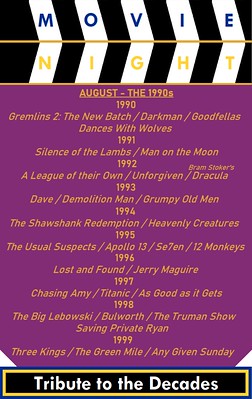
And now, the schedule for this month, a mix of familiar and new faces on and behind the camera as one approaches the end of the millennium. 

January 31, 2019

A Bucket of Blood.


Review #1186: A Bucket of Blood.

Cast: 
Dick Miller (Walter Paisley), Barboura Morris (Carla), Antony Carbone (Leonard de Santis), Julian Burton (Maxwell H. Brock), Ed Nelson (Art Lacroix), John Brinkley (Will), John Herman Shaner (Oscar), Judy Bamber (Alice), Myrtle Vail (Mrs. Swickert), and Bert Convy (Lou Raby) Directed by Roger Corman (#368 - The Little Shop of Horrors, #684 - It Conquered the World, #852 - The Terror, #931 - Not of This Earth, #1007 - Attack of the Crab Monsters, #1039 - Five Guns West, #1042 - War of the Satellites, #1136 - Gas-s-s-s, and #1147 - X: The Man with the X-ray Eyes)

Review: 
Horror and comedy films are generally entertaining on their own, but mixing the two genres together can certainly invite the possibility of something really interesting, particularly if you have a good set of hands on and behind the camera. Roger Corman and an handy ensemble cast are sure up to the task. Unsurprisingly, the budget and time to shoot for this film was fairly low - $50,000 and five days (shooting under the working title of "The Living Dead"). The sets themselves were leftovers from another AIP film, Diary of a High School Bride (1959). Fittingly, the sets would be re-used for The Little Shop of Horrors the following year. Miller, although he was happy with the story and humor from the finished product, wasn't too happy with the production values, noting the mannequins used for the statues and the fact that they didn't put plaster on him (instead using grey makeup) for the last scene. Corman and screenwriter Charles B. Griffith spent a day drifting around beatnik coffeehouses, using observations of the scene along with ideas and reactions to make the basic story, which in some ways resemble Mystery of the Wax Museum (1933).

In any case, this is a pretty enjoyable little movie, shining fairly well with a good degree of black humor and occasional scares that prove efficient for a 66 minute run-time. Perhaps a longer film might've resulted in the characters being fleshed-out a bit more (or perhaps a bit more emphasis on horror), but the material involving the beatniks is pretty funny anyways, as one might expect from people with a bit of pseudo-intellectualism and offbeat nature. Miller does well making this hapless yet ambitious lead interesting to view the film through - after all, he is basically playing a serial killer (with a calling card, no less), but he manages to have the right kind of presence the film needs to go on. The other cast-mates don't have as much time, but they each do decently with their roles when needed, such Morris and her encouraging nature or Burton and his offbeat poetry. The movie has its limits with money and time, but it manages to carry itself with some dark charm through some magic with silly lines and a game cast that make for a good time. Like with other Roger Corman films, this is certainly one to advise for anyone with a curiosity towards some fun that makes for quite a delight.

Rest in peace to Dick Miller, who died yesterday. He was a noted character actor who appeared in several films over six decades of work - appearing in films such as The Terminator (1984) alongside over a dozen films for Roger Corman.

Overall, I give it 8 out of 10 stars.

January 31, 2018

War of the Satellites.


Review #1042: War of the Satellites.

Cast: 
Dick Miller (Dave Boyer), Susan Cabot (Sybil Carrington), Richard Devon (Dr. Pol Van Ponder), Eric Sinclair (Dr. Howard Lazar), Michael Fox (Jason ibn Akad), Robert Shayne (Cole Hotchkiss), and Jered Barclay (John Compo) Directed by Roger Corman (#368 - The Little Shop of Horrors, #684 - It Conquered the World, #852 - The Terror, #931 - Not of This Earth, #1007 - Attack of the Crab Monsters, and #1039 - Five Guns West)

Review: 
Today happens to be the 60th Anniversary of the launch of Explorer 1, the first satellite launched by the United States. As such, I figured that it would make sense to a science fiction film involving space from that year, and thus this came up for viewing. Enjoy!

It is interesting to see how many space films one can encounter that attempted to benefit from the Space Age, with this one being an independent film (distributed by Allied Artist) from Roger Corman (who also has a small part in the film as a Ground Control member), who certainly makes films worth talking about, for better or worse. This was released on May 18, 1958, four months after the launch of Explorer 1 and seven months after the launch of Sputnik 1. This time around, the plot revolves around a mysterious group of aliens trying to stop humans from exploring space through exploding their satellites by some sort of space barrier. The title of the film is a bit strange considering that the film doesn't have any sort of war between satellites, but I digress. As a science fiction film, it isn't anything too special for the genre, but it isn't anything too patronizing nor anything too ridiculous, with a villain that has a few interesting moments. The characters aren't anything too developed, although the actors at least make them see fairly passable and useful to watch. Miller and Cabot make for a decent pairing, but a good part of the film utilizes Devon to a satisfactory effect. There isn't too much with the special effects, but they are fairly passable when on screen, such as the effect that is utilized for the healing of a hand wound that seems fairly clever. The sets (such as the ship's interior) are also fairly serviceable, making for something that doesn't come off as anything too cheap. The film doesn't go for anything too ridiculous or too schlocky, having a concentrated feel that is somewhat intriguing. It may have some of the cliches you might see in other sci-fi movies, but it at least makes an effort to gel those together to make something worth watching at least once. At 66 minutes, this is a fairly quick movie that will certainly satisfy anyone with tastes for some science fiction or something with a bit of entertainment to it, which this one does fairly well. If you're a fan of Roger Corman movies, or a fan of sci-fi in any kind of form (low budget or not), this one will fit fairly well for your standards.

Overall, I give it 7 out of 10 stars.

May 6, 2017

Not of This Earth.


Review #931: Not of This Earth.

Cast:
Paul Birch (Paul Johnson), Beverly Garland (Nadine Storey), Morgan Jones (Harry Sherbourne), William Roerick (Dr. F.W. Rochelle), Jonathan Haze (Jeremy Perrin), Dick Miller (Joe Piper), Anna Lee Carroll (Davanna Woman), and Pat Flynn (Simmons) Directed by Roger Corman (#368 - The Little Shop of Horrors, #684 - It Conquered the World, and #852 - The Terror)

Review:
With an estimated budget of $100,000 and a run-time of 67 minutes (some prints have it as 71 due to repeating certain scenes), this is certainly a movie that fits in as a carefully crafted sci-fi flick. And who better than Roger Corman? It had been a while since I covered one of his numerous films, so this seemed to fit the bill. Birch is a neat villain, in that his insidious nature and voice go well together in making the scenes with him and Garland have their share of thrills. Garland also does a fine job, having a fair share of competence along with a fair sense of panic. I have to admit, a movie about an alien studying the effects of human blood on him and his dying race is an interesting premise, while wearing sunglasses most (but not all) of the time, even in the dark. Jones and Roerick are also pretty good in supporting roles; Haze stands out, mostly because he seems so capable at playing this assistant role with a good touch of charm. Miller is in the movie for one fun little scene as a vacuum cleaner salesman, with a little look toward the camera just before his untimely departure, which is amusing somehow. The effects on the alien (such as his eyes) is pretty good for the time, though the flying creature does remind me an umbrella or lamp (whichever seems funnier). It's not exactly a clear cut invasion movie, nor is it a movie about a sympathetic alien, but there is something about how he interacts with the humans (and vice versa) that works. This is a fairly competent kind of science fiction movie, having some quick thrills and some level of suspense that I'm sure would fit well for anyone. It's no masterpiece, but it is a fairly manageable experience and sometimes that is all one needs for a movie.

Overall, I give it 7 out of 10 stars.

October 21, 2016

The Terror (1963).


Review #852: The Terror.

Cast: 
Boris Karloff (Baron von Leppe/Eric), Jack Nicholson (Andre Duvalier), Dick Miller (Stefan), Sandra Knight (Helene/Ilsa), Dorothy Neumann (Katrina the Witch), and Jonathan Haze (Gustaf) Directed by Roger Corman (#368 - The Little Shop of Horrors and #684 - It Conquered the World)

Review: 
It figures that I get to a Roger Corman movie for this month, and it just so happens to have Jack Nicholson in one of his earliest roles, alongside Boris Karloff. The idea for the movie came not because of a really great idea for a movie, but because Corman wanted to take advantage of sets left over from another production of his, The Raven. In fact, Karloff's scenes were done in three days, and he later described Corman as having "the sketchiest outline of a story.", which is amusing. One thing I can say is that there are some good looking sets, and some moderately entertaining effects. The movie is a bit of a mess, suffice to say, but what do you expect? In addition to Corman, there were four other people who directed parts of the movie (Francis Ford Coppola, Monte Hellman, Jack Hill, and Jack Nicholson), with an 81 minute run time as well. The movie runs at such a strange jumbled pace, with a small cast making up the characters and plot twists being revealed here and there, which one should remember was written for the price of $1,600. You might as well make a flow chart for the movie, or set up a bingo card of things that happen (witch being struck by lightning got me bingo)...and what is The Terror anyway? (the answer to this is placed under your floorboard). I especially love the climax where Karloff and Knight "fight" each other right before a flood happens. Karloff does what he does best in a role as strange as it would be for anyone not named Boris Karloff, and he has quite the screen presence. Nicholson can't really give his character much charisma, but he tries his best to make for an adequate performance. Honestly this isn't a terrible movie, just a strangely cobbled one that could be entertaining to watch late at night before going to bed, which is easy considering this is in the public domain. 

Overall, I give it 5 out of 10 stars.

April 22, 2013

Movie Night: The Little Shop of Horrors.


Review #368: The Little Shop of Horrors.

Cast
Jonathan Haze (Seymour Krelboyne), Jackie Joseph (Audrey Fulquard), Mel Welles (Gravis Mushnick), Dick Miller (Burson Fouch), Myrtle Vail (Winifred Krelboyne), Karyn Kupcinet (Shirley), Leola Wendorff (Siddie Shiva), Lynn Storey (Hortense Fishtwanger), Wally Campo (Joe Fink/Narrator), John Shaner (Dr. Phoebus Farb), Jack Nicholson (Wilbur Force), and Charles B. Griffith (Audrey Junior) Directed by Roger Corman.

Review
Not only is today Jack Nicholson's birthday, it is also the first review of a film directed by Roger Corman, who reportedly has directed over 50 films and produced 300...one of them being Sharktopus. But nevertheless, this is an early 60's film made in two days from sets used in another Roger Corman production that has inspired a musical and a remake. And...the film is good. Despite the title, it actually has a good amount of laughs, which make the horror scenes more contrasting, creating a good balance. And of course, Audrey Junior makes me giggle, and that may sound strange, given the amount of reviews here. Nicholson may have a small part, but it certainly is memorable. The acting is fine, and it has its good moments all throughout. The effects work well and the film flows well given the small, but fine length. Happy 76th birthday, Jack. Great way to celebrate Earth Day, huh?

Overall, I give it 9 out of 10 stars.

October 26, 2012

Movie Night: Batman: Mask of the Phantasm.


Review #269: Batman: Mask of the Phantasm.

Cast
Kevin Conroy (Bruce Wayne/Batman), Dana Delany (Andrea Beaumont), Mark Hamill (The Joker), Hart Bochner (Arthur Reeves), Stacy Keach (Carl Beaumont and Voice of the Phantasm), Efrem Zimbalist, Jr. (Alfred Pennyworth), Abe Vigoda (Salvatore Valestra), Dick Miller (Charles "Chuckie" Sol), John P. Ryan (Buzz Bronski), Bob Hastings (Commissioner James Gordon), and Robert Costanzo (Harvey Bullock) Directed by Eric Radomski and Bruce Timm.

Review
This was directed by the creators of Batman: The Animated Series, which was a very well acclaimed show in the 1990's that would get a movie, which is this. This was the third (or fourth if you count the 1966 Batman film) Batman film released, though it was different from the first two (though released one year after Batman Returns and two years before Batman Forever.) Anyway, the film has a lot going for it, with a beautiful opening sequence showing Gotham City. The plot is alright, but I find that it is a bit hampered by the flashbacks in the beginning that while it gives important info for the rest of the film, it feels like a distraction. But the animation is good, with the animation of the show a bit improved to make it more like a film. The middle to the end get interesting as the Joker comes in. And he is...really good. Out of the 4 actors that have played him, he might just tie Nicholson and Ledger's performances for best Joker (although Romero isn't a bad Joker by any means) The rest of the actors including Conroy, are good. I wish the film could had been longer, as the run time is only 76 minutes. In the end, it's a good film that while not better then Batman or The Dark Knight, certainly beats the two films that followed this (Batman Forever and Batman & Robin) by a long shot.

Overall, I give it 8 out of 10 stars.