Showing posts with label Cecil Kellaway. Show all posts

December 31, 2024

Hush...Hush, Sweet Charlotte.

Review #2331: Hush...Hush, Sweet Charlotte.

Cast: 
Bette Davis (Charlotte Hollis), Olivia de Havilland (Miriam Deering), Joseph Cotten (Doctor Drew Bayliss), Agnes Moorehead (Velma Cruther), Cecil Kellaway (Harry Willis), Mary Astor (Jewel Mayhew), Victor Buono (Big Sam Hollis), Wesley Addy (Sheriff Luke Standish), William Campbell (Paul Merchand), and Bruce Dern (John Mayhew) Produced and Directed by Robert Aldrich (#105 - What Ever Happened to Baby Jane?, #778 - The Longest Yard, #1014 - The Dirty Dozen#1389 - Kiss Me Deadly)

Review: 
If you remember, What Ever Happened to Baby Jane? (1962) was a hit with audiences, so naturally one might want to capture on that success and make a quick follow-up. Robert Aldrich decided to use an unpublished short story written by Henry Farrell called "What Ever Happened to Cousin Charlotte?". Lukas Heller, who had adapted Farrell's Baby Jane novel, would write the screenplay with Farrell (incidentally, Farrell wrote one other screenplay with What's the Matter with Helen? [1971]). Of course, he ran into a small problem: Joan Crawford and Bette Davis did not really want to work with each other again. Crawford (as cast in a role that wasn't exactly a role to chew on when compared to Davis, who had influenced the title change) wound up in the hospital with a respiratory ailment, but Aldrich was skeptical enough to actually hire a P.I. to track her. Incidentally, Crawford happened to star in a different type of psychological horror movie in 1964 with Strait-Jacket (both movies feature a person spooked by a memory of head-rolling death that may or may not be coming back to haunt them back home). At any rate, demands by the insurance company led him to either trash the movie or fire Crawford, for which Alrich went with the latter decision in August of 1964. After a handful of actresses rejected Aldrich's offers (such as Vivien Leigh), he eventually replaced her with a good friend of Davis with Olivia de Havilland. Others did return to be involved with the film from Jane such as editor Michael Luciano and composer Frank De Vol to go along with appearances by Victor Buono and Wesley Addy. While not quite as popular as the aforementioned Aldrich film, the movie was a relative success with audiences when it first came out in late 1964 and even received a few award nominations (in interviews, Aldrich liked making the movie just fine, although he had wished he could've spread out the time in making two similar films with Baby Jane and Charlotte for "my personal taste" while also arguing that Davis gave a better performance in the latter). In 1969, Aldrich produced What Ever Happened to Aunt Alice?, which while not related to Charlotte or Baby Jane is at least interesting for being about an aging old woman (played by Geraldine Page) dealing with murder and mayhem.

Creepy and creaky with a runtime at 133 minutes, this is the kind of movie that plays right at home for those who like drawn out thrillers (it reminds me to consider Les Diaboliques [1955], incidentally), albeit ones that play with bits of gore here and there. One particularly has some fun with the opening sequence (which features the ever-effective Buono to go along with a young Dern getting to be a part of, well, head-rolling) to draw out the scenarios of Southern Gothic mayhem that does eventually circle back to what it believes will be fun turns of the screw. Of course, it helps to have an actress like Davis at the helm to give the whole thing a sense of interested dignity in making this more than just goofy hysterics (hey, we don't judge anyway, particularly since  there are people who thought Baby Jane had some sort of camp aspect to it, as if scene-chewery isn't merely just part of just making some thrillers). Her entrapment in the past for the character is handled with the usual Davis standard of approaching the role with straight-to-the-point grace, managing to handle the tightrope of not merely being consumed or embarrassed by the macabre aspects. She plays the great creature that comes with a psyche that can only see things through the prism of the place that might as well be a mark on her soul, one that traps her soul that can be seen even when she is brandishing a shotgun (as seen early in the movie). de Havilland apparently wasn't too keen on making the movie but elected to do it because of the desire by Davis to work with her, which she did with relative success (after this, she appeared in five further films over the next 15 years to go along with a few television appearances prior to her death in 2020 at the age of 104). But she plays it as it if was a tight-rope to glitter in facades just as interesting as the one presented by what one would assume is just a nut (maybe it's a spoiler to say to beware of nice-presenting strangers), and it goes just as well with Cotten (incidentally, he also happened to play a key role in a movie about a woman possibly being on the nutty side with 1944's Gaslight), who has that conniving nicety to play the part one needs to play in triangular mayhem with composure to make it stick. Of course, Moorehead inspires a few quizzical in amusement that lends support to both the unravelling curiosity along with generally being warm to follow in terms of devotion with an accent to match (hey, the accents are fine for me). Of course, Kellaway is the civil one for enjoyment on the level of a usual character actor that could just inhabit a role with a few choice sentences. Undeniably, the movie is so worthwhile to see in all of the shadows and angles (as shot by Joseph Biroc), which is gorgeously appropriate when it comes to crafting a tawdry tale (complete with carefully composed angles for such a suitable set (which come to a head in one eerie scene) with game actors and at least one rug-pull moment that will surely make a worthy dark joke. Sure, the movie wraps its strings quite a few times around itself to make a knot, but the game is worth playing nonetheless. Aldrich was a craftsman director worth following along with in his attempts at chasing the audience to entertain with whatever he felt like doing at the time. As such, there is a few good moments in suspense to justify a watch for those who love seeing a few familiar actors play along in Gothic strangeness for lively execution that endures after six decades because of the commitment behind it.

Overall, I give it 8 out of 10 stars.
167 reviews later, here we are at yet another New Year's Eve. Sure, last year was a bit busier, but October 2024 was a month to be proud of regardless. Since 2011, we've managed to review a movie on December 31st a total of 17 times, with only 2015 and 2017 being exceptions, and it was nice to try a double-header once again to try and top how things went from last year.

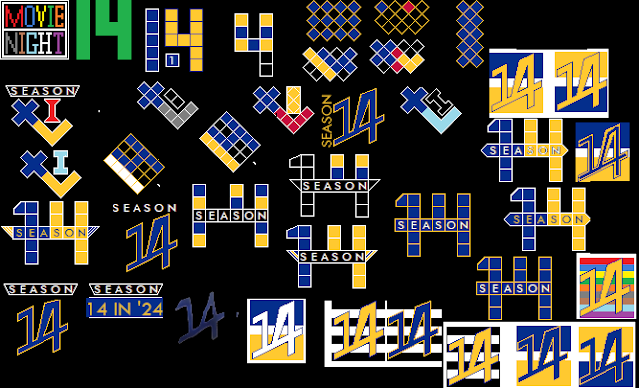
As a treat, I'd like to close off Season 14 by showing off a few concept ideas I had come up with MS Paint before settling on the final format in what accompanied each review in 2024. We shall see what Season XV brings in 2025. It will be a short wait for the next review.

October 16, 2024

The Invisible Man Returns.

Review #2279: The Invisible Man Returns.

Cast: 
Cedric Hardwicke (Richard Cobb), Vincent Price (Geoffrey Radcliffe), Nan Grey (Helen Manson), John Sutton (Dr. Frank Griffin), Cecil Kellaway (Inspector Sampson), Alan Napier (Willie Spears), Forrester Harvey (Ben Jenkins), and Paul England (Detective) Directed by Joe May.

Review: 
You have to be a bit bold to flat out call your movie a sequel to H. G. Wells' The Invisible Man, particularly since well, Wells didn't do a follow-up work to his famous 1897 novel. The 1933 adaptation by Universal (as directed by James Whale) even matched the book in killing off its lead character. But here we are because Universal Pictures loved the idea of doing follow-ups to their horror films and had a hit with Son of Frankenstein (1939). Universal apparently had an interesting time to pick a director and an actor for the title role (thinking of Rowland V. Lee to direct) but eventually settled with May to direct and picked Vincent Price (having originally thought about casting someone familiar like Boris Karloff at first before going for "young and good-looking upcomer"). This was released at the tail end of May's career as a director (having emigrated from Austria to America in the 1930s) as he directed just four further films prior to his death in 1954 at the age of 73. Four writers were utilized for this film: Lester K. Cole and Curt Siodmak wrote the screenplay while May, Siodmak, and Cedric Belfrage wrote the story. The movie apparently was shot over the course of a month in late 1939. The effects were credited to John P. Fulton, Bernard B. Brown and William Hedgcock, which apparently dealt with shooting in black velvet. The next two films dealing with invisible people from Universal were not exactly horror films, but Siodmak wrote both of them (with May being there as well for one of them) with the sci-fi comedy The Invisible Woman (1940) and the action/spy film Invisible Agent (1942). Jon Hall served as the new title character for that film and The Invisible Man's Revenge (1944).

Admittedly, the sequel does have one neat card to play: it isn't merely just doing the last film again, particularly since it seems hard to top Claude Rains and his performance from a few years ago. For one, it is more of a gradual unravelling as one might see from a procedural, complete with a somewhat low-key lead presence (note that "Sir" Hardwicke actually isn't in the film for very long). The justification for how one gets to see a new invisible man is pretty interesting: when framed for murder and on the door for execution, friends resort to helping a guy turn loose and invisible. It has a "fine" pace at 81 minutes that is more interesting when trying to play for effects rather than play itself in showing the locale that is, well, not nearly as effective in relief that one already saw years prior. It probably is more interesting to wonder just what one would end up doing in terms of stability when it comes to the idea of invisibility, and like before it presents someone who gets wrapped up a bit in chaos but otherwise had a genuine idea in mind in going with the whole thing. This was the fourth feature film for Price, who actually would go through a variety of supporting roles (with some top billing) in noirs and period films before getting latched onto as a horror guy by the 1950s. He does just fine for a role that is all about the voice over all, which he plays with concern rather than ham, which probably makes sense. Hardwicke gives the worried elegance of someone doing a job quick and easy while Grey and Sutton at least fill out the movie in casual interest (i.e. a bit of science-babble and babble about their friend). Kellaway isn't even forced to play skeptic to what's going around him, he just plays it straight. As such, it may be a hokey sequel not quite up to the original stuff, but it at least has some commitment to doing drama with some quality effects and useful enough pacing to keep one invested to the bitter end. It's a familiar comfort, go figure.

Overall, I give it 7 out of 10 stars.

January 13, 2023

I Married a Witch.

Review #1955: I Married a Witch.

Cast: 
Fredric March (Jonathan Wooley), Veronica Lake (Jennifer Wooley), Cecil Kellaway (Daniel), Susan Hayward (Estelle Masterson), Robert Benchley (Dr. Dudley White), Elizabeth Patterson (Margaret), Eily Malyon (Tabitha Wooley), Robert Warwick (J.B. Masterson), Mary Field (Nancy Wooley), Nora Cecil (Harriet Wooley), Ann Carter (Jennifer Wooley), and Aldrich Bowker (Justice of the Peace) Produced and Directed by René Clair.

Review: 
To start with a director, the middle is sometimes a pretty good idea. René Clair was a director of various films over four decades, born to a soap merchant in Paris in 1898. He served in World War I as an ambulance driver before becoming a journalist. His film career came to start because of persuasion by Damia (the stage name of singer Marie-Louise Damien) to visit the Gaumont film studio, which ended up resulting in him getting cast as a lead role in acting. He became an editor to a film magazine in 1922 before doing a bit of travelling to Belgium and subsequently becoming an assistant director to Jacques de Baroncelli. In 1924, he got his chance to direct with a couple of shorts in The Crazy Ray [Paris qui dort] and Entr'acte before his first feature film came with The Phantom of the Moulin Rouge [Le Fantôme du Moulin-Rouge] (1925). By the time the silent era was over, he developed a reputation as one of the most notable French names in cinema. His sound features would be an interesting case. Le Million (1931) and À nous la liberté (1931) were noted classics involving Paris, but the failure of The Last Billionaire [Le Dernier Milliardaire] (1934) was not only a flop but also the last film he did in France for years. A deal with Alexander Korda while in London led to a deal between the two to make films together, and Korda directed two films for him (The Ghost Goes West and Break the News). He then moved to America and directed a handful of feature films, which started with The Flame of New Orleans (1941). He did not return to France until 1947. He directed four films in America for various studios. His reputation dipped in light of the French New Wave deeming him a member of the establishment, with his last film being The Lace Wars [Les Fêtes galantes] (1965). Clair died at the age 82 in 1981.
 
The film is an adaptation of the book The Passionate Witch, which was being written by Thorne Smith (best known for his two ghost books in Topper) prior to his death in 1934 that saw Norman H. Matson finish it to see publication in 1941. Robert Pirosh and Marc Connelly are credited with the screenplay, but several writers were left uncredited for the dialogue, such as Clair, André Rigaud and Dalton Trumbo. Preston Sturges was originally the main producer of the film (it is him that brought Veronica Lake onto the project by convincing Clair and Paramount Pictures), but artistic differences with Clair led to him leaving the project with no screen credit. Incidentally, this film and Bell, Book and Candle (1958) would prove the inspiration for the television series Bewitched. There is something quite hypnotic that comes through with the chemistry of March and Lake, acting in their one and only feature together. Lake (a twenty-year old at the height of a career that saw her last three films be released in 1951, 1966, and 1970) proves quite bewitching in the right sort of timing, one who alternates between bubbly and later hopelessly smitten, which makes her ideal for a screwball supernatural film that rests on her shoulders for confidence and mostly succeeds; Clair later stated that she was a gifted actress who didn't believe she was gifted, and that statement seems to hold water now. March (25 years older than Lake, talk about contrasts) plays the straight and wavering role to general amusement without coming off as just the fool. They make a worthy pairing, which is probably an indicator of their talent given that they disliked working together (with names of "poseur" and "sexpot" being thrown around). Kellaway proves a solid conniving presence in support, a useful adversary in a silly film with plenty of goofs and magic to go around, while Hayward makes a solid icy foil of ambition. What can one expect from a film of witchcraft that sees wedding crashers and a flying car? It is offbeat, but it is consistently on time with amusement that never seems to cloy at the viewer in desperation or take itself too seriously. Instead, it uses peculiar charm and timing to make a film worth celebrating and viewing after eight decades because of the craftsmanship at hand to turn a bedeviling witch film into worthy entertainment for the young and old at heart. There may be no perfect answer to where to start with Rene Clair as a filmmaker, but this one is a solid place to consider.

Overall, I give it 8 out of 10 stars.

Next Time: I know, not enough hints about what comes up next in a month for new voices. I got one hell of a spotlight coming with this one film from Korea...

October 7, 2022

The Beast from 20,000 Fathoms.

Review #1899: The Beast from 20,000 Fathoms.

Cast: 
Paul Hubschmid (Professor Tom Nesbitt), Paula Raymond (Lee Hunter), Cecil Kellaway (Dr. Thurgood Elson), Kenneth Tobey (Colonel Jack Evans), Donald Woods (Captain Phil Jackson), Ross Elliott (George Ritchie), Steve Brodie (Sgt. Loomis), Jack Pennick (Jacob Bowman), Michael Fox (ER doctor), Lee Van Cleef (Corporal Jason Stone), and Frank Ferguson (Dr. Morton) Directed by Eugène Lourié.

Review: 
The creature feature is a fun one to think about in the Atomic Age, considering that you had films that ranged from ones attacking Tokyo to ones involving irradiated ants or octopuses. Sure, there were movies you might call "monster movies" beforehand such as The Lost World (1925) or King Kong (1933), but you have to consider how the dawn of nuclear paranoia with the 1950s made for a whole new element of creature terror, primarily as B-productions...and this one came in 1953, before Godzilla (1954) and others of its ilk.  The film is loosely based on the short story "The Fog Horn", written by Ray Bradbury (you may remember Bradbury as the writer of numerous short stories and novels such as Fahrenheit 451). That story involved a lighthouse with a horn that attracts the attention of a lone sea monster. The studio bought the rights to the story when the screenplay was in development, probably because of the lingering similarities between sea monster and creature from beneath the sea (besides, who wouldn't want to say they were based on a Bradbury work?). The screenplay was done by Fred Freiberger, Eugène Lourié, Louis Morheim, and Robert Smith. The career of its director is a bit fascinating. This was the debut of Lourie, who directed just three more films after this one: The Colossus of New York (1958), The Giant Behemoth (1959), and Gorgo (1961). The Russian-born Frenchman was first inspired by film when he saw his first cinema theater in 1911 as a six-year-old, and he even appeared as a bit player in films starting in 1919. By the 1930s, he would do work as an art director that spanned numerous directors such as Jean Renoir and Clint Eastwood. Of course, he noted later in life that he was typecast as a director of science fiction because of his work with this film (incidentally, he was nominated for an Academy Award for Best Visual Effects on Krakatoa, East of Java in 1969).

Incidentally, Bradbury was a long-time friend of Ray Harryhausen. The Los Angeles native had an interest in animation since seeing King Kong (1933) numerous times, and he would study at the School of Cinematic Arts at the University of Southern California to hone skills in arts and sculpture. He would get a chance to work with his mentor Willis O'Brien as a technician on effects with the Academy Award awardee Mighty Joe Young (1949). When it came time for Fathoms, Harryhausen would get his first chance to do a film with himself in charge that saw him pioneering "Dynamation". The process required split-screen, rear projection, multiple pieces of glass between camera and screen with paint to black out the part that are meant to be in front of the creature required to be seen before using one that blackens out the reverse of the first glass. This required less building of miniatures that were apparent for stop-motion that could have a bit more interaction between creatures and actors. In total, Harryhausen would use the process for fifteen films from 1953 to 1981 as one of the most distinct effects people of the last half-century.

For an 80-minute movie made for roughly $200,000 (as produced by former Monogram associates in Jack Dietz and Hal E. Chester that saw distribution by Warner Bros.), it was a clear-cut success with audiences. It is a fun movie in its construction that pulls off spectacle with careful patience that never sells out for simply being a mash movie with no substance to it. Any movie that takes a little bit of time to cover how a nuclear weapons test goes. Sure, the actors aren't exactly doing stand-out performances, but making sure to not look goofy in the face of what is meant to be refreshing entertainment is something to give credit to, particularly since a handful of the actors were part of other monster movies besides being usual veterans of the screen, such as Tobey or Elliott. Hubschmid makes a solid lead in trying to make others believe a monster lurks while Kellaway works his charm in the "let's capture it alive" type to go with a soothing Raymond. They keep the edges at a fairly rounded level to make the scenarios work, whether that involves sharpshooting isotopes or trying to make people believe a monster exists. The effects are dazzling and effective in the moments required in making a capable threat, one seen terrorizing streets and even a lighthouse and rollercoaster ride with believability. My favorite part is the idea that the people can shoot the creature, which works for them shooting a hole in it before they find that the blood coming out from it is getting people really sick. That's one interesting way to have a scary monster that moves on four legs, one that can snatch police officers and chomp them and also get you sick if someone tries shooting holes in it. With a smooth monster, it is no wonder how this movie worked so well with audiences, because it is a fair treat that fit its era like a glove, pulling off entertainment with resourceful craftmanship fit for everyone.

Overall, I give it 8 out of 10 stars.

October 7, 2021

The Mummy's Hand.

Review #1735: The Mummy's Hand.

Cast: 
Dick Foran (Steve Banning), Peggy Moran (Marta Solvani), Wallace Ford (Babe Jenson), Eduardo Ciannelli (the High Priest), George Zucco (Professor / Andoheb), Cecil Kellaway (Tim "The Great Solvani" Sullivan), Charles Trowbridge (Dr. Petrie), Tom Tyler (Kharis), and Sig Arno (The Beggar) Directed by Christy Cabanne.

Review: 
Believe it or not, the Univeral line of horror movies was not a constant cycle that just churned out interesting monster after monster; sure, Universal opened the door with The Phantom of the Opera (1925), but it was Dracula (1931) that set the stage for a craze of films in the next five years that generally adapted literary material such as the works of Edgar Allan Poe or H.G. Wells. The Mummy (1932), however, was instead inspired by the public interest in Egyptian tombs and curses. By 1936, the cycle of these films would take a pause because of the power struggle that came about over ownership of Universal Pictures, which struggled with financial overruns with the Laemmle family in charge. Until the fall of 1938, there were no plans for future films...until Universal heard about the positivity coming from the Regina-Wilshire Theatre in Beverly Hills, which showed a double feature of Dracula and Frankenstein and attracted crowds, including Bela Lugosi being used to promote it; they would make their own prints to show around (while having Lugosi do a wide tour) and soon found themselves in a decision to return into the world of horror. As such, Son of Frankenstein (1939) started a new cycle of horror films from the company, which would include old and new monsters with features such as The Invisible Man Returns (1940), The Wolf Man (1941), and others. However, with the Mummy series, a re-imagining would be done for the four feature films done in the 1940s (each with the title of "The Mummy's [blank]" with this one, Tomb, Ghost, and Curse). The 1931 film featured a mummy by name of Ardeth Bay / Imhotep, while this one features a mummy named Kharis, which would be the name for each of the subsequent films (this does not include the Abbott and Costello crossover film, which spelled it as Klaris). The story was done by Griffin Jay, who also did the screenplay with Maxwell Shane; the film was made on a modest budget of $84,000 while having a bit of footage re-used from the original feature (because why re-stage something you already shot in a time where you couldn't just watch the other film on a whim?) and sets re-used from Green Hell (released the same year, incidentally directed by James Whale). At the helm of director was Cabanne, a stage/film actor-turned-director that would turn out films at a proficient rate from the 1910s all the way until his last film in 1948, with a good deal of them being Westerns. Oddly enough, it was a guy known for Westerns that would play the title character for this film with Tom Tyler. One can imagine why anybody would only want to do one feature where cotton is glued to the face for wrinkles (I imagine it took less than eight hours to get the job done this time around).

This, along with a handful of the horror films of its era, belong to the B-movie classification, ones that could be slickly made and shown out to fill the billing for whatever theatres needed in the era of the 1940s, for better or worse (Frankenstein would turn into a monster mash with varying results, for example). One could probably do better with 67 minutes than to watch a curiously average affair that this film proves to be, one that has a bit more of the Mummy than the original but without as much interest in actually doing anything useful besides attempts at building a quartet that go about as well as riding a bike blindfolded. Technically, the only interesting presence is Zucco, who certainly had a knack for playing the heavy (whether suave or mad), although Tyler and a frame-by-frame blackening out of his eyes is a close second (incidentally, Lon Chaney Jr would play the title character in the next three films, while Zucco would appear in two of them). The effects are fairly decent here too for the character, so there is that to consider. To add one more Western connection, Foran was actually known for his performances in Western musicals and supporting roles. For such a wooden time, he is probably the better of the main four, if only because he fits the requirements of a calm middle man with the bare minimum (the same could be applied to Moran, but playing the one in distress on a slab doesn't help). Nay, the flaws rests with the attempts at making comic relief with Ford and Kellaway. Sure, each actor had a handful of films to show their stuff as character presences, but they seem wasted here because the comic stuff just isn't that interesting. With such a short time to spare (particularly after spending the first few minutes with Zucco in relaying the plot), one doesn't have much patience with goofy things that revolve from trying to trick a magician in a bar to talking about a trick with a pebble. Besides, the mummy doesn't exactly have as much threatening power if all it does is being used as a tool to kill everybody but the main group (involving extinct leaves being turned into tana liquid). The climax is especially annoying in this regard, since Zucco and Ford get to engage in a short gunfight where they somehow shoot at each other but only one manages to hit anything (and if you remember correctly with Zucco, this means nobody really shot the other!) while the mummy stumbles around with a tied up person (brought in by Zucco because he wants to be immortal with her because...guarding the mummy isn't enough?). Honestly, besides torching the mummy, the quarter getting spoils of the tomb they eventually found is probably the most insulting thing, because we are here for the tiniest bit of horror, not fortune. As a whole, the film served as a quick way of getting folks back in the seats for a mummy after eight years of seclusion, and while I can't say I liked the film, it might prove a curiosity for anyone wanting quickly-done horror or for folks already interested in just where Universal liked to go with their monsters.

Overall, I give it 6 out of 10 stars.

Next Time: Abbott and Costello Meet Frankenstein.

December 6, 2020

Harvey.

Review #1607: Harvey.

Cast: 
James Stewart (Elwood P. Dowd), Josephine Hull (Veta Louise Dowd Simmons), Peggy Dow (Miss Kelly), Charles Drake (Dr. Lyman Sanderson), Victoria Horne (Myrtle Mae Simmons), Jesse White (Marvin Wilson), Cecil Kellaway (Dr. William Chumley), William H. Lynn (Judge Omar Gaffney), Dick Wessel (Bartender Mr. Cracker), Nana Bryant (Mrs. Hazel Chumley), Grayce Mills (Aunt Ethel Chauvenet), and Clem Bevans (Herman Shimmelplatzer) Directed by Henry Koster.

Review: 
"I must say it was a complete, one hundred percent pleasure, the whole picture. I had the most wonderful performers. The spirit of Harvey, that splendid and helpful ghost, was always with us while we did it."

What does one expect from a movie involving an eccentric lead that has a six-foot (and 3 1/2 inches) invisible rabbit for a best friend? Plenty, if you can believe it from a film celebrating its 70th anniversary. I'm sure at least one of my readers has had an imaginary friend that lurked in their lives, and I remember having one to talk my thoughts with out loud (it didn't have a name, however). Harvey first began as a play of the same name, written in 1944 by Mary Chase. She was awarded a Pulitzer Prize for Drama the following year for the play. Its original production ran for five years on Broadway, which originally featured Frank Fay as the lead with Josephine Hull in the secondary role. There were various actors that would take over the role during that run, which included actors such as Joe E. Brown and James Stewart. He managed to snag the role in a deal with Universal-International that meant he would be cast if he agreed to be the star of Winchester '73 (1950), which arguably played a great role in his second phase of stardom. Stewart would play the role again on the stage numerous times, including a revival on Broadway and a run on the West End as well as a TV adaptation in 1972 (done between two other TV adaptations, which had Art Carney and Harry Anderson as leads, respectively). He would note this as one of his favorite roles, reflected as such by him in a special introduction he did for the release of the film onto video in 1990. If you can believe it, Chase wanted the film to show the rabbit at the end, as if to show that the lead was not in fact just a drunk - the studio decided to not do so, instead going with for the final shot of the movie a credit for the title character that shows a door quietly being opened as "as himself" title appears (besides, he technically makes an appearance - in a painting with him and Stewart). This was a film in the middle of the lengthy career of Henry Koster, who grew up interested in cinema from a young age growing up in Berlin, Germany. He grew up to become a screenwriter for German films before moving into directing with Thea Roland (1932) before leaving for Austria and later the United States before World War II started. Koster would direct numerous films in three decades of work (for a variety of studios, most notably with Universal Pictures), directing a variety of genres such as musicals and comedies (including discovering Abbott and Costello that led to them being hired for films) - simply put, it is long overdue to look upon his career.

Chase and Oscar Brodney wrote the screenplay, while Myles Connolly did uncredited contribution as well. So how goes the film with plenty of calm whimsy? Oh, it's a fine one, one that honors its stage roots to make a well-mannered adaptation into film. With Stewart at the helm, he makes the experience all the more useful in quiet endearing charm, which one can expect from a number of his performances in a lengthy career, but this one fits right at home with what is needed here, because he doesn't make it out to seem like one is waiting for a joke to arise, as he is instead a bit stooped over with kindness (since the shots make it look like there really is someone near him to begin with). It may not be a great film, but it is nice to see that no one has tried to remake it into a theatrical effort since this one. While this was only the fourth of five film roles for Hull, don't let that fool you into seeing the talent within, because she was a stage actress for fifty years, going from stock to chorus girl to eventual star. She makes a worthy mild tempered foil to go with Stewart, one that has the interesting act of having to believe and not believe in the title character at the same time. In other words, this is a fine film where either Stewart or Hull can be thought of as easy to go along with. Others do fine in keeping up, such as a fair duo with Dow and Drake in clinical straight folks, alongside quirks such as White and Kellaway in interaction spent with Stewart and/or Harvey.  It balances its main quirk with reasonable pace at 104 minutes and a few interesting performances to go alongside Stewart that delivers some chuckles that keeps its main focus from devolving into farce with simple wisdom in one key thing: normal humans may be stinkers, but that doesn't mean one that happens to believe in a friendly spirit like Harvey is dangerous to you or me. Basically, you could shorten it to "be yourself", but without the eye-roll that comes at times to folks because of the struggle that comes to wrestle with reality in offbeat ways. In any case, one's enjoyment of the film is all up to your imagination, which goes with the amusement of errors that happen throughout its runtime. What we have is a light-hearted winner in bending the usual expectations seen in comedy-dramas, one with no need for an adversary or a romance to carry itself along, instead relying itself on the folksy charm of Stewart and a pooka to carry your imagination anywhere it wants to go. Sometimes, that is more than enough for a fine time, whether for 1950 or 2020.

Overall, I give it 8 out of 10 stars.

March 26, 2020

Unconquered (1947).

Review #1371: Unconquered.

Cast:
Gary Cooper (Captain Christopher Holden), Paulette Goddard (Abby Hale), Howard Da Silva (Martin Garth), Boris Karloff (Guyasuta, Chief of the Senecas), Cecil Kellaway (Jeremy Love), Ward Bond (John Fraser), Virginia Campbell (Mrs. John Fraser), Katherine DeMille (Hannah), Henry Wilcoxon (Captain Steele), C. Aubrey Smith (Lord Chief Justice), and Victor Varconi (Captain Simeon Ecuyer) Directed and Produced by Cecil B. DeMille (#1245 - The Squaw Man)

Review: 
"Creativity is a drug I cannot live without."

When it comes to innovators and crucial pieces of cinema to link past and present, Cecil B. DeMille serves as a key member of sound and silent cinema for America. He made 70 films from 1914 to 1958 that were known for their epic scale and showmanship. He developed a love of the theater from his playwright father (who suddenly died when Cecil was 11), and he graduated from the American Academy of Dramatic Arts (after time with military college) in 1900. He started his career as an actor that same year, and he would later turn to directing and producing plays in the 1910s. He was soon introduced to Broadway producer Jesse L. Lasky by his producer mother Beatrice, and the two would join forces with Samuel Goldwyn alongside Oscar Apfel to form the Jesse L. Lasky Feature Play Company in 1913, with their studio being a barn in Hollywood, one of the first in the region that is now a state landmark (named after Lasky and DeMille). Their landmark first feature was from DeMille and Apfel with The Squaw Man (1914), which was DeMille's debut (he of course would later film two remakes of the material). DeMlle spent his time directing numerous films nonstop, with his style soon being characterized by having extensive research that turned into collaboration with writers to mold a story together in his vision, which also applied to his efforts on visuals along with editing and lighting. He did not tend to give direction much to actors, preferring to work with them in the office with read-throughs as opposed to doing so on set, where he was an authoritarian that commanded attention from his cast and crew, no matter how big they could be. Actors who did not want to take physical risks for the sake of the film could incur his wrath, such as with this film, where Goddard objected to risk herself for a scene with hurling fireballs (which not surprisingly was proven correct when the stuntwoman later got burned for the scene). He didn't speak to her for years and later denied her a role in one of his subsequent films. Although he is known for his spectacle epics, he directed a variety of genres over the course of his career, ranging from Westerns to romances to comedies, with numerous highlights being Cleopatra (1934), The Greatest Show on Earth (1952, his lone Best Picture win), and The Ten Commandments (1956, a remake of his 1923 film that served as his last venture), and he has served as influence and inspiration to directors such as Steven Spielberg and Martin Scorsese.

The film was written by Charles Bennett, Fredric M. Frank and Jesse Lasky Jr, with un-credited work by Jeanie Macpherson. DeMille had been inspired by The Judas Tree, Neil Swanson's novel about people who had been sent to 18th century America to be sold as slaves after conviction in England. Despite hiring two experts to research about the topic of colonial slavery, he wanted to romanticize the American colonial conquest more than anything else, which means that the final result is a film that seems to go anywhere it wants with its colonial setting, certainly seeming the part with costumes and its cinematography from Ray Rennahan than with other aspects, a ridiculously watchable curiosity. It certainly does seem a bit bloated at 146 minutes, complete with a $4.3 million budget and a shooting schedule that was just as excessive and a battle sequence that had over 800 extras and plenty of dynamite. Cooper (in his fourth and final collaboration with DeMille) pulls off a subtle performance as usual, one that we care to follow along with no trouble because of how natural he plays the hero. Goddard drives the screen with some passion, rolling just fine in chemistry with Cooper in a rustled role that seems fitted for a dime-store novel, complete with color to really emphasize her bright hair for sequences such as the impromptu auction or the bathing one. Da Silva (known for his stage work alongside his work in film) makes for a conniving adversary that the audience can seethe at whenever sharing the screen with either lead, although the climax certainly proves anticlimactic for both sides. Karloff (who was asked to study the Seneca language for the role) seems reserved here for his brief time on screen. Kellaway and Bond give a moment of levity or two, at least. One may very well call this film kitsch and get away with it because of how silly it can get with characters and situations (particularly when relating to history) so overblown that might make The Outlaw and Duel in the Sun bat an eye. It doesn't mean I despise the film however, since there are aspects in terms of cast and design that do tend to work out well - if you are going to make a film resemble a damsel-in-distress novel with big costumes, one can't go too wrong with something like this, which is too long, too big and too perfect for a few moments to gawk and perhaps have amusement with, for better or worse.

Overall, I give it 7 out of 10 stars.

May 12, 2012

Movie Night: Guess Who's Coming to Dinner.


Review #139: Guess Who's Coming to Dinner.

Cast
Spencer Tracy (Matt Drayton), Sidney Poitier (Dr. John Prentice), Katharine Hepburn (Christina Drayton), Katharine Houghton (Joanna "Joey" Drayton), and Cecil Kellaway (Monsignor Ryan) Directed by Stanley Kramer.

Review
This film was the ninth and final pairing of Spencer Tracy and Katherine Hepburn (1st time I've reviewed a film with these two though, Hepburn's 105th Birthday being today), and they both are wonderful in this drama. It's beautifully acted, especially from Poitier. This is a well set drama that after 45 years holds up allright. But not perfectly allright. I feel that this film wants to have Poitier be too perfect (Which is actually what the director wanted) He does so much good, why would the other parents not accept him? It's a bit outdated, but it is still an allright drama.

Overall, I give it 8 out of 10 stars.