Review #1509: Apollo 13.
Cast:
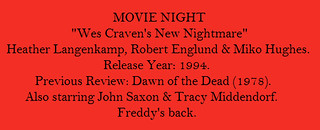
Tom Hanks (Jim Lovell), Bill Paxton (Fred Haise), Kevin Bacon (Jack Swigert), Gary Sinise (Ken Mattingly), Ed Harris (Gene Kranz), Kathleen Quinlan (Marilyn Lovell), Mary Kate Schellhardt (Barbara Lovell), Emily Ann Lloyd (Susan Lovell), Miko Hughes (Jeffrey Lovell), Max Elliott Slade (Jay Lovell), Jean Speegle Howard (Blanch Lovell), Tracy Reiner (Mary Haise), David Andrews (Pete Conrad), Michele Little (Jane Conrad), and Chris Ellis (Deke Slayton) Directed by Ron Howard (#301 - How the Grinch Stole Christmas, #546 - Cinderella Man, #1085 - Willow, and #1095 - Solo: A Star Wars Story)
Review:
"I've acted with all types, I've directed all types. What you want to understand as a director, is what actors have to offer. They'll get at it however they get at it. If you can understand that, you can get your work done."
When it comes to well-established directors in entertainment for over four decades, one key figure of versatility is Ron Howard. He was very familiar with show business from a young age, owing to his parents both being actors and his younger brother Clint also became a child actor (all three would appear in several of his films). Howard began acting from the age of five, and his first major role was in The Andy Griffith Show beginning in 1960, which ran for several years. Howard would credit the friendly environment of the production in allowing participation and curiosity over the role of the director's role in making the show what it was for getting him interested in becoming a director. Howard continued to act in his growing years in film and television (such as The Music Man, American Graffiti, and Happy Days) before venturing his way into making a film with the low-budget Grand Theft Auto (1977), which he starred in and co-wrote with his dad Rance. Since his breakthrough with Night Shift (1982), Howard has gone on to directing a variety of genres in a four-decade career, including comedy, adventure, and thrillers.
Howard became interested in doing the film when reading about the facts of the mission and realizing the interest sprang not so much in just making the audience experience space but also making a story of human triumph. The film first came into interest with the non-fiction account of the mission by its commander Jim Lovell that he co-wrote with Jeffrey Kluger in Lost Moon: The Perilous Voyage of Apollo 13, published in 1994. William Broyles Jr and Al Reinert would be behind the screenplay (with un-credited rewrites from John Sayles). What a fascinating film we have here, both on how it treats its subject matter and as an experience in entertainment. Its depiction of the "successful failure" of the Apollo 13 is one that has endured for over two decades because of how Howard and his crew managed to cultivate meaningful drama and spectacle into 140 minutes with near-perfect precision for what makes exploration and resilience so interesting. We look upon the Apollo missions with wonder for how they did those missions from the Earth to space and beyond with the technology of the time while not forgetting that the Apollo missions rode and fell in popularity over the years that followed landing on the Moon, as if one could see travel away from home as just typical, but this particular mission showed the resilience of people under pressure on Earth and off it to maintain themselves with failure not being an option.
Hanks, an affirmed lover of the space program, is naturally perfect here, having a natural charm and spirit that we care to see in his pursuit of travel with curiosity and nuance. Paxton follows him with well-followed spirit and a vivid presence worth viewing in the ship in the struggles that came for the mission. Bacon finishes the main trio of shipmates with earnest interest, while Sinise stands firm on the ground with conviction through those moments used in spurts throughout. Harris reins in respect and determination with a well-rounded performance that exudes confidence and professionalism each time he is on screen within Mission Control. Quinlan certainly seems right in her instinct for what is needed, with the real Lovell praising her as being fairly authentic to her own thoughts and feelings of the time. The others fill in the seams with no problem in keeping the interest and docudrama on the level. The interest in looking at history told through the lens of a film is where the accuracies and inaccuracies blend in with each other. In this case, there are certain quibbles that come with making a drama (such as for example Mattingly being more of a composite for several astronauts and engineers with regards to solving the power consumption problem for re-entry or the neglection of Glynn Lunney and his team in those crucial first hours of doom), but nothing comes across as contrived or illogical to ruin what is a fairly accurate movie, particularly in its look (noted in several parts by crew members, such as the Mission Control set). Think about this: this is a film that did not utilize documentary footage, rather instead going for re-creation of the whole experience through effects and sets, which would include the KC-135 (a fixed-wing aircraft that is used to train astronauts for weightlessness), which they could only use for filming in zero gravity for very brief intervals (25 seconds at a time). On the whole, one can find themselves wholly invested into the proceedings without needing much familiarity with the Apollo missions, and even those who know it will still find plenty to take interest in without seeming inevitable. It wins most of its moments in sentiment and tension with a clear-cut cast and well-done technique to make a solid enough winner for the era that remains timeless then as now as a portrait of the people that stood up when failure was not an option.
Overall, I give it 9 out of 10 stars.