
Showing posts with label Wesley Addy. Show all posts

December 31, 2024

Hush...Hush, Sweet Charlotte.

Review #2331: Hush...Hush, Sweet Charlotte.

Cast: 
Bette Davis (Charlotte Hollis), Olivia de Havilland (Miriam Deering), Joseph Cotten (Doctor Drew Bayliss), Agnes Moorehead (Velma Cruther), Cecil Kellaway (Harry Willis), Mary Astor (Jewel Mayhew), Victor Buono (Big Sam Hollis), Wesley Addy (Sheriff Luke Standish), William Campbell (Paul Merchand), and Bruce Dern (John Mayhew) Produced and Directed by Robert Aldrich (#105 - What Ever Happened to Baby Jane?, #778 - The Longest Yard, #1014 - The Dirty Dozen#1389 - Kiss Me Deadly)

Review: 
If you remember, What Ever Happened to Baby Jane? (1962) was a hit with audiences, so naturally one might want to capture on that success and make a quick follow-up. Robert Aldrich decided to use an unpublished short story written by Henry Farrell called "What Ever Happened to Cousin Charlotte?". Lukas Heller, who had adapted Farrell's Baby Jane novel, would write the screenplay with Farrell (incidentally, Farrell wrote one other screenplay with What's the Matter with Helen? [1971]). Of course, he ran into a small problem: Joan Crawford and Bette Davis did not really want to work with each other again. Crawford (as cast in a role that wasn't exactly a role to chew on when compared to Davis, who had influenced the title change) wound up in the hospital with a respiratory ailment, but Aldrich was skeptical enough to actually hire a P.I. to track her. Incidentally, Crawford happened to star in a different type of psychological horror movie in 1964 with Strait-Jacket (both movies feature a person spooked by a memory of head-rolling death that may or may not be coming back to haunt them back home). At any rate, demands by the insurance company led him to either trash the movie or fire Crawford, for which Alrich went with the latter decision in August of 1964. After a handful of actresses rejected Aldrich's offers (such as Vivien Leigh), he eventually replaced her with a good friend of Davis with Olivia de Havilland. Others did return to be involved with the film from Jane such as editor Michael Luciano and composer Frank De Vol to go along with appearances by Victor Buono and Wesley Addy. While not quite as popular as the aforementioned Aldrich film, the movie was a relative success with audiences when it first came out in late 1964 and even received a few award nominations (in interviews, Aldrich liked making the movie just fine, although he had wished he could've spread out the time in making two similar films with Baby Jane and Charlotte for "my personal taste" while also arguing that Davis gave a better performance in the latter). In 1969, Aldrich produced What Ever Happened to Aunt Alice?, which while not related to Charlotte or Baby Jane is at least interesting for being about an aging old woman (played by Geraldine Page) dealing with murder and mayhem.

Creepy and creaky with a runtime at 133 minutes, this is the kind of movie that plays right at home for those who like drawn out thrillers (it reminds me to consider Les Diaboliques [1955], incidentally), albeit ones that play with bits of gore here and there. One particularly has some fun with the opening sequence (which features the ever-effective Buono to go along with a young Dern getting to be a part of, well, head-rolling) to draw out the scenarios of Southern Gothic mayhem that does eventually circle back to what it believes will be fun turns of the screw. Of course, it helps to have an actress like Davis at the helm to give the whole thing a sense of interested dignity in making this more than just goofy hysterics (hey, we don't judge anyway, particularly since  there are people who thought Baby Jane had some sort of camp aspect to it, as if scene-chewery isn't merely just part of just making some thrillers). Her entrapment in the past for the character is handled with the usual Davis standard of approaching the role with straight-to-the-point grace, managing to handle the tightrope of not merely being consumed or embarrassed by the macabre aspects. She plays the great creature that comes with a psyche that can only see things through the prism of the place that might as well be a mark on her soul, one that traps her soul that can be seen even when she is brandishing a shotgun (as seen early in the movie). de Havilland apparently wasn't too keen on making the movie but elected to do it because of the desire by Davis to work with her, which she did with relative success (after this, she appeared in five further films over the next 15 years to go along with a few television appearances prior to her death in 2020 at the age of 104). But she plays it as it if was a tight-rope to glitter in facades just as interesting as the one presented by what one would assume is just a nut (maybe it's a spoiler to say to beware of nice-presenting strangers), and it goes just as well with Cotten (incidentally, he also happened to play a key role in a movie about a woman possibly being on the nutty side with 1944's Gaslight), who has that conniving nicety to play the part one needs to play in triangular mayhem with composure to make it stick. Of course, Moorehead inspires a few quizzical in amusement that lends support to both the unravelling curiosity along with generally being warm to follow in terms of devotion with an accent to match (hey, the accents are fine for me). Of course, Kellaway is the civil one for enjoyment on the level of a usual character actor that could just inhabit a role with a few choice sentences. Undeniably, the movie is so worthwhile to see in all of the shadows and angles (as shot by Joseph Biroc), which is gorgeously appropriate when it comes to crafting a tawdry tale (complete with carefully composed angles for such a suitable set (which come to a head in one eerie scene) with game actors and at least one rug-pull moment that will surely make a worthy dark joke. Sure, the movie wraps its strings quite a few times around itself to make a knot, but the game is worth playing nonetheless. Aldrich was a craftsman director worth following along with in his attempts at chasing the audience to entertain with whatever he felt like doing at the time. As such, there is a few good moments in suspense to justify a watch for those who love seeing a few familiar actors play along in Gothic strangeness for lively execution that endures after six decades because of the commitment behind it.

Overall, I give it 8 out of 10 stars.
167 reviews later, here we are at yet another New Year's Eve. Sure, last year was a bit busier, but October 2024 was a month to be proud of regardless. Since 2011, we've managed to review a movie on December 31st a total of 17 times, with only 2015 and 2017 being exceptions, and it was nice to try a double-header once again to try and top how things went from last year.

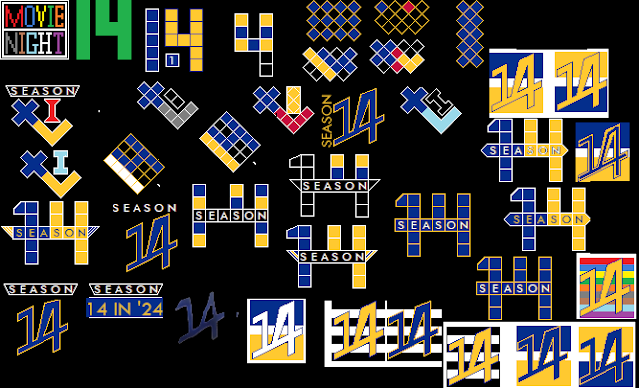
As a treat, I'd like to close off Season 14 by showing off a few concept ideas I had come up with MS Paint before settling on the final format in what accompanied each review in 2024. We shall see what Season XV brings in 2025. It will be a short wait for the next review.

December 11, 2022

The Verdict (1982).

Review #1935: The Verdict.

Cast: 
Paul Newman (Frank Galvin), Charlotte Rampling (Laura Fischer), Jack Warden (Mickey Morrissey), James Mason (Ed Concannon), Milo O'Shea (Judge Hoyle), Lindsay Crouse (Kaitlin Costello Price), Edward Binns (Bishop Brophy), Julie Bovasso (Maureen Rooney), Roxanne Hart (Sally Doneghy), James Handy (Kevin Doneghy), Wesley Addy (Dr. Towler), Joe Seneca (Dr. Thompson), and Lewis J. Stadlen (Dr. Gruber) Directed by Sidney Lumet (#035 - 12 Angry Men, #036 - Network, #404 - The Anderson Tapes, #1065 - Deathtrap#1446 - Murder on the Orient Express#1450 - Dog Day Afternoon, #1545 - Before the Devil Knows You're Dead)

Review: 
A combination of a director known for his crafting of actors into diverting character dramas and a powerhouse star and script surely would work out for a fair classic, you might say. The movie is an adaptation of the 1980 novel of the same name by Barry Reed. In addition to writing for American Bar Association Journal alongside novels, Reed had his own legal practice in Boston, Massachusetts and he had a reputation for specializing in medical malpractice, personal injury, and civil litigation. Interestingly, one of his proteges was Jan Schlichtmann, a lawyer noted for his own case that became a book and film about a lawyer taking on a big name (in this case, two companies sued for leukemia deaths), which you might know as A Civil Action (1998). Right before publication of The Verdict, producers David Brown and Richard D. Zanuck purchased the film rights. The two hired David Mamet to write a screenplay based on the book. By this point, Mamet was noted for his array of off-Broadway plays in the 1970s such as American Buffalo. The first produced screenplay by Mamet was the 1981 adaptation of The Postman Always Rings Twice. It shouldn't be too surprising that there were numerous choices for directors and main stars: James Bridges was the initial choice for director and Robert Redford was the first-pick star, but when Bridges became busy with Urban Cowboy (1980), the producers went with Arthur Hiller as the potential director...before a disagreement with Mamet saw him depart (of course, Zanuck wasn't particularly big on the ending of the original script, which ended before the jury came back with the verdict). Jay Presson Allen came in to try and deliver a new script, and when Bridges had time at last to do a project, he also seeped his fingers into writing for the film, but it all went for naught when Redford and Bridges had disagreements over the nature of the main character (Redford irked at the idea of playing the character with the flaws as written). Not long after, Lumet was asked to do the film, and he elected to go back to the original Mamet script, complete with Paul Newman as star. 

Admittedly, the legal aspects of the film aren't completely on the level, as I suspected from a cursory bout of research. For the record, if you are suing a hospital and they offer you a settlement, your lawyer cannot simply reject the offer (without even consulting the clients), and the opposing council doesn't go around telling the client about offers either. But I suppose if you can buy a film that hinges its big finish on having the jurors challenge their doubts in their beliefs, institutions, and the law itself, you can do almost anything. But the movie as a whole is pleasant as a stone-cold thriller of possible redemption as baptism by fire, utilizing its 129 minutes to general effectiveness. It relies heavily on the performance of Newman, in his only appearance in a feature film with Lumet as director. He pulls off a great performance, plundering the depths of redemption in an understated and powerful manner that never blusters or hits a false note from start to finish, one where burying the case is not the end of his own road. Sure, one could put the highlight as the last scene in the courthouse or even the final shot with a rejected call, but the best one might be a sequence where Newman is taking photos of his client (a comatose victim) before he processes what he is doing when the photo is developing and snaps himself to action without having to say a word. It isn't so much as chewing the scenery as it is just a case of a damn good actor being accompanied by pretty decent support in the cast besides him. Rampling makes a quality counterpart to Newman, since each are wayward spirits to begin with, and the last sequence where they share time together (i.e., not just stare at each other) is quite effective in its shock, while Warden accompanies Newman as the long-suffering lawyer pal in useful character presence. Mason (in the twilight of his career) is the ideal foil to Newman, bringing dignity to a role of slime, which goes just as well for O'Shea in steely impatience. As a whole, it is more of a thriller of the lead character rather than a straight-boiled court drama, which results in a slow burn experience that ultimately shows Lumet and Newman in their proper environments: rehearsed excellence, one that has endured well for itself after four decades. 

Overall, I give it 9 out of 10 stars.

April 15, 2020

Kiss Me Deadly.

Review #1389: Kiss Me Deadly.

Cast: 
Ralph Meeker (Mike Hammer), Albert Dekker (Dr. G.E. Soberin), Paul Stewart (Carl Evello), Juano Hernandez (Eddie Yeager), Wesley Addy (Lt. Pat Murphy), Maxine Cooper (Velda), Cloris Leachman (Christina Bailey), Gaby Rodgers (Gabrielle/Lilly Carver), Nick Dennis (Nick), Jack Lambert (Sugar Smallhouse), and Jack Elam (Charlie Max) Produced and Directed by Robert Aldrich (#105 - What Ever Happened to Baby Jane? and #778 - The Longest Yard, and #1014 - The Dirty Dozen)

Review: 
"The power is for the director to do what he wants to do. To achieve that he needs his own cutter, he needs his cameraman, he needs his own assistant and a strong voice in his choice of writer; a very, very strong voice on who's the actor. He needs the power not to be interfered with and the power to make the movie as he sees it."

A director can come from anywhere if their heart is set on it. The descendant of prominent family members of wealth and society, Robert Aldrich found himself with plenty of pressure to succeed in the line of other Aldriches before him, with his father being a newspaper publisher while others had served in office or in war. He attended both Yale and the University of Virginia, but he found himself at odds with his family when it came to his beliefs that were less focused on wealth and money than his family was, particularly with the advent of the New Deal in lieu of the Great Depression. He dropped out of studying economics for a chance at working at RKO Radio Pictures as a production clerk at the age of 23, which resulted in him being disinherited. From this, he would work his way up to positions higher up such as associate directing and producing to writing and directing for television (which he viewed as a crash course for directors in terms of rushed schedules). He worked for a variety of directors for a decade such as Lewis Milestone, Robert Rossen, Charlie Chaplin, and Jean Renoir, learning from their strengths and weaknesses about the fundamentals of filmmaking. In 1953, at the age of 35, Aldrich made his directorial feature debut with Big Leaguer, a low-budget baseball movie that he felt was good, but not what he wanted to express in the film medium. Aldrich found his next effort more to his interest with World for Ransom the following year, and he soon found himself hired by Burt Lancaster for two Westerns in Apache and Vera Cruz (1954), with the relative success of those films helping in him forming his own company in The Associates and Aldrich. In total, the fiercely independent and rambunctious Aldrich would direct 29 total films before his death in 1983 at the age of 65, having a rapid work pace that was equaled with his constant use of crew members like editor Michael Luciano or composer Frank De Vol for several of his films.

It probably isn't a surprise that certain types of people felt this film was a menace to juveniles in terms of delinquency, which was the case of one government commission. Of course the material the film was adapted from attracted its own kind of attention for its violent content (which led to trouble in adapting the generally cold-blooded killer detective to the screen acceptable for the standards of the time) for its hardboiled character of Mike Hammer, which Mickey Spillane featured in thirteen novels over the course of 49 years. The film was an adaptation of the novel of the same name, which was the sixth of thirteen novels (with the series continuing after the author's death in 2006). This was the second of three Spillane novels to be turned into a film in this decade (the other two being I, the Jury and My Gun is Quick). The writing for the film was done by A.I. Bezzerides, who changed the novel's adversary of Mafia gangsters while also adding the nuclear suitcase aspect (as opposed to the pursuit of certain substances in the book) along with changing the occupation of the private eye to divorce case P.I, with Bezzerides noting that he wrote the script with contempt and quickness, which apparently did not sit well with Spillane. In any case, this is a wonderful film noir, filled with plenty of intrigue and tension with a dynamite cast and execution from Aldrich and cinematographer Ernest Laszlo. Meeker leads the film with cynical conviction, a blunt instrument of macho nature that fits the film's maze of brutality. The rest of the cast follow along in varying levels of principle that range from the cleverly understated Rodgers to the hard-line authority in Addy to the careful menace of Dekker. Of note is the debut of Broadway-turned-television actress Cloris Leachman, who appears for the first couple of minutes in a key role that sticks out in panic. In any case, one finds themselves swept up in the film in its path, whether that means having our lead break a record or hurt someone's fingers or even when it comes to explaining the mysterious glowing whatsit. By the time one has spent 106 minutes with the film, you will find yourself electrified by a film that lands most of its punches with precision and paranoia that makes for an explosive climax, which has thankfully been restored in recent years (for decades, the film abruptly ended on a shot of the burning house that made it look like the lead had died looking around the house as opposed to ending on the beach). On the whole, this is a fine gem in Aldrich's body of work that stands today as a neat noir for a prime decade of thrills and paranoia for audiences to gaze upon.

Overall, I give it 9 out of 10 stars.

April 22, 2011

Movie Night: Network.

Review #036: Network.

Cast
Faye Dunaway (Diana Christensen), William Holden (Max Schumacher), Peter Finch (Howard Beale), Robert Duvall (Frank Hackett), Wesley Addy (Nelson Chaney), Ned Beatty (Arthur Jensen), Beatrice Straight (Louise Schumacher) Jordan Charney (Harry Hunter), William Prince (Edward Ruddy), Lane Smith (Robert McDonough), Marlene Warfield (Laureen Hobbs), and Conchata Ferrell (Barbara Schlesinger) Directed by Sidney Lumet (#035 - 12 Angry Men)

Review
Review to be updated at a later point in time - hopefully by the end of 2018 or 2019. 

This film is excellent. Its a fun film that parodies the news and what happens if we let sensationalism win...which in retrospect we may already have let happen to us. The acting especially by Finch is good. He is a riot, as he makes you giggle and more (a shame that this was his last role). This isn't just a movie about Finch, this is a satire that reflects the time it was made while having an angry but collected tone that works. The movie won four Academy Awards, winning for Best Actor (Finch), Actress (Dunaway), Supporting Actress (Straight, who is in the movie for five minutes), and Original Screenplay (Chayefsky) while being nominated for five more. The film flows alright, as the direction by Lumet is (as with the previous film reviewed here) good. This is a fine film that hasn't aged badly.

Overall, I give it 8 out of 10 stars.