Showing posts with label Mary Astor. Show all posts

December 31, 2024

Hush...Hush, Sweet Charlotte.

Review #2331: Hush...Hush, Sweet Charlotte.

Cast: 
Bette Davis (Charlotte Hollis), Olivia de Havilland (Miriam Deering), Joseph Cotten (Doctor Drew Bayliss), Agnes Moorehead (Velma Cruther), Cecil Kellaway (Harry Willis), Mary Astor (Jewel Mayhew), Victor Buono (Big Sam Hollis), Wesley Addy (Sheriff Luke Standish), William Campbell (Paul Merchand), and Bruce Dern (John Mayhew) Produced and Directed by Robert Aldrich (#105 - What Ever Happened to Baby Jane?, #778 - The Longest Yard, #1014 - The Dirty Dozen#1389 - Kiss Me Deadly)

Review: 
If you remember, What Ever Happened to Baby Jane? (1962) was a hit with audiences, so naturally one might want to capture on that success and make a quick follow-up. Robert Aldrich decided to use an unpublished short story written by Henry Farrell called "What Ever Happened to Cousin Charlotte?". Lukas Heller, who had adapted Farrell's Baby Jane novel, would write the screenplay with Farrell (incidentally, Farrell wrote one other screenplay with What's the Matter with Helen? [1971]). Of course, he ran into a small problem: Joan Crawford and Bette Davis did not really want to work with each other again. Crawford (as cast in a role that wasn't exactly a role to chew on when compared to Davis, who had influenced the title change) wound up in the hospital with a respiratory ailment, but Aldrich was skeptical enough to actually hire a P.I. to track her. Incidentally, Crawford happened to star in a different type of psychological horror movie in 1964 with Strait-Jacket (both movies feature a person spooked by a memory of head-rolling death that may or may not be coming back to haunt them back home). At any rate, demands by the insurance company led him to either trash the movie or fire Crawford, for which Alrich went with the latter decision in August of 1964. After a handful of actresses rejected Aldrich's offers (such as Vivien Leigh), he eventually replaced her with a good friend of Davis with Olivia de Havilland. Others did return to be involved with the film from Jane such as editor Michael Luciano and composer Frank De Vol to go along with appearances by Victor Buono and Wesley Addy. While not quite as popular as the aforementioned Aldrich film, the movie was a relative success with audiences when it first came out in late 1964 and even received a few award nominations (in interviews, Aldrich liked making the movie just fine, although he had wished he could've spread out the time in making two similar films with Baby Jane and Charlotte for "my personal taste" while also arguing that Davis gave a better performance in the latter). In 1969, Aldrich produced What Ever Happened to Aunt Alice?, which while not related to Charlotte or Baby Jane is at least interesting for being about an aging old woman (played by Geraldine Page) dealing with murder and mayhem.

Creepy and creaky with a runtime at 133 minutes, this is the kind of movie that plays right at home for those who like drawn out thrillers (it reminds me to consider Les Diaboliques [1955], incidentally), albeit ones that play with bits of gore here and there. One particularly has some fun with the opening sequence (which features the ever-effective Buono to go along with a young Dern getting to be a part of, well, head-rolling) to draw out the scenarios of Southern Gothic mayhem that does eventually circle back to what it believes will be fun turns of the screw. Of course, it helps to have an actress like Davis at the helm to give the whole thing a sense of interested dignity in making this more than just goofy hysterics (hey, we don't judge anyway, particularly since  there are people who thought Baby Jane had some sort of camp aspect to it, as if scene-chewery isn't merely just part of just making some thrillers). Her entrapment in the past for the character is handled with the usual Davis standard of approaching the role with straight-to-the-point grace, managing to handle the tightrope of not merely being consumed or embarrassed by the macabre aspects. She plays the great creature that comes with a psyche that can only see things through the prism of the place that might as well be a mark on her soul, one that traps her soul that can be seen even when she is brandishing a shotgun (as seen early in the movie). de Havilland apparently wasn't too keen on making the movie but elected to do it because of the desire by Davis to work with her, which she did with relative success (after this, she appeared in five further films over the next 15 years to go along with a few television appearances prior to her death in 2020 at the age of 104). But she plays it as it if was a tight-rope to glitter in facades just as interesting as the one presented by what one would assume is just a nut (maybe it's a spoiler to say to beware of nice-presenting strangers), and it goes just as well with Cotten (incidentally, he also happened to play a key role in a movie about a woman possibly being on the nutty side with 1944's Gaslight), who has that conniving nicety to play the part one needs to play in triangular mayhem with composure to make it stick. Of course, Moorehead inspires a few quizzical in amusement that lends support to both the unravelling curiosity along with generally being warm to follow in terms of devotion with an accent to match (hey, the accents are fine for me). Of course, Kellaway is the civil one for enjoyment on the level of a usual character actor that could just inhabit a role with a few choice sentences. Undeniably, the movie is so worthwhile to see in all of the shadows and angles (as shot by Joseph Biroc), which is gorgeously appropriate when it comes to crafting a tawdry tale (complete with carefully composed angles for such a suitable set (which come to a head in one eerie scene) with game actors and at least one rug-pull moment that will surely make a worthy dark joke. Sure, the movie wraps its strings quite a few times around itself to make a knot, but the game is worth playing nonetheless. Aldrich was a craftsman director worth following along with in his attempts at chasing the audience to entertain with whatever he felt like doing at the time. As such, there is a few good moments in suspense to justify a watch for those who love seeing a few familiar actors play along in Gothic strangeness for lively execution that endures after six decades because of the commitment behind it.

Overall, I give it 8 out of 10 stars.
167 reviews later, here we are at yet another New Year's Eve. Sure, last year was a bit busier, but October 2024 was a month to be proud of regardless. Since 2011, we've managed to review a movie on December 31st a total of 17 times, with only 2015 and 2017 being exceptions, and it was nice to try a double-header once again to try and top how things went from last year.

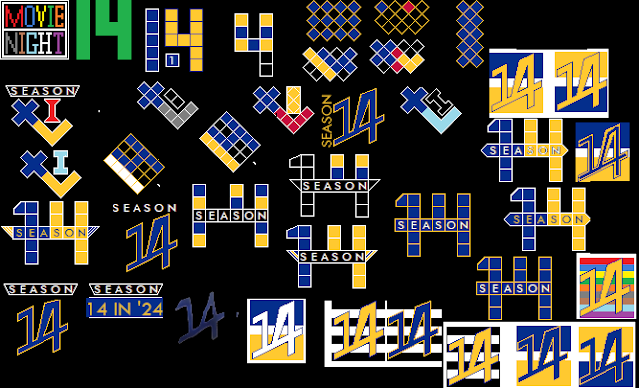
As a treat, I'd like to close off Season 14 by showing off a few concept ideas I had come up with MS Paint before settling on the final format in what accompanied each review in 2024. We shall see what Season XV brings in 2025. It will be a short wait for the next review.

May 25, 2023

The Prisoner of Zenda (1937).

Review #2013: The Prisoner of Zenda.

Cast: 
Ronald Colman (Major Rassendyll / King Rudolf V), Madeleine Carroll (Princess Flavia), Douglas Fairbanks Jr (Rupert of Hentzau), C. Aubrey Smith (Colonel Zapt), Raymond Massey (Duke Michael), Mary Astor (Antoinette de Mauban), and David Niven (Captain Fritz von Tarlenheim) Directed by John Cromwell (#1008 - The Racket, #1341 - Of Human Bondage, and #1348 - Algiers

Review:  
In 1894, a novel was published in the United Kingdom that was written by Anthony Hope, which was titled The Prisoner of Zenda. As one might expect, it has been adapted several times in the realm of stage, film, and radio, with the first adaptation being a play (as adapted by Edward Rose) that opened exactly one year after the novel was published. The silent era saw a handful of films (1913, 1915, 1922), with the most noted one being done by Rex Ingram. Evidently, there were plans to make a musical by MGM with Jeanette MacDonald and Nelson Eddy as star. However, it eventually fell into the hands of David O. Selznick and his studio, and he took notice of the abdication of King Edward VIII in 1936 when it came to marketing. There were several writers credited with the writing: John L. Balderston wrote the screenplay while Wells Root wrote the adaptation, Donald Ogden Stewart provided additional dialogue, and un-credited work was done by Ben Hecht and Sidney Howard. John Cromwell, already in his forties when he went from stage performances as actor and Broadway directing to films in the late 1920s, was chosen by Selznick to direct (Cromwell had directed with various studios from Paramount to RKO to United Artists). However, W. S. Van Dyke was brought in to help with reshoots in fencing while George Cukor was recruited to shoot the renunciation scene because he apparently was felt to be good with directing women. Did you know that Hope wrote a follow-up novel to Zenda? Rupert of Hentzau was written the year after Zenda's publication but not seen until 1897 (there have been a few adaptations, but not nearly as many as Zenda, probably because that book ends with the death of the lead, albeit with fitting irony). Evidently, there were plans announced in 1947 to make a film adaptation by Selznick after the success of this film with Joseph Cotten set to star, but it did not come to pass (coincidentally, Selznick's father Lewis was the producer of the 1923 version of Rupert of Hentzau). A shot-for-shot remake of Prisoner of Zenda was done in 1952, with the next (and last) high-profile remake being a 1979 film with Peter Sellars as star. 

When it comes to classics, this one is a pretty easy one to spot. It has all of the pieces you would expect from a swashbuckler: a nifty setup, a few costuming choices, a villain almost as dashing as the hero, and various other methods of adventure. Colman gets to employ the use of tables and chairs to go along with swordplay when it comes to playing with fire in the adventure sense, which reflects well when playing a double role that has him also play a weakened would-be king. It is no surprise that Selznick waited until he secured Colman to get the ball rolling on the film, because he is the dashing presence required in such a film that would seem lacking with perhaps anybody else but him when it comes to glamour without having a sense of being aloof to the fray. Of course, this is also a romance, so the time spent with Carroll is crafted quite well, mostly because her newfound sense of affection for the face standing in front of her is compelling to view in elegance, which makes what occurs in the resolution all the more poignant. Fairbanks Jr, the son of that famed swashbuckler with whom he shared his name, was told by his father to take the part of Rupert when he was offered it over the double role because (in his words), it was "probably one of the best villains ever written". Fairbanks clearly had good advice for his son, because it is a compelling role. He gets to snidely whiplash his way through the action with clear enthusiasm for the material when it comes to being the real threat behind the throne (as opposed to Massey, who actually is pretty decent himself), and the fact that he glides through the final action sequence to parts unknown certainly makes it a memorable adversary to see all the way through. Smith (the lead actor in the London production of the play decades earlier) and Niven (cast right before his turn as a star) provide support to Colman in very mild relief. As a whole, you can see the professionalism displayed by Cromwell and company to make entertaining adventure roll off the pages that generally utilizes its 101-minute runtime for suitable pacing that makes most of the right moves to set a place among the classics to watch in eight-decade cinema of a fantasy that all can enjoy within kingdoms and the duality and duplicity of people.

Overall, I give it 9 out of 10 stars.

December 28, 2017

Meet Me in St. Louis.


Review #1031: Meet Me in St. Louis.

Cast: 
Judy Garland (Esther Smith), Margaret O'Brien ('Tootie' Smith), Mary Astor (Mrs. Anna Smith), Leon Ames (Mr. Alonzo Smith), Lucille Bremer (Rose Smith), Tom Drake (John Truett), Marjorie Main (Katie the maid), Harry Davenport (Grandpa), Henry H. Daniels Jr. (Alonzo "Lon" Smith Jr.), Joan Carroll (Agnes Smith), and June Lockhart (Lucille Ballard) Directed by Vincente Minnelli (#405 - The Reluctant Debutante, #510 - Father of the Bride, #620 - Lust for Life, #878 - The Long, Long Trailer, and #986 - An American in Paris)

Review: 
Admittedly, musical films can tend to feel a bit familiar, particularly if the setting or the characters aren't too interesting to go with the songs. Meet Me in St. Louis manages to be an interesting musical in part due to its charm along with its performances that make for a relatively engaging movie. The movie basks itself in nostalgia with its setting, but it definitely doesn't feel too off-putting, coming off as fairly welcome. Each member in the family of Smiths have their own moment to shine or make an impact, and no one does it better than Garland, who radiates charm and a wholesomeness that also extends to her songs, with "Have Yourself a Merry Little Christmas" being a particular standout, having a tone that is moving along with effective due to her way of singing it. She manages to have fine chemistry with the others, such as O'Brien and Drake as well. O'Brien also does a fine job as well, being a fine child actress; in fact, she won an Academy Juvenile Award for her work for her films of 1944 (this award was given eleven other times from 1935 to 1961, with Garland herself winning one for her work in 1939). Astor and Ames prove to be fairly useful parents for the household, with Main and Davenport also proving themselves well. It should be mentioned that the songs in the film are charming, from the opening song of "Meet Me in St. Louis, Louis" to "The Trolley Song", with the movie keeping itself with enough steam and energy to make for a riveting experience. The film runs finely enough at 113 minutes, with numerous story-lines that surround the movie revolving around the family that work alright, with the end featuring the St. Louis World's Fair (also known as the Louisiana Purchase Exposition) that is a brief but fitting treat, with nothing in the film that comes off as condescending nor too ridiculous for the movie. Musicals may not be everyone's cup of tea, but I'm sure that this one will work wonders for people looking for a fun time.

Overall, I give it 9 out of 10 stars.

July 18, 2013

Movie Night: The Palm Beach Story.


Review #431: The Palm Beach Story.

Cast
Claudette Colbert (Geraldine Jeffers), Joel McCrea (Tom Jeffers), Mary Astor (The Princess Centimillia), Rudy Vallée (John D. Hackensacker III), Sig Arno (Toto), and Robert Dudley (Wienie King) Directed by Preston Sturges (#188 - Sullivan's Travels)

Review
The Palm Beach is a decent film, not as good as Sullivan's Travels, but it is entertaining, it does have a twist and it had good enough writing to keep the film in wrap. The actors are alright, and Joel McCrea is enjoyable, managing to switch emotions, he can be gruff, but he can also be funny, and that's always nice for an actor or an actress. Claudette Colbert is good, taking advantage of being one the lead roles very well. Sturges is a good director and he weaves his characters and setting to a good result, and while it doesn't last too long, it is fun while it is lasting, and I suppose that makes sense in the grand scheme of the film, which is just to make us laugh with a quick pace, romantics and all.

Overall, I give it 8 out of 10 stars.

December 10, 2011

Movie Night: The Maltese Falcon (1941).


Review #081: The Maltese Falcon.

Cast
Humphrey Bogart (Sam Spade), Mary Astor (Ruth Wonderly/Brigid O'Shaughnessy), Gladys George (Iva Archer), Peter Lorre (Joel Cairo), Barton MacLane (Lieutenant Dundy), Lee Patrick (Effie Perine), Sydney Greenstreet (Kasper Gutman), Ward Bond (Detective Tom Polhaus), and Jerome Cowan (Miles Archer) Directed by John Huston.

Review
This is a classic film that should be watched at least once by people who like film. Yes, that's my first line. And it's truthful straight down to the last period. The acting is good, especially from Bogart. The film has a style to it that helps the film makes its case for a good film, if not already from the acting. The story's good, making you interested in it for the entirety of the film. This film is the stuff that dreams are made of...

Overall, I give it 10 out of 10 stars.