Showing posts with label Bette Davis. Show all posts

December 31, 2024

Hush...Hush, Sweet Charlotte.

Review #2331: Hush...Hush, Sweet Charlotte.

Cast: 
Bette Davis (Charlotte Hollis), Olivia de Havilland (Miriam Deering), Joseph Cotten (Doctor Drew Bayliss), Agnes Moorehead (Velma Cruther), Cecil Kellaway (Harry Willis), Mary Astor (Jewel Mayhew), Victor Buono (Big Sam Hollis), Wesley Addy (Sheriff Luke Standish), William Campbell (Paul Merchand), and Bruce Dern (John Mayhew) Produced and Directed by Robert Aldrich (#105 - What Ever Happened to Baby Jane?, #778 - The Longest Yard, #1014 - The Dirty Dozen, #1389 - Kiss Me Deadly)

Review: 
If you remember, What Ever Happened to Baby Jane? (1962) was a hit with audiences, so naturally one might want to capture on that success and make a quick follow-up. Robert Aldrich decided to use an unpublished short story written by Henry Farrell called "What Ever Happened to Cousin Charlotte?". Lukas Heller, who had adapted Farrell's Baby Jane novel, would write the screenplay with Farrell (incidentally, Farrell wrote one other screenplay with What's the Matter with Helen? [1971]). Of course, he ran into a small problem: Joan Crawford and Bette Davis did not really want to work with each other again. Crawford (as cast in a role that wasn't exactly a role to chew on when compared to Davis, who had influenced the title change) wound up in the hospital with a respiratory ailment, but Aldrich was skeptical enough to actually hire a P.I. to track her. Incidentally, Crawford happened to star in a different type of psychological horror movie in 1964 with Strait-Jacket (both movies feature a person spooked by a memory of head-rolling death that may or may not be coming back to haunt them back home). At any rate, demands by the insurance company led him to either trash the movie or fire Crawford, for which Alrich went with the latter decision in August of 1964. After a handful of actresses rejected Aldrich's offers (such as Vivien Leigh), he eventually replaced her with a good friend of Davis with Olivia de Havilland. Others did return to be involved with the film from Jane such as editor Michael Luciano and composer Frank De Vol to go along with appearances by Victor Buono and Wesley Addy. While not quite as popular as the aforementioned Aldrich film, the movie was a relative success with audiences when it first came out in late 1964 and even received a few award nominations (in interviews, Aldrich liked making the movie just fine, although he had wished he could've spread out the time in making two similar films with Baby Jane and Charlotte for "my personal taste" while also arguing that Davis gave a better performance in the latter). In 1969, Aldrich produced What Ever Happened to Aunt Alice?, which while not related to Charlotte or Baby Jane is at least interesting for being about an aging old woman (played by Geraldine Page) dealing with murder and mayhem.

Creepy and creaky with a runtime at 133 minutes, this is the kind of movie that plays right at home for those who like drawn out thrillers (it reminds me to consider Les Diaboliques [1955], incidentally), albeit ones that play with bits of gore here and there. One particularly has some fun with the opening sequence (which features the ever-effective Buono to go along with a young Dern getting to be a part of, well, head-rolling) to draw out the scenarios of Southern Gothic mayhem that does eventually circle back to what it believes will be fun turns of the screw. Of course, it helps to have an actress like Davis at the helm to give the whole thing a sense of interested dignity in making this more than just goofy hysterics (hey, we don't judge anyway, particularly since  there are people who thought Baby Jane had some sort of camp aspect to it, as if scene-chewery isn't merely just part of just making some thrillers). Her entrapment in the past for the character is handled with the usual Davis standard of approaching the role with straight-to-the-point grace, managing to handle the tightrope of not merely being consumed or embarrassed by the macabre aspects. She plays the great creature that comes with a psyche that can only see things through the prism of the place that might as well be a mark on her soul, one that traps her soul that can be seen even when she is brandishing a shotgun (as seen early in the movie). de Havilland apparently wasn't too keen on making the movie but elected to do it because of the desire by Davis to work with her, which she did with relative success (after this, she appeared in five further films over the next 15 years to go along with a few television appearances prior to her death in 2020 at the age of 104). But she plays it as it if was a tight-rope to glitter in facades just as interesting as the one presented by what one would assume is just a nut (maybe it's a spoiler to say to beware of nice-presenting strangers), and it goes just as well with Cotten (incidentally, he also happened to play a key role in a movie about a woman possibly being on the nutty side with 1944's Gaslight), who has that conniving nicety to play the part one needs to play in triangular mayhem with composure to make it stick. Of course, Moorehead inspires a few quizzical in amusement that lends support to both the unravelling curiosity along with generally being warm to follow in terms of devotion with an accent to match (hey, the accents are fine for me). Of course, Kellaway is the civil one for enjoyment on the level of a usual character actor that could just inhabit a role with a few choice sentences. Undeniably, the movie is so worthwhile to see in all of the shadows and angles (as shot by Joseph Biroc), which is gorgeously appropriate when it comes to crafting a tawdry tale (complete with carefully composed angles for such a suitable set (which come to a head in one eerie scene) with game actors and at least one rug-pull moment that will surely make a worthy dark joke. Sure, the movie wraps its strings quite a few times around itself to make a knot, but the game is worth playing nonetheless. Aldrich was a craftsman director worth following along with in his attempts at chasing the audience to entertain with whatever he felt like doing at the time. As such, there is a few good moments in suspense to justify a watch for those who love seeing a few familiar actors play along in Gothic strangeness for lively execution that endures after six decades because of the commitment behind it.

Overall, I give it 8 out of 10 stars.
167 reviews later, here we are at yet another New Year's Eve. Sure, last year was a bit busier, but October 2024 was a month to be proud of regardless. Since 2011, we've managed to review a movie on December 31st a total of 17 times, with only 2015 and 2017 being exceptions, and it was nice to try a double-header once again to try and top how things went from last year.

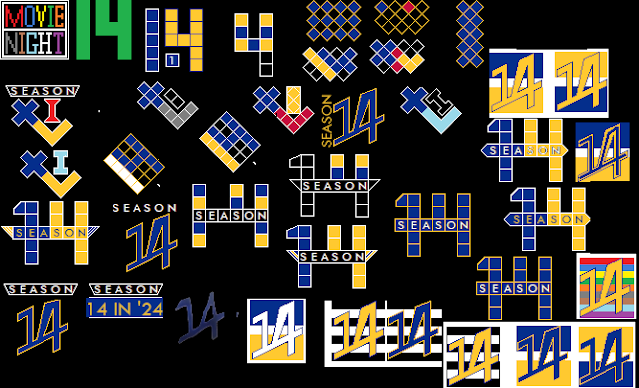
As a treat, I'd like to close off Season 14 by showing off a few concept ideas I had come up with MS Paint before settling on the final format in what accompanied each review in 2024. We shall see what Season XV brings in 2025. It will be a short wait for the next review.

April 7, 2020

Phone Call from a Stranger.

Review #1380: Phone Call from a Stranger.

Cast: 
Gary Merrill (David Trask), Shelley Winters (Binky Gay), Michael Rennie (Dr. Robert Fortness), Keenan Wynn (Eddie Hoke), Evelyn Varden (Sally Carr), Warren Stevens (Marty Nelson), Beatrice Straight (Claire Fortness), Ted Donaldson (Jerry Fortness), Craig Stevens (Mike Carr), Bette Davis (Marie Hoke), and Helen Westcott (Jane Trask) Directed by Jean Negulesco.

Review: 
Have you ever felt a connection with a human being that you didn't see coming? It happens every day, often in unexpected places all around the world, whether one is at home or not, so it only makes sense to have a film about strangers becoming fast friends at an airport, complete with name actors to try and spruce up interest for moments required to fill 105 minutes. It should figure that the responsibility to direct such name actors fell to Jean Negulesco. Although he isn't a particular household name for directors, the Romanian-born painter-turned-filmmaker directed his first feature film at the ripe age of 36. with Crash Donovan (1936). He had started in Hollywood as a sketch artist and technical advisor for The Story of Temple Drake (1933), and he would soon move up to second-unit director to associate to eventually directing shorts, which he would do for over a decade (even after moving his way to features). He had a few notable standout films, such as The Mask of Dimitrios (1944), Johnny Belinda (1948), where he received a nomination for Best Director at the Academy Awards while directing his leading lady Jane Wyman to a Best Actress award, and How to Marry a Millionaire (1953), the first feature to be entirely filmed in CinemaScope. In total, Negulesco directed films in five decades before his death in 1993 at the age of 93.

The film was written by journalist-turned-writer/director Nunnally Johnson and writer I. A. R. Wylie (who had thirty of her works turned into films in her lifetime). The end product is a casual yarn, appropriate for a rainy day as the random choice in the pile of drama/noir-ish movies that will prove adequate for entertainment. Merrill leads the film with a relaxed presence, one will a by-the-numbers plotline to follow with seeming like an observer in his own feature, since one will get to know the actors around him with more than a batted eye. After all, each of the main three besides him had distinguished careers, such as the bombshell-turned character actress star in Winters or the dignified British-turned-Hollywood star in Rennie or the character player-in-demand talent of Wynn, and each get a sliver for themselves to express themselves, which works out mostly for Rennie, although Wynn does deliver a clownish chuckle and Winters proves diverting. The supporting cast is headlined by Davis, who shows up in the last twenty minutes (having asked for the role since she felt it was a good part to play) and is just as sturdy a presence as she ever was, supporting role or not. One knows what they are in for after the film eliminates three of its main four it had focused on, where it now becomes a series of vignettes about each of the departed's home life before leading up to the inevitable conclusion (departing your wife and kids for an unstated reason? Take one guess of how that plays out) that will leave the crowd pleased if not shrugging their shoulders in saying how it may be average, but it's their kind of average film to go to, where you can find something in yourself with at least one of these four strangers and find yourself satisfied in the long run.

Overall, I give it 7 out of 10 stars.

March 14, 2020

Now, Voyager.

Review #1362: Now, Voyager.
Cast: 
Bette Davis (Charlotte Vale), Paul Henreid (Jeremiah "Jerry" Duvaux Durrance), Claude Rains (Dr. Jaquith), Gladys Cooper (Mrs. Windle Vale), Bonita Granville (June Vale), John Loder (Elliot Livingston), Ilka Chase (Lisa Vale), Lee Patrick (Deb McIntyre), Franklin Pangborn (Mr. Thompson), and Janis Wilson (Tina Durrance) Directed by Irving Rapper.

Review: 
"This has always been a motto of mine: Attempt the impossible in order to improve your work."

I think we all can say we have had our moments involving an ugly duckling. The feeling of inferiority or the feeling of isolation within having a lack of self confidence or missing people to help in that regard. Simply put, sometimes we just need help. The screenplay was done by Casey Robinson as an adaptation of the 1941 novel of the same name by Olive Higgins Prouty, the third in a five-book series of the Vale family. She had spent time in a sanitarium herself due to a mental breakdown sixteen years prior due to the death of one of her daughters. The depiction of psychotherapy in the book and film were thought of as pioneering for the time, and she was also noted for her philanthropic work. At the helm for stars is quite an interesting pair in Davis, Henreid, and Rains. Davis had lobbied hard for the role, which had been thought of for actresses ranging from Irene Dunne to Ginger Rogers, while directors considered had gone from Edmund Goulding to Michael Curtiz. Who better to helm the production than Hal B. Wallis, who was behind several hits for Warner Bros since 1930 with films such as The Letter (1940, featuring Davis) and Casablanca (1942, featuring Henreid and Rains). Rapper had started his career in Hollywood as a dialogue coach and assistant director in 1936 for Warner Brothers, and he made his debut in 1941 with Shining Victory, which had Davis in a cameo appearance. He directed her in four other films while having a moderate career in directing, with his last being Born Again in 1978.

Who better to sink into a tortured main role in terms of showing struggle and growth than Davis? She was always known for her intensity as a perfectionist, reading the novel and being involved in the wardrobe design for her character. She gives a dignity to this role that dominates the film in sincerity, a transformation that she makes thoroughly believable with chemistry to boot with Henreid, best signified by the sequence where they share a cigarette together after he lights two of them in his mouth (a scene that had been done in a few productions before but made notable here) and puts one in her mouth. Henreid proves to be a fair match for Davis, one with inviting charisma. Rains (described by Davis as her favorite co-star) pulls through with professionalism in his moments on screen (with are a bit scattered after the initial scenes), never seeming unbelievable at any moment. Cooper pulls in venom with ease for her clashes with Davis, which seem to be like a soap opera just as much as the rest of the film is. On the whole, the movie pulls through in tugging at the heartstrings (aided through Max Steiner's dynamic music, which naturally won an Oscar) for 117 minutes that succeeds most of the time in capable drama without becoming a complete soggy sponge of drama. It's a film with its own spirit of independence that one can still find useful today, where one only needs to look to the stars to find something to behold for themselves.

Overall, I give it 8 out of 10 stars.

February 15, 2020

Of Human Bondage.


Review #1341: Of Human Bondage.

Cast: 
Leslie Howard (Philip Carey), Bette Davis (Mildred Rogers), Frances Dee (Sally Athelny), Kay Johnson (Norah), Reginald Denny (Harry Griffiths), Alan Hale (Emil Miller), Reginald Sheffield (Cyril Dunsford), Reginald Owen (Thorpe Athelny), and Tempe Pigott (Agnes Hollet, Philip's landlady) Directed by John Cromwell (#1008 - The Racket)

Review: 
What is there to say about Bette Davis that hasn't already been said before? Davis is one of the most famous actresses of film to ever grace the screen, but one only needs to point to her six decade career of various sardonic roles that ranged from various dramas that garnered multiple Academy Award wins (two) and nominations (only three other people have more nominations than her ten). One nomination that is not technically recorded is for her role in this film (for which she received write-in votes for in one of only two ceremonies to allow said votes), which is generally considered her breakthrough role. She had started her career on the stage in 1929 before moving to Hollywood the following year to screen test for Universal Studios. She made her film debut with a supporting role in Bad Sister (1931), but her time with the studio was characterized by a dearth of roles before her release from her contract the following year. On the verge of leaving Hollywood, it was the decision of George Arliss to have her cast as the fiancee to his character in The Man Who Played God (1932) with Warner Bros. that gave her the foot in the door she needed, as she soon signed a contract with the studio after they liked the rushes. She would subsequently stay with the studio until 1949, although there were not always easy times. She notably attempted to breach her contract in 1936 when presented an offer to make two films in Britain, owing to be faced to perform in parts she felt were mediocre (incidentally, it was her appearance in a film named The Cabin in the Cotton (1932) that led director Cromwell to want her for this film). In any case, Davis had wanted the un-glamorous role despite the reluctance of studio head Jack L. Warner to let her star in what was to be a production by RKO Radio Pictures. A chance to trade actresses for a part led to RKO being allowed to borrow Davis for this film while Warner Bros borrowed one of their contract players for a film of their own. Davis proved to be dedicated to making this role the first of many noted performances of her career, from hiring a housekeeper with a Cockney English accent to prepare for the role to even designing her own makeup for her final scenes when downtrodden with tuberculosis.

For a film released just as a strengthened Motion Picture Production Code was coming into effect in July of that year, this is sure a daring film to inspire such shock and passion. This was an adaptation of the 1915 novel of the same name by W. Somerset Maugham, which has a mix of autobiographical and fictional elements, as admitted by the author (with both him and the main character having a physical calamity, being an orphan at an early age, and studying medicine). It was the first of three adaptations, with ones to follow in 1946 and 1964. Obviously the work is going to be changed a bit for a film adaptation, especially a 600-page book going down to an 83 minute film. A curious synopsis glance notes that the film only mentions the main character's uncle at the end when he dies, as opposed to showing his experiences growing up with his uncle. The film has a stagey if somewhat dated feel to it at times (this proves true with some of Cromwell's decisions like the perspective shots), but it is the dominant performance of Davis that keeps the film rolling with curiosity. She has a fearlessness and tenacity to making this role worth viewing to see her run the gamut in cruelty, most notably when she chews the main character out near the end. We all have had at least one experience or knew at least one person in our lives with that kind of emotional recklessness, the kind of person we think we need in our lives no matter how they might treat us. It doesn't mean that Howard's character is completely in the right either, but it is a film that uses most of its time (save for its obligatory moralistic line for the ending) to show two people who really just don't belong together who keep lining up that way. Sure, the main character still finds someone to be with after his obsession is lifted, but the film still hits on those basic points without too much trouble. Howard (a man of theatre and film who was an idol in his own right for the decade) comes off as stiffly sensitive, quiet yet fairly easy to follow along with despite some of the offbeat decisions his character can make. With lesser actors, this could've been easily turned into a vamp piece and nothing else. But these two make for a worthy duet to view, which go with a decent supporting cast to make for a decent piece to study. Interestingly enough, this is a film readily available for viewing, since the copyright for this film was not renewed in the 28th year of publication, meaning that this is in the public domain for easy viewing. I recommend this one without any doubt, a fairly entertaining film on the strength of Bette Davis in the role that made her a star worth viewing with interest.

Overall, I give it 8 out of 10 stars.

December 11, 2017

Jezebel (1938).


Review #1022: Jezebel.

Cast: 
Bette Davis (Julie Marsden), Henry Fonda (Preston Dillard), George Brent (Buck Cantrell), Donald Crisp (Dr. Livingstone), Fay Bainter (Aunt Belle Massey), Margaret Lindsay (Amy Bradford Dillard), Richard Cromwell (Ted Dillard), Henry O'Neill (General Theopholus Bogardus), Spring Byington (Mrs. Kendrick), John Litel (Jean La Cour), Gordon Oliver (Dick Allen), and Janet Shaw (Molly Allen) Directed by William Wyler (#509 - Roman Holiday)

Review: 
Admittedly, it is hard to talk about the film without comparing it to Gone with the Wind (#569), which was released one year after this movie, which was based off the 1933 play of the same name by Owen Davis. It has been stated that Davis got the role as a sort of a consolation prize for not being awarded the role of Scarlett O'Hara, which went to Vivien Leigh. However, it should also be mentioned that the original actress intended for the role for Jezebel was Tallulah Bankhead, but she fell ill during rehearsals.

In any case, Davis won an Academy Award for Best Actress (her second and final career win) and Banter would win one for Best Supporting Actress for this movie. For the time, Davis' character must have come off as shocking (manipulating people for love and wearing red to a party), but she just comes off as spiteful and not all too compelling, even with her story arc. It should be noted that Davis does pull of a fine performance, though. I will say that her character is mildly compelling to see progress through the movie, but the ending is a bit odd with her motivations, which seems a bit tacked on. The other performances are pretty consistent, and they (along with the production values) help in making for a film that is at the very least dazzling, with Fonda being a fine standout along with Brent and Bainter. The sequence with Davis and Fonda at the ball is a particular highlight in striking tone. The black-and-white photography is fine, but this is a film that probably should've been filmed in color in order to to make the red dress that she notably wears stand out (this is coming from someone who has nothing against black-and-white, of course). The run-time of 103 minutes is fine for the romantic drama that it wants to be, with a few interesting scenes that make it worth it just enough. It doesn't hold too much of a candle to the other more famous film that followed a year later, but if you look past that and try to see the movie for its own worth, you will find it something that is probably worth a look.

Overall, I give it 8 out of 10 stars.

October 23, 2015

All About Eve.


Review #750: All About Eve.

Cast
Bette Davis (Margo Channing), Anne Baxter (Eve Harrington), George Sanders (Addison DeWitt), Celeste Holm (Karen Richards), Gary Merrill (Bill Sampson), Hugh Marlowe (Lloyd Richards), Thelma Ritter (Birdie), Gregory Ratoff (Max Fabian), Marilyn Monroe (Miss Casswell), and Barbara Bates (Phoebe) Directed by Joseph L. Mankiewicz.

Review
Based off "The Wisdom of Eve" by Mary Orr, All About Eve is a movie that held the record for most Oscar nominations (14) until Titanic tied it over four decades later, with five actors receiving nominations, and one (Sanders) winning. In fact, Joseph L. Mankiewicz won two Oscars for the movie (Best Director and Adapted Screenplay). 65 years later, the movie is heralded as a classic. And why not? It is great. It's interesting that the big highlight in a movie all about Eve is not Eve herself, but Bette Davis and her tremendous screen presence. She is always interesting to watch and always entertaining, especially when interacting with the cast. Baxter is effective in making her character come off as innocent and helpful...for a while, anyway. Her scene with Holm in which she would will be willing to use Karen's deep friendship with Margo as leverage just to get a part shows the extent of Eve's manipulation. But while her ambition got her out of one problem along with getting her this far, it may have gotten her into another situation...but the movie ends on a different character, named Phoebe. The final scene, with her taking the award and imagining herself winning one is certainly fitting. Sanders manages to ingrain his character into the narrative. He may be snide. but his way with words is much more devastating. His scene with Baxter at the end, is especially well-done, as the movie comes full-circle. The movie begins with Eve winning an award for her performance in a play...but maybe in a way she hasn't won. She won the award, but perhaps at the cost of her heart, in a sense. One actress who also is in the movie, though brief, is Marilyn Monroe, whose character also plays a role in regards to Eve's rise. Monroe doesn't get much to do, but she is interesting to watch, especially when being guided by Sanders in his attempts to give her a career. The movie certainly looks well in both fashion and just in general, with the Costume Designers (Edith Head and Charles LeMaire) winning an Oscar for it. Bottom line, the movie is interesting to watch, especially if you love big performances and love big classical drama.

Thank you for reading this 750th Review. I hope you enjoyed it.

Overall, I give it 10 out of 10 stars.

For all of the appreciation over the past 750 reviews, I made a collage detailing from the first big landmark (and the number before it is, as customary)...all the way up to now. Thank you. Enjoy.


December 20, 2013

Movie Night: The Man Who Came to Dinner.

Review #501: The Man Who Came to Dinner.

Cast
Monty Woolley (Sheridan Whiteside), Bette Davis (Maggie Cutler), Ann Sheridan (Lorraine Sheldon), Richard Travis (Bertram H. Jefferson), Jimmy Durante (Banjo), Grant Mitchell (Ernest W. Stanley), Billie Burke (Daisy Stanley), Reginald Gardiner (Beverly Carlton), Elisabeth Fraser (June Stanley), George Barbier (Dr. E. Bradley), and Mary Wickes (Nurse Preen) Directed by William Keighley.

Review
Based on the comedy play of the same name, The Man Who Came to Dinner tries its best, and while it doesn't always succeed, it certainly hits more than it misses. Monty Woolley certainly is the big attraction of the film, and while he certainly is an odd fellow to watch, he is at least moderately funny to watch. Bette Davis is our leading actress, reportedly wanting the role solely due to wanting to play a comedic role for once, and she does a decent job at it. The rest of the cast is all well and good, and Durante is frantic, but effective. The film starts a bit slow, but it has its fun, and while it could be more, it's well enough, I suppose.

Overall, I give it 7 out of 10 stars.

February 26, 2012

Movie Night: What Ever Happened to Baby Jane?


Review #105: What Ever Happened to Baby Jane?

Cast
Bette Davis (Jane Hudson), Joan Crawford (Blanche Hudson), Victor Buono (Edwin Flagg), Maidie Norman (Elvira Stitt), Anna Lee (Mrs. Bates), B. D. Merrill (Liza Bates), Marjorie Bennett (Dehlia Flagg), and Dave Willock (Ray Hudson) Directed by Robert Aldrich.

Review
The film is a thriller and an excellent drama with Bette Davis doing a great job as the twisted Baby Jane (even if she looks like Betty White...). Anyway, the film delivers slight chills (Not like a horror film...A good one anyway) It's stunning, it's madness, and it's wonderful for it. The mystery develops over the film, and at the end it delivers it with a twist that's not so Shamalyan at all in the sense that it makes a good end for a good film. Hard to believe this is the first film I've seen on Davis or Crawford's. And I didn't regret seeing it one bit.

Overall, I give it 9 out of 10 stars.