Showing posts with label Tony Randall. Show all posts

August 1, 2020

Gremlins 2: The New Batch.

Review #1494: Gremlins 2: The New Batch.

Cast:
Zach Galligan (Billy Peltzer), Phoebe Cates (Kate Beringer), John Glover (Daniel Clamp), Robert Prosky (Grandpa Fred), Robert Picardo (Forster, chief of security), Christopher Lee (Doctor Cushing Catheter), Haviland Morris (Marla Bloodstone), Dick Miller (Murray Futterman), Jackie Joseph (Sheila Futterman), Gedde Watanabe (Mr. Katsuji), and Keye Luke (Mr. Wing), with Howie Mandel (Gizmo), Tony Randall (Brain Gremlin), and Frank Welker (Mohawk, Other Gremlins) Directed by Joe Dante (#007 - Looney Tunes: Back in Action, #096 - Gremlins, and #097 - Small Soldiers)

Review:
"It's the one time someone came to me and said: 'We want this movie and we don't care what it is. Do whatever you want, just give it to us by this date."

When it comes to underappreciated directors, Joe Dante certainly deserves consideration. He grew up with an interest in cartoons alongside watching matinee films as a youth. While a graduate of the Philadelphia College of Art, it was Roger Corman who Dante honed his craft into becoming a filmmaker, initially starting out in the trailer-cutting department at New World Pictures. He made his debut with Hollywood Boulevard (1976), co-directing with Allan Arkush along with editing the film. His first minor triumph was Piranha (1978), and The Howling (1981) helped get his foot in the door with Warner Bros. to make Gremlins (1984). The original film is a triumph of comedy and horror, dark and entertaining that had attracted attention for their effects (and of course, complaints from folks who managed to be fooled by the Christmas setting and critics of violence that don't know any better and are rightfully made fun of here) along with being a key force in the creation of the PG-13 rating. It is entirely possible that this is a sequel that was just a little too late to the party. It took six years for a sequel to Gremlins to arrive into theaters and its director Joe Dante had to be convinced to even do another film in the first place, and he was granted creative control and a bigger budget. Charlie Haas would take over in writing duty (the original had been done by Chris Columbus), who moved the action to New York City with satirical elements all throughout the film, such as the advent of cable television (most notably with Ted Turner) and sequels in general that was more cartoonish than dark, with Dante describing it as one of his most personal films.

It's a shame that this wasn't too successful on release, because I enjoyed it just as much as the original Gremlins. The quality is just about even here, replacing its dark sentiment for cartoonish anarchy that manage to resonate just as much in amusement. It touches upon elements of the original without being smothered by expectations or becoming too much of an effects show, and it does so without becoming dated. It does what one could want for someone with a clear interest in having a good time at the movies in a similar vein to someone like William Castle or even in cartoons with Chuck Jones (who provided the animation for the opening/closing titles). Galligan returns alongside Cates, and each prove just fine in providing continuity and some small moments of levity among themselves and some sort of Mogwai mayhem. Of course the real focus is on Glover, wrapped in spry curiosity that is very much in his element with a bit of camp enjoyment. Prosky, imitating Al Lewis' portryal of another famous horror Grandpa that hosted a horror TV segment, does just fine with mixing camp and care that does lend itself to some quick smiles. Picardo does fine with smarmy chuckles, but the true curiosity ineviably turns to Lee, with that solumn voice going just right with the cliches required for some momentary smiles. Miller and Joseph also return for a quick turn around with the creatures, while Morris and the Mogwai voices round out the cast just fine. Like before, there are quite a handful of cameos lurking around, most notably with Leonard Maltin being dragged away by unsatisfied viewer gremlins. The effects are always lurking in one's mind, and Rick Baker does a tremendous job with delivering some distinct creatures (with a mix of puppetry like before and also mechanical work and stop motion) that get to do a bit more madcap action, such as a bat gremlin for example. The plot threads verge a bit familar at times with its structure, but it makes up for it with some interesting tricks of offbeat humor (such as having the film be stopped and then re-started) that goes in the right direction to make a fun time worthy of further inspection as a quality sequel and an interesting film to highlight for the start of the 1990s.

Overall, I give it 8 out of 10 stars.

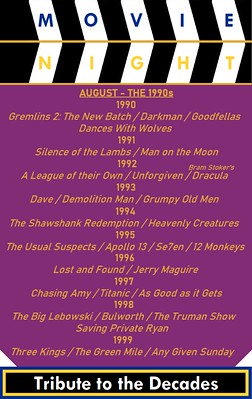
And now, the schedule for this month, a mix of familiar and new faces on and behind the camera as one approaches the end of the millennium. 
April 28, 2020

Pillow Talk.

Review #1401: Pillow Talk.

Cast: 
Rock Hudson (Brad Allen), Doris Day (Jan Morrow), Tony Randall (Jonathan Forbes), Thelma Ritter (Alma), Nick Adams (Tony Walters), Karen Norris (Miss Dickenson), Julia Meade (Marie), Allen Jenkins (Harry), Marcel Dalio (Mr. Pierot), Lee Patrick (Mrs. Walters), Mary McCarty (Nurse Resnick), and Alex Gerry (Dr. Maxwell) Directed by Michael Gordon.

Review: 
"Comedy is the most serious tragedy in the world. Play it that way and you can't go wrong. If you ever think of yourself as funny, you haven't got a chance."

Sometimes the best way to talk about a film is to just say it is nice and leave it that. This is a decent comedy for its time, a fair highlight for its stars and director to take pride in. Michael Gordon went from being a student of the Yale Drama School and member of the Group Theatre to working in films and stage, where he would go from crafting low-budget b-movies in the early 1940s to noirs and dramas by the end of the decade, with Cyrano de Bergerac (1950) serving as a highlight. His career was interrupted the following year due to blacklisting; he would do stage productions for the next eight years until successes in that field led to Universal-International wanting to bring him back into directing with this film, which would be the first in a string of eight comedies he would do for the rest of his career, which ended with How Do I Love Thee? (1970). As for Day and Hudson, both were established stars in their own right, with the former having success in musicals, comedies, and thrillers that went with a prolific singing career and the latter was a leading man for adventures and melodramas since the early 1950s. The two would collaborate on two further films together over the next five years, and they became lifelong friends.

For the time, this surely proved a fun daring time for enjoyment. The film was written by Stanley Shapiro and Maurice Richlin that was based on a story by Russell Rouse and Clarence Greene, who had done the script in the 1940s that was bought and sold numerous times without being produced (each would receive an Academy Award for their work in the category of Best Original Screenplay, beating out noted films such as The 400 Blows and North by Northwest). This was a time where even the title of the film had to go through wrangling with the Production Code before giving in (imagine if it had gone with the alternate choice of Any Way the Wind Blows). Party lines are (mostly) a thing of the past now, but they were quite prevalent for most of the 20th century as a way to provide service for cities both rural and urban through a shared local loop circuit. At any rate, there certainly is enough room for some clever moments with Day and Hudson with this scenario, particularly with the use of split-screens in certain sequences that make for some humor and passion. They click together in ways that seem instant, natural at inspiring curiosity and charm in their respective manners with class in romance, with Day being quite passionate and Hudson being subtle in charming humor. Randall (who would appear with Day and Hudson twice more) does well as a fussy foil while Ritter rounds out the cast with deadpan stupor. While one will know what they are in for pretty early in its 104 minute run-time, the film maintains itself with careful vigor that doesn't lead to impatience or a lack of meaningful interest in where the film wants to go to drive some laughs and passion, doing a relatively fine job in making appealing entertainment that has kept most of its luster through six decades of time.

Overall, I give it 8 out of 10 stars.

September 20, 2017

The King of Comedy.


Review #992: The King of Comedy.

Cast: 
Robert De Niro (Rupert Pupkin), Jerry Lewis (Jerry Langford), Diahnne Abbott (Rita Keane), Sandra Bernhard (Masha), Tony Randall (Himself), Shelley Hack (Cathy Long), Ed Herlihy (Himself), Frederick de Cordova (Bert Thomas), Margo Winkler (The Receptionist), and Kim Chan (Jonno) Directed by Martin Scorsese (#990 - Taxi Driver)

Review: 
This is certainly an interesting black comedy film, in that it is a black comedy that doesn't invite itself for laughs, but it invites you to follow these strange but interesting characters while also feeling very relevant even after nearly 35 years since its release. When compared to Taxi Driver, one can see some similarities within the main character (both played by De Niro) in their loneliness, although their results definitely have a significant contrast (namely, one film has blood while the other doesn't); Scorsese stated this about the connection between the two characters: "Taxi Driver. Travis. Rupert. The isolated person. Is Rupert more violent than Travis? Maybe." De Niro undeniably pulls a great performance out of this aspiring (and deranged) character that reels you in with his passion and desire (as odd as that might seem). Lewis (in a role that was rejected by Johnny Carson) does a tremendous job as the beleaguered host who has an unquestionable subtle charm to him (even with all the things that happen around him). Bernhard pulls off a capably deranged performance, always managing to make you not take your eyes off and what offbeat thing she might be doing next. Abbott also does a fine job, having a naturally innocent charm to her that resonates well when paired with De Niro. For me, my favorite scene comes during the second half, with De Niro, Lewis and Bernhard acting together, involving some gum and cue cards which works because of how well each actor plays off each other and the way that the film plays with the circumstances and mood. The camera shots are also fairly fitting for the film's tone, where fantasy and reality not being particularly distinct from each other but also showing mayhem (such as the opening scene).

The rest of the cast are satisfactory in their roles, with my favorite being Herlihy (who had been the voice of Kraft Foods commercials for decades) and his richly distinctive voice. As stated before, there are some laughs, but the movie never really desires to let you absorb it because of how enclosed it seems with its dark aspects; one particular example is a scene where Lewis is accosted and told by an old lady that he "should only get cancer". It's a brief but useful scene in understanding this film, for better or for worse. It never strives to overstate itself nor focus on being just satire or thrilling. It blurs the line between fantasy and reality a few times throughout the movie (something that once again someone could compare to Taxi Driver), and it definitely has an interesting repel effect, with the ending also being an interesting point of discussion. It never goes for the jugular in laughter nor give you the satisfaction of seeing a character show their layers, but there is something about how it portrays the perspective of media culture and worship that certainly resonate even now. It shows an ugly side to the culture that without doubt leaves an indelible and unforgettable mark. It definitely is not a movie for everyone, but it definitely is a fine winner in my mind, laughter and all.

Happy to mark that this is the 100th film reviewed in 2017 on Movie Night, the fourth time that I've done at least 100 films since 2010.

Overall, I give it 8 out of 10 stars.

July 17, 2013

Movie Night: 7 Faces of Dr. Lao.


Review #430: 7 Faces of Dr. Lao.

Cast
Tony Randall (Dr. Lao, Merlin, Pan, the Serpent, Medusa, Apollonius of Tyana, and the Abominable Snowman), Arthur O'Connell (Clint Stark), Barbara Eden (Angela Benedict), John Ericson (Ed Cunningham), Kevin Tate (Mike Benedict), Noah Beery, Jr. (Sam), Royal Dano (Casey, the Brutal Henchman), John Doucette (Lucas, the Henchman's Sidekick), Lee Patrick (Mrs. Howard T. Cassan, the Stuffy Matron), Minerva Urecal (Kate Lindquist, the Shrewish Wife), John Qualen (Luther Lindquist, the Meek Husband), and Frank Cady (Mayor James Sargent)  Directed by George Pal (#247 - The Time Machine)

Review
This is a weird sort of film, it feels like a fantasy film, but it sometimes feels like it tries to be a comedic film, and it also manages to try to show a cavalcade of stop motion effects, creating a jello mold of a film in which the main actor tries to flesh out 7 different characters. But does this film work as a whole? Eh...it depends. The directing for the most part is alright, George Pal (also notable for producing The War of the Worlds in 1953) does alright, and focus doesn't get too off focus. And while Randall does okay in his performances, it is a tour de force in the makeup department by William Tuttle as he even won an honorary Oscar for the makeup. The effects are alright, and the Serpent does look good. The rest of the actors are okay, not too bad, even if they are overshadowed by the effects and Randall, though probably unintentionally. The film is dated at some points and despite some questionable aspects, this is at least okay, and while it is a weird experiment in the amount of characters one actor or actress can play, I suppose it can't be too harmful. Take this film at your own risk.

Overall, I give it 7 out of 10 stars.